

The Long Road to "Yes:" My First Short Film as Director
I think I first realized that such a thing as a director existed when I was 14 years old. The nasty voices immediately started in my head: “Only old white men get to do that fun stuff. Like Scorsese and Coppola and George Lucas. Not women. Especially not tiny hijabi Sri Lankan Muslim women from Dubai.”
My first short film – finally!
I think I first realized that such a thing as a director existed when I was 14 years old. The nasty voices immediately started in my head: “Only old white men get to do that fun stuff. Like Scorsese and Coppola and George Lucas. Not women. Especially not tiny hijabi Sri Lankan Muslim women from Dubai.”
But I still couldn’t shake that feeling. That I was meant to be doing that thing. That Scorsese and Coppola and Lucas were doing.
I had been a quiet introverted ‘writer’ up until then – a writer of tortured poetry, weird plays and much angst-ridden short stories.
Because the world around me told me ‘no, you’re not allowed’, I stayed that way for about 15 years. Give or take a year.
Then #metoo happened. Then four rejections happened in quick succession. Each one hurt worse than the others because all I needed was for one person to say yes.
Then I thought to myself, “Why don’t I say yes… to myself? Who has the right to tell me that my story isn’t valid?”
Answer: no one. Not even me.
After one traumatic childbirth experience, the death of my mom, three company (read: family) moves across three countries, I’ve realized that life is short. What’s the worst that could happen? Nothing will kill me except, you know, death.
I am terrified. So so terrified. My anxiety disorder is LOVING this. My depression just waits for those rejections so it can tell me just how ‘not good enough’ I am (they’re both wrong, but I love them anyway).
But here I am, on this director’s journey at last. And I have to say, my dear friends – I feel more alive than I’ve ever felt. Good God, it hurts, but it’s a good kind of pain.
Early last year, I made an 8-minute short called I Like Long Walks. One location (my house), one character (me), minimal set ups. We're currently tightening it up in post and hoping to submit it to a few festivals. Watch this space.
Here are a few lessons I learned from this teeny tiny but mighty experience.
Food rocks. Food is super important. Food is the wind beneath my wings. (I'm fasting.) Seriously though: Plan lunch in advance in consultation with your crew. If you're going to do French hours i.e. no lunch, have tons of healthy and nutritious snacks on hand. Again in consultation with your crew. I had precisely one other person so that consultation would have been easy. If I had done it. And have lots of water on hand.
Get help. I was so overwhelmed writing, directing, producing and starring that I failed to account for pretty basic needs (see above).
I was initially planning to shoot the thing myself so I did not feel the need to do a recce with sound and light in mind. If I had, I'd have known the train and the highway right outside would be rather a bother for sound. Plus my loud neighbors and their ludicrously long home improvement projects. I had also initially wanted to shoot in my bedroom. But light is terrible there. So we chose the living room but light fluctuates like crazy where I was sitting. It all made for fun times in post.
Take your time on set. Goodness takes time. Especially when your actor (me) has not had a lot of sleep and is acting out some tough emotions.
Divide your script into units even if there aren't any scenes. So this makes it easier to shoot and easier to edit as well.
Make sure sound is rolling when camera is rolling and off when camera is off. It can make for irritating work in post listening to sound files looking for the correct audio. Label sound files with scene numbers.
Choose people to work with who are generous with their knowledge. Who don't laugh at you when you ask questions. Who teach you everything they can. Because personally, I learn best from other people
A true spirit of collaboration is key. No creative should dominate the conversation, should drown someone out, should muscle in, negate or ignore any other. Empathy and being a good listener are SUCH PIVOTAL QUALITIES for a good filmmaker, it's ludicrous. I would highly recommend reading Marshall Rosenberg's Non Violent Communication. The whole book seems to be up here for free with seemingly no copyright claims.
This is where directing overlaps with mothering to a great degree - the director directs the vision of the film. What that means to me is: Directors set the most gentle parameters they can and then allow their people to play freely within those parameters. Those gentle parameters are key, I think.
Keep the props in a safe place in case you need to reshoot!
Hope this helps. If it is in your heart to do so, go out and make movies, folks. Nothing quite like it. I always knew this. But I'm only accepting this truth now. Better late than never, I guess.
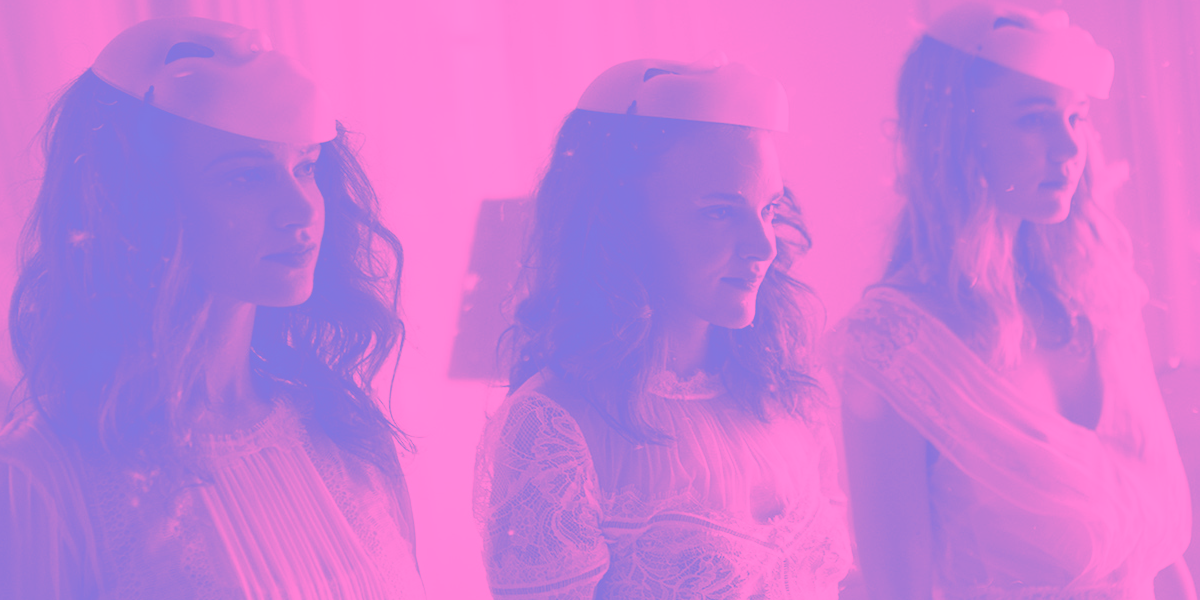
Writer/Director Mitzi Peirone on Braid, the First Cryptocurrency-Funded Feature Film
Not only was Braid her first feature as writer and director, it was also the first feature film fully funded by cryptocurrency (raising a reported $1.7M in just two weeks). And no, I don’t super know what that means either…
Mitzi Peirone, the writer and director of the psychological horror heist film (how’s that for a “genre” film?) Braid, knows a thing or two about beginnings. Not only was the film her first feature as writer and director, it was also the first feature film fully funded by cryptocurrency (raising a reported $1.7M in just two weeks). And no, I don’t super know what that means either, but luckily we got in touch with Mitzi to explain it to us.
Starring Madeline Brewer (The Handmaid’s Tale, Cam, Black Mirror) the story follows two wanted women who decide to rob their wealthy but psychotic friend who lives in the fantasy world they created as children. In order to take the money they have to take part in a deadly perverse game of make believe… and IT LOOKS AWESOME.
We spoke with Mitzi to learn more about her filmmaking journey, what advice she offers to first-time filmmakers, and just what the hell that cryptocurrency stuff is all about.
Braid is your first feature film. How did you take it from initial idea to final film?
Braid started as an existential philosophical quest: I wanted to understand what separated reality from dreams, what that line between real and imagined was and whether that line existed at all. I started reflecting upon the fact that since childhood we instinctively play make-believe, we practice and rehearse life to a subconscious degree, without anyone telling us to, we just naturally inhabit roles and play by made up rules. I realized afterwards that as adults we still operate under the same belief system, that we abide to imaginary conventions and societary rules, playing the parts we believed were right for us. Everything is invented; names, jobs, laws, politics, philosophies, religions, geographical borders, even time, all taking part in this great play of existence.
We are still kids playing make believe, adults in global sandbox. I realized reality was an extension of our thoughts and that we are only as powerful as we believe ourselves to be. So the idea for adults playing dress up stuck in a mind game came to mind pretty early on, I was about 23; the heist propulsion of the story came afterwards, but I always wanted to make something that made the audience feel like they were getting lost in their own minds too, instead of watching and feeling the psychological downfall of the characters by association, I wanted the camera and script and colors, editing, sounds all of it to lose its mind too. I wanted to know what it was like to be incapable of discerning waking life from dreaming.
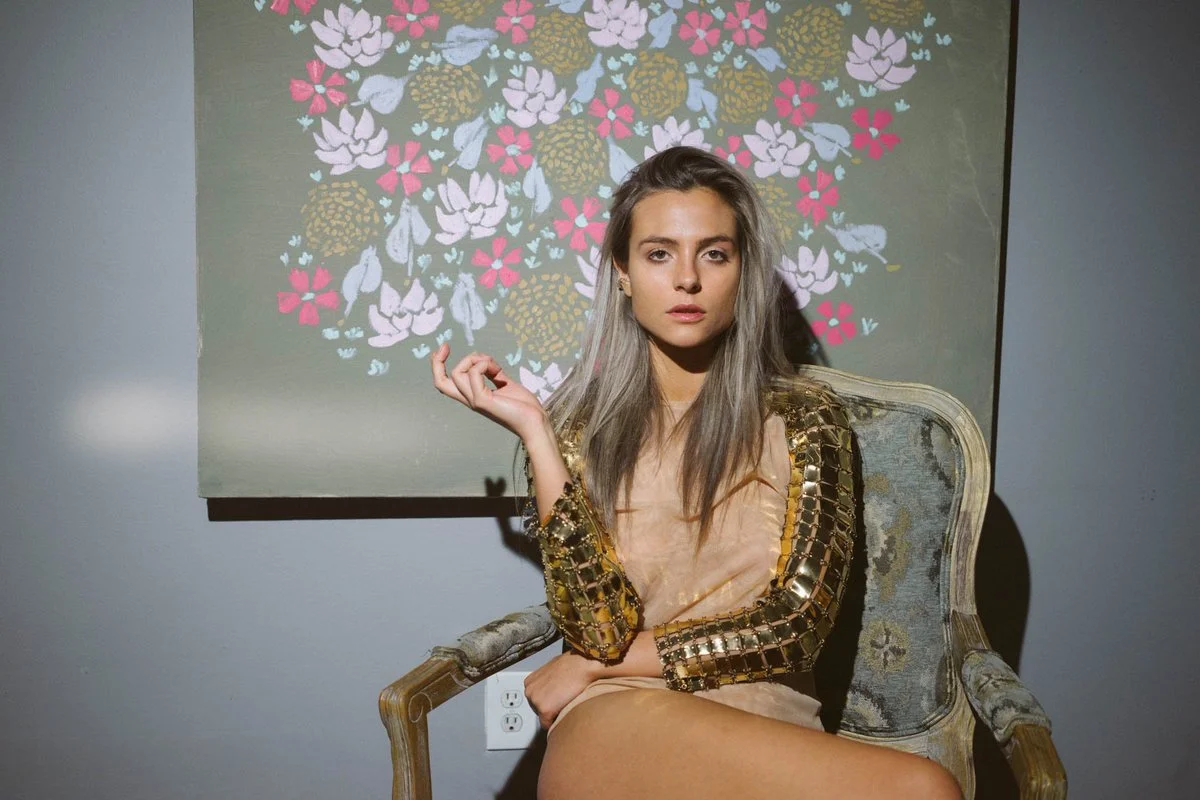
What themes did you set out to explore with Braid and how much of yourself is reflected in the final product?
Themes of existentialism, philosophical pondering, semiotics, perception of reality, time and the realms of dreams, how they affect our world: traveling through the layers of consciousness that we like to perceive as separate, are yet at once intertwined; fantasies, memories, hallucinations, daydreams all braided into one, finding us stuck, tangled and strangled in this deadly mind fever. There are parts of me in all three characters, their delusions, their wandering minds, their violent passions, their psychological manipulation, their decadence.
Braid in the end is a form of cautionary tale, a psychedelic odyssey without an exit that warns us how potent yet dangerous dreams can be, how easily they can enable us and how quickly they can trap us in the walls of our own heads: paranoia, fears, doubts, delusions, procrastination all live on the dark flip side of dreams and imagination. Being paralyzed by fear is like being stuck in a recurring nightmare. And that is made up, just as much as any other dream that can propel anyone to their rosiest futures. But here comes the element of time: in dreams time slows down. Braid warns you not to dream for too long without taking action or by the time you wake up it might be too late.
Braid was the first film fully funded by cryptocurrency. Can you tell us a little about how you decided to fund in this fashion and how exactly it works?
I didn’t have the connections to get financing from a studio, nor did I want to use crowdfunding platforms that did not offer a return to contributors. I also wanted full creative control of the movie and needed final cut. The tokenized world is full of intelligent opportunities for alternative funding, I think it’s really great for independent artists: I partnered up with the CEO of Consensys, a leading blockchain tech company through which we created a crowd-selling platform for the film that offered 30% of the net profits in exchange for 1.7M to be raised in two weeks: our investors will be the first ones to be refunded and receive an additional 15%.
The reason why we used cryptocurrency is because of its underlying technology, the Blockchain: it is peer to peer technology that enables smart contracts at every transaction, these are also known as “if… then” contracts, which means that if the investment generates profit, then the investor will automatically receive their share. The sale started in June 2017 and it was fulfilled by our deadline. We were in production for 5 weeks, post production for 6 months and premiered at Tribeca Film Festival in April 2018. The film was released in theaters nation-wide in February 2019. World-wide rights were acquired by Blue Fox Entertainment.

What's the biggest surprise about making your first film?
My biggest surprise was how glorious being on set was. It is the most testing yet blissful experience, being on this fantastical journey with a group of people that becomes your family by having a shared lucid dream in mind, all working within this sensorial orchestra together. The artistic process is a miracle; out of nothing, suddenly, everything.
What advice would you give to an up-and-coming filmmaker looking to make their first feature?
My advice to a first time feature filmmaker would be to make the movie about what doesn’t let you sleep at night. Whether it is uplifting or terrifying, the motif behind the story has to be so invincibly important you will do anything to make it happen. Countless things will get in your way, countless sacrifices you will have to make and even after it’s done and out into the world there are chances that it will be misunderstood, berated, insulted and inevitably dissected without you being able to utter a word about it, and people will make what they want of it. But it will also shake some people from the bottom of their souls and that’s when it all pays off: when you make another human being feel less alone. Storytelling is about community, it’s to make us all feel closer, and you as the artist must show your wounds in order to heal them.
Braid is now available on VOD across all platforms: iTunes, Amazon Prime, Vudu etc.
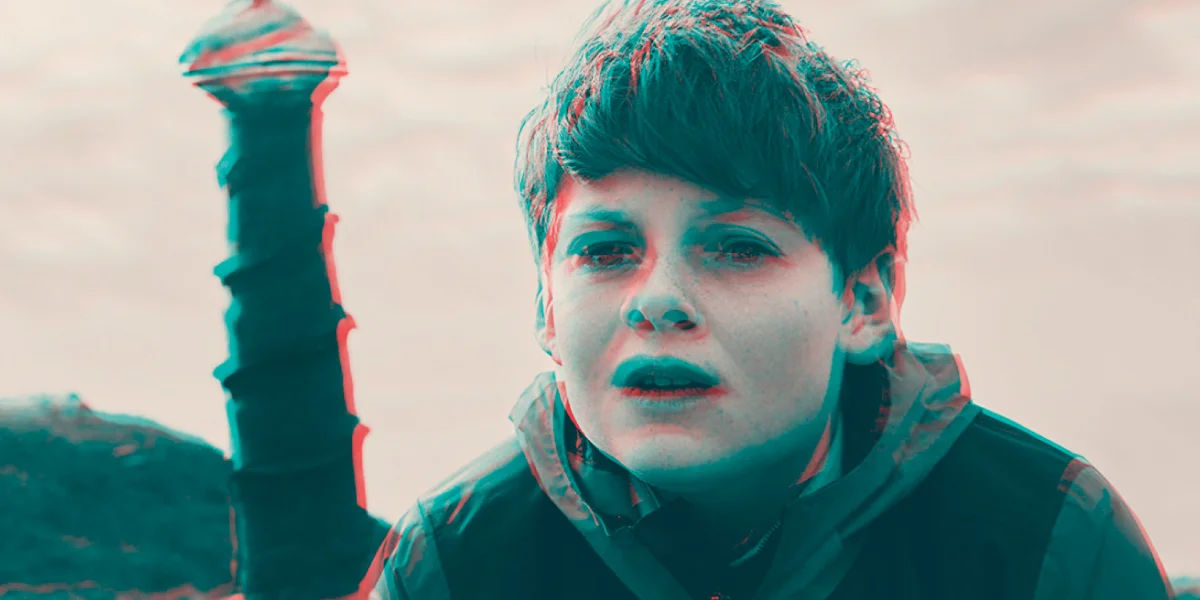
The Kid Who Would be King and Remembering how Fun Movies Used to Be
The Goonies, Stand By Me, E.T. The Extraterrestrial. These are all the films that I couldn’t stop thinking about as I watched writer/director Joe Cornish’s latest film, The Kid Who Would Be King…
The Goonies, Stand By Me, E.T. The Extraterrestrial.
These are all the films that I couldn’t stop thinking about as I watched writer/director Joe Cornish’s latest film, The Kid Who Would Be King. This story owes a lot to those classic 80’s adventure movies, and I certainly think that’s a good thing. There’s a reason those stuck in the minds of an entire generation. I should be honest though. I was born in 1991, so that generation isn’t even mine. Luckily for me, I had three very cool older siblings who did in fact grow up in the 80’s, so I was introduced to those stories at a very early age, and I watched them over and over and over again growing up. Clearly, they made quite the impact on me since I’m still talking about them twenty years later.
After seeing Cornish’s directorial debut, Attack The Block, back in 2011, I was delighted to find another talented British director with an eye for action and cinematography, in the same vein as Edgar Wright. That film was one of the more unique debuts I’ve ever seen. A VERY British film about a small gang in South London fighting off an alien invasion is quite the statement to make in your very first feature. To his credit, it’s incredibly entertaining and a must see for any fan of that sort of story. Cornish certainly likes his genre films. Science fiction, fantasy, and adventure are his clear calling cards. He’s also written a few solid films in the years since Attack (Ant-Man and The Adventures of Tintin), but this modern retelling of the Arthurian legend is a return to form for him.
There’s just something pure about a movie like this, especially when the child actors are actually good. The titular “Kid” is played by Louis Ashbourne Serkis, son of the very talented Andy Serkis, and he really brings it. Like those first movies I mentioned, think of Mikey, Gordie, and Eliott. Each of those main characters had something in common, and Serkis’s Alex shares whatever that thing is. Good-hearted, brave, and a little shy; something about that sort of character makes me feel like a kid again, and that is one of the highest compliments I can give about a movie like this. The unifying trait among all those great characters is a simple one, I think. They all had a sense of wonder that is still so relatable to me even today, as a twenty-seven-year-old. They embraced the fantastic and weird and ran with it, and that always stuck with me as a kid.
So many of today’s films lack that same sense of wonderment that made those past films classics. While I understand wanting your protagonist to be sarcastic and cynical, it feels like many films rely on those quippy one-liners just a bit too much sometimes, especially in films geared towards kids. There’s something to be said about the sense of curiosity and adventure that seems to shine through in films that make an effort to do so.
Like Attack, the visual effects really look great in this one. The skeleton knights with flaming swords definitely looked like how I’d imagine skeleton knights with flaming swords to look! I joke, but they legitimately would have scared the shit out of me as a kid, and I would have loved every second of it. They reminded me of the first time I watched Jurassic Park waaaaay too early in life. Fear and excitement go hand in hand, even as a kid.
In the theater, I kept hearing the voices of kids, laughing and occasionally screaming. Normally, as a moviegoer, that would be annoying and frustrating. Silence is golden, of course. However, this time, I understood it. Had I seen Jurassic Park or The Goonies in theaters, I would have been the most annoying kid in the whole theater. I couldn’t help but smile for most of the two hour runtime.

The true highlight of this film is Angus Imrie, the young actor who gave what (I think) is my favorite portrayal of Merlin I’ve ever seen. He just infuses it with so much weirdness and even though most of that credit goes to Cornish himself for writing it that way, Imrie really stood out above everyone. Also, shout out to Patrick Stewart, who plays the old version of Merlin, because who doesn’t love Patrick Stewart?
I don’t have kids, but if I did, I’d take them to see this movie, and hopefully it would make the same impact on them that those other films had on me. Good movies like this that are made for a very specific type of kid are pretty rare, and I would love to see more of them created. Kids are getting harder and harder to impress with each new piece of technology that comes out, so I’d be interested to see what kind of storytelling techniques writers start using to keep them entertained and interested throughout. I shouldn’t speak as if I’m any better. I can barely read for longer than ten minutes!
Overall, The Kid Who Would Be King is an immensely enjoyable popcorn movie that should entertain any kid, as well as plenty of adults like me. See this one.
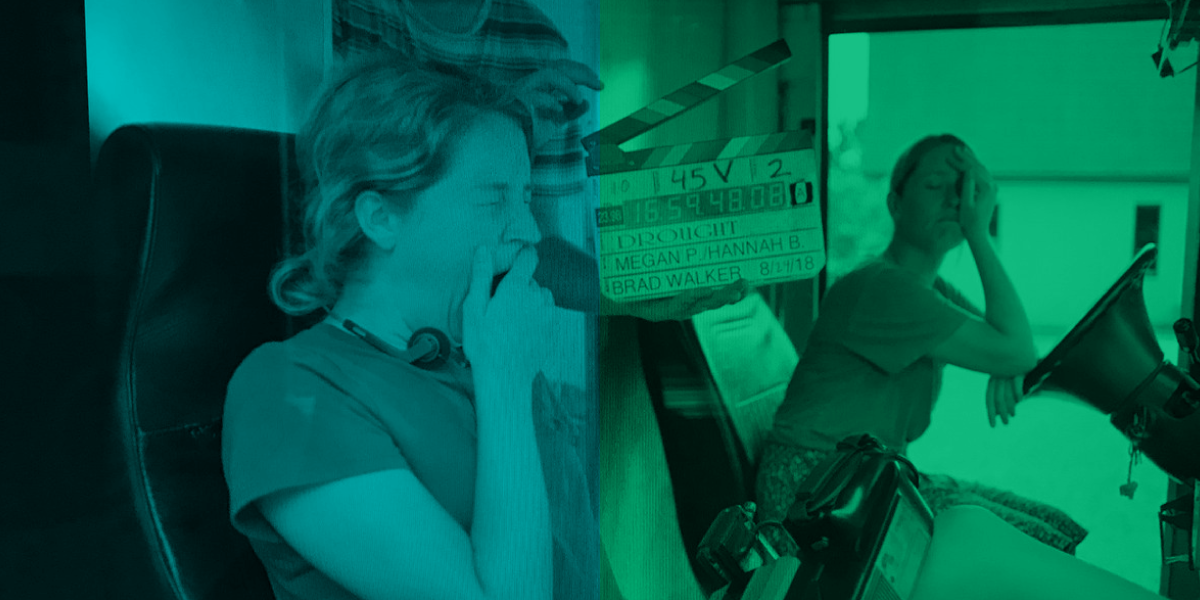
How Hannah Black and Megan Peterson got their First Film Produced by the Duplass Bros.
“Raise funds for your feature? Gain an audience? Oh...and potentially have The Duplass Brothers executive produce? Heck yes!”
I first discovered Megan Peterson and Hannah Black while prepping for the This World Alone crowdfunding campaign. Megan and Hannah had (very) successfully funded their first feature, Drought, and we passed around their fundraising video to show everyone what a great fundraising video could be. As we continued to follow along with their journey, we were happy to learn that you couldn’t find two harder working, kinder, and more accessible filmmakers in the business. Their hard work paid off when Drought was chosen as the winner of the Hometown Heroes contest which brought on Mark and Jay Duplass as producers. Drought is currently in post-production and should be hitting the festival circuit in the fall.

Tell us a little about Drought!
Megan: Drought is a feature length film about a girl, Sam, her brother Carl, best friend Lewis, and estranged sister Lillian that find themselves on a crazy adventure to chase a storm. Carl is on the Autism spectrum & obsessed with weather, but their small town is going through a drought. All he wants is to chase a storm he is predicting. The gang ends up together on a fun adventure mixed with learning about forgiveness and the importance of family.
How did did you guys first meet and how did this big journey all this come together?
Megan: Hannah and I met in a Meisner class 5 years ago at Actor's Arsenal, an acting studio in Wilmington, NC. During the 2 year program, our acting coach, Ron Fallica, showed us Mark Duplass' SXSW talk encouraging filmmakers to make movies on the weekends with friends. So we did that!
Hannah: Megan and I had created a couple of short films and discovered that we complemented one another very well. We enjoyed and respected what the other person brought to the table and had a blast working together. She's pretty much the best! Shortly after wrapping a short film in the summer of 2015, I came to Megan with the story of what would later be, Drought. Our visions completely aligned and we quickly realized that the story deserved a longer format.
Megan: We would meet and structure the story on Tuesdays, Hannah would write and send me 5 pages a day, and in a month we had a first draft.
Hannah: We were so jazzed that we had a real life feature film in our hands that we were ready to make it on the spot. Thankfully, two of our very good friends read it over and encouraged us to keep tweaking it and make it the best it could be. We are so grateful for them and their advice because the first draft was bad... like really bad. Megan and I would meet to discuss story, I would go back and re-write a draft... and re-write again... and again.
Megan: Fast forward three years and 7 1/2ish drafts later, we were ready to make the film but didn't know how it would all come together.
Hannah: We had no idea how to make it, let alone get the finances. Just when we were about to shelf it, Seed&Spark made an announcement that they were doing a Hometown Heroes Rally. Raise funds for your feature? Gain an audience? Oh...and potentially have The Duplass Brothers executive produce? Heck yes!

And all those “potentialities” came true! You guys successfully crowdfunded your movie and now have the Duplass Brothers on as producers! How did this happen?
Hannah: Its absolutely insane right?!! We are still pinching ourselves.
Megan: We still can't believe it but it is true!! It's a pretty crazy story. In the summer of 2017, Hannah texted me a No Film School article titled "The Duplass Brothers Want To Fund Your Feature." Her text only included the article & 13 exclamation marks.
Hannah: Like I said, we were ready to shelf Drought. We had no idea how to get the finances we needed. Megs and I have always looked up to Mark and Jay Duplass and had naturally taken their way of filmmaking and implemented into our own movie making style. When we saw that Seed&Spark was doing the Hometown Heroes rally with a chance to win the Duplass Brothers as executive producers, we quickly got to work.
Megan: The Hometown Heroes Rally focused on encouraging filmmakers to create their stories in their own towns with local casts & crew, which was exactly our hope for Drought. With 6 weeks to get all of our material together, we entered the rally, meaning we would run a crowdfunding campaign for 30 days.
Hannah: Crowdfunding was the hardest thing we had ever done. It is a full time job and with a tiny team of two, we were working 12 hours a day on the campaign and then had our normal day jobs. Together, we lost 20 pounds in the one month of crowdfunding. However, Seed&Spark really sets you up for success to raise all your funds and provides you with all the education you will need to run a smart, concise, and clear campaign. This is not a plug by the way. Seed&Spark really is the best. If you are filmmaker and need to raise money, use them! They are kind and work so hard and are changing the game of independent filmmaking.
Megan: To qualify to pitch to the Duplass Brothers, we would have to raise our funds of $24K & be in the top 10 out of 73 teams with the most followers. At the end of the competition we had accomplished those two things and had the opportunity to create a 30 second pitch video (yes, only 30 seconds?!!?) that the Duplass team would watch along with the other qualifying team pitches. Then on Nov 4, 2017 we gathered with our close family & friends to watch the LIVE announcement of the winners. When Mark announced that Drought had won the Executive Producer-ship & a 25K no-interest loan, the room erupted with an energy we had never felt. Then we were on our way to make our movie with them on our team and double our original budget. It was, and is, unreal!
Hannah: We still cry about it.
Is this a personal story for you? How much of your own life or personal emotions ended up in the film?
Hannah: Drought was originally inspired by the students I used to teach who were on the Autism spectrum. These kids were pure joy and magic to me. The way they look at the world and the unique gifts they brought to the classroom were inspiring. Some of my students had siblings and to see their bond was so special. I really wanted to highlight that particular sibling relationship. However, as drafts progressed I also realized that Drought had also become a love letter to my sister; who is different than me in every way, and to anyone who has a sibling that they love and so desperately want to understand.
Megan: I believe every story you create has a touch of your personal life & emotions on some level. The theme of the movie is very personal to me. Growing up I wanted to fit in and find my place but I was given the label as the "shy girl" or the "nervous girl". I took those labels as less than. My hope through the film is that people will realize no matter the label you have been given, or have given yourself, you are more than that. Our differences make us wonderful and unique and appreciating that about each other will change our perspective for the better.
You guys co-directed Drought. How is the process of directing with another person? How do you divide up responsibilities?
Hannah: It was an absolute dream. I say this because Megan is an incredible human. The fact that I was able to collaborate with her and go on this journey together has been one of my greatest gifts in life. We are complete opposites but really respect and value what the other person brings to the table.
Megan: For me it is wonderful! Especially because we are wired so differently in personality strengths. Where I lack in something, Hannah can come in and fill that gap, then vice versa.
Hannah: We divide a lot of responsibilities depending on what we excel in. I know what I suck at and it is almost always what Megan can do with natural talent and grace.
Megan: We are also actors.
Hannah: On set, we were both playing leads while also directing. Whoever was not heavy on acting in the scene would usually take the lead in directing.
Megan: It is nice having a co-director when you are in a scene and they are able to take over the director role for that moment. The pressure feels less since you know that you have a teammate in the same role that you can pow-wow with to make decisions together.
Hannah: And if you are wondering, yes, we are jealous of one another's gifts and simultaneously cheering each other on.

What's the one thing you know now that you wish you knew before you started making the film?
Megan: You do not need to be and should not be responsible for everything. Holding all the responsibility for everything puts tremendous pressure on you and isn't healthy for you and the people around you. That is why you create an awesome team! You can share responsibilities and give full ownership to your crew. Once you do that and let them do what they are there to do to their fullest, you are free to focus on what you are there to do. It creates a really healthy working environment and brings in more creative people to the mix leading to a better product. This is challenging in low budget filmmaking as each person carries the weight of multiple jobs. We created an open space for dialogue for ourselves and crew to express if they felt they were taking on too much or not being given freedom to do their role. (Also, Hannah had full permission to call me out on things like not feeling responsible when the grip truck was stuck in sand because we had three fully capable crew working on the solution).
Hannah: I wish I would have known that you don't have to be an expert at everything. I really struggled with feeling incompetent if I did not know how every single thing worked. It could become a downward mental spiral if I saw everyone around me buzzing around set knowing exactly what to do. Imposter syndrome at its finest my friends! But that was on me. That is why everyone has different roles on set. It is okay to say you don't have an answer or do not know how to do everything. Celebrate the things you excel at and laugh at the things you struggle with.
What advice would you give to a young filmmaker just starting out with the dream to make a movie?
Megan: It's ok to start small. Make a one minute short film on your phone. Find a partner in crime. Someone who is there to encourage you, challenge you, collaborate with you. They don't even have to live in the same town! Be prepared for the process to feel like a marathon at times and then turn quickly into a sprint. You can go to film school, but you don't have to. We didn't. However, spend time everyday to work on your craft. We have been in classes for years and study the art of filmmaking with all of the amazing resources technology brings us.
Hannah: Find your people to collaborate with. Study all elements of filmmaking. If you are a director, take an acting class. It’s important to understand the role that each person brings to set so you can encourage and support them.
Megan: Most importantly, don't give up. It is a really tough industry but it is possible and you can accomplish your dreams.
Hannah: Above anything else, be kind.
To learn more about Drought and Megan and Hannah’s journey, check out @droughtthemovie wherever you lurk on social media!

Can There Really Be “Only One?”
“Aye, yo. You see that new movie?” I’m sitting in a cubicle staring at a screen for a job I’m grateful to have but slightly depressed because of. “It’s crazy! You gotta check out this trailer.” …
“Aye, yo. You see that new movie?”
I’m sitting in a cubicle staring at a screen for a job I’m grateful to have but slightly depressed because of.
“It’s crazy! You gotta check out this trailer.”
My co-worker, an older black lady with a thick New York accent is really interested in a trailer she herself had just been told about. Honestly, by this time everybody in the office is abuzz about it. They’re abuzz because the internet is abuzz.
Everybody is talking about this film.
“It’s your type of thing.”
My type of thing. This movie on the horizon was the type of movie I told her I always wanted to make; the type of film I was currently writing. It’s a genre film, with social commentary, and features people of color. It’s exactly the type of movie I planned on making, only somebody else already is.
That’s... great...?
The movie in question is Get Out, the first feature from Jordan Peele. At this point Peele is primarily a comedic actor best known for being one half of the titular duo Key & Peele (as seen on Comedy Central).
This film, however, is no comedy. It is instead a psychological thriller/horror that puts a satirical lens on an interracial couple as the black boyfriend goes to meet his girlfriend’s white parents for the first time.
Exactly the movie I wanted to see more of. So why this feeling? This feeling where my anxiety’s get closer while my dreams feel further away like a Spike Lee dolly shot. Why is my heart sinking like Catherine Keener stirred her tea cup?
Could it really just be that this movie shares a similar DNA to a project I’ve been writing? But it’s the American film industry. Duplication isn’t just possible, it’s considered best practice here. Studios hunt to find movies that match other successful movies, sometimes even producing a near replica of a film being produced by another studio at practically the same time.
So what’s different?
Hi, my name is Profound Clarke and I’m a black aspiring filmmaker. Yeah, things are different.
When you’re a black artist with an interest in exploring “white” spaces (ie things that don’t lean heavily on previously accepted cultural stereotypes for whatever non-white group you fall into), there’s a Highlander “there can be only one” element to your aspirations. At least, I’ve found, that’s how my anxiety works. I’ve also found I’m not alone.
With the opportunities few and success stories fewer, when you have an idea that hasn’t been explored yet, you know the chances of it getting made are slim. Something like it being made twice? Nearly unheard of, not in any authentic way at least.
There’s only one Spike Lee. Only one Robert Townsend. Only one Keenan Ivory Wayans. Only one... um... who did the Color Purple? White guy? Who did People Under the Stairs? White guy too? Who did Redbelt? OK, I added Redbelt in there because I love it so much, but also a white guy did that, right?
My point is that the industry seems to find a black person to whom it gives trust. By find, I really mean notice after they clawed out an undeniable lane for themselves. Other creators in that lane then seem to fall into a blindspot.
Only Spike makes Spike movies. Keenan Wayans and Robert Townsend both made comedies but they lived in different spaces. All three got to take big chances with what they were doing, but the next Spike Lee, Townsend, and Wayans wouldn’t exist for decades. Not to discount the handful of directors, black directors, doing good work in areas that audiences expected black characters to live, but to venture beyond always meant to be part of a short list.
This brings me back to Get Out, which I love. Love isn’t the word. I however Kayne feels about Kanye this movie. Yes. That’s a perfect fit. I all the way Kanye on Kanye this movie. All the adulation. All the troubled feelings. All the hating the way I feel about it. All the “I’m going to tell the world how in love with it I am” to hide how uncomfortable with it I might be” shining through.
Jordan Peele, a fellow New York native with a similarly weird brain and love for genre films, wearing skin darkened by black parenthood lightened by non-black DNA (his case: white, my case: all-of-the-cases) has lead me lower than my lowered expectations. What’s the value of a painting portraying another angle of Mona Lisa?
That question should be rhetorical, but guess who wants to know?
Jordan Peele.
Not long after delivering on the promise of his first film, Jordan Peele became a trusted voice in the industry, launching Monkeypaw Productions. One of the first things they said before they even had a functional website up? We want your scripts.
Jordan Peele, like most people of color, understands the journey my brain went on. He himself admits to not thinking his own film would ever be made. Now he’s creating opportunities for more films like his to be made. It was Monkeypaw that partnered with the aforementioned Spike Lee to make BlacKkKlansman at a time that Spike was self financing his films.
At the same time, a new group of bold filmmakers continued to claw their own way up into the industry spotlight. Filmmakers like Ava Duvernay, Ryan Coogler, and Barry Jenkins. They too are defying industry logic about what films featuring black characters are capable both on the page and at the box office.
What I’m getting at is that things are looking up for people of color like me with an interest in creating stories beyond what is expected of us. The most exciting part is that these great and ambitious filmmakers aren’t just cutting new paths, but supplying the tools for those of us who want to cut our own paths.
So no matter what happens with my project, the feeling like it won’t get a chance to coexist has settled a bit. Hopefully one day I too can join my favorite filmmakers in this tradition of calming the restless waters stirring inside a hopeful minority artist through my own success and the doors success opens. That’s a journey with much traveling left to do. For now I can worry about more conventional writing anxieties like finishing drafts, creating tension throughout the 2nd Act, and convincing my mother to listen to a 100 page read through for feedback.

Make Good Art
“Whatever you do, you have one thing that’s unique. You have the ability to make art.” - Neil Gaiman
"Remember whatever discipline you’re in, whether you are a musician or a photographer, a fine artist or a cartoonist, a writer, a dancer, a singer, a designer, whatever you do, you have one thing that’s unique.
You have the ability to make art.
Sometimes life is hard. Things go wrong. And when things get tough, this is what you should do:
Make good art.
Husband runs off with a politician? Make good art. Leg crushed and then eaten by mutated boa constrictor? Make good art. Cat exploded? Make good art. Someone on the Internet thinks what you’re doing is stupid or evil or it's all been done before? Make good art.
Probably things will work out somehow, and eventually time will take the sting away, but that doesn't even matter. Do what only you can do best. Make good art."
- Neil Gaiman
We believe that movies should reflect reality—including all shapes & sizes, genders, ages, and ethnicities—both in front of and behind the camera. Come share your art with us at http://www.mirrorboxfilms.com

February's Theme: "Beginnings"
The thing about beginning anything is IT’S TERRIFYING. And no one really tells you that. You assume that after you create something enough times, that the fear goes away. But unfortunately it...
So this is it… the beginning.
For me, it’s the beginning of a brand new production company that’s about to start pre-production on a brand new film and launching a brand new website with the goal of helping others begin their own artistic journeys.
And the thing about beginning anything is IT’S TERRIFYING. And no one really tells you that. You assume that after you create something enough times, that the fear goes away. But unfortunately it does not. I’m scared to death every single time. Anything that’s worth beginning is big and giant and ambitious and I often begin to doubt and ask “am I worthy of big and giant and ambitious?” And the answer is a big and giant and ambitious “YES!,” not because I’ve accomplished enough to earn this, but because I am a human being with a unique point of view on the world and a desire to create that is deep-seated within me. And I’m not the only one.
I believe that you have a voice. You have a unique point of view. You have a deep-seated creative desire within you. You have a story to tell. You are worthy of big and giant and ambitious things. And the reason I’ve created this website is to inspire you to begin, provide you with motivation and advice to keep going, and give you a platform for your art when you’re done.
So, what is your “what” and what is your “why?”
The key to any beginning is clarity. You need to know where you’re going in order to get there. But the “what” is easy, right? You probably have a good idea already of what excites you and is buried inside of you dying to come out. Maybe when you were little you loved drawing, but gave up on it over the years as you felt you could never live up to the idea in your head. Maybe you’ve always loved to act but felt dejected after not getting a part in the first play you tried out for. Maybe you’ve got a drawer full of poems but you’re too afraid to put them out there. There is a creative urge deep inside of you. Take a moment and listen for it.
What is the thing that lights you up whenever you do it, the thing that you think about when you’re away from it, the thing that lifts you out of your slump. THAT is your what.
The “why” is equally important. Because here’s the thing about letting your art out—you will face resistance. It will come in the form of rejection, artistic blocks, being too busy, the world will throw anything and everything at you to discourage you, but your WHY is what’s going to keep you going.
For me, my “why” came at a dark moment in my life. I had a short-lived over-before-it-really-began screenwriting career, I was a divorced single dad, and my best friend had passed away. I was struggling financially, I was struggling creatively, my entire life felt like a struggle. And then I had lunch with a friend named John who happens to be the father of the aforementioned best friend. John told me he became a pastor after the loss of his son so he could help others who have gone through similar situations. He took something so incredibly painful and used his passion and skills to connect with other humans. And over the course of this lunch he helped define my what and my why. He said “the reason you are on this earth is to take your passion (my “what”, in this case writing) and use your experiences (my “why”, my pain and struggle) to connect with others.” And after that lunch everything changed. And that “why” has kept me going through each new beginning ever since.
It’s not enough to know what you want to do creatively, you need a why to keep you going through the dark times. Your “why” is your purpose, your meaning, the thing that gives you your unique voice. No one else shares your "why” because no one has lived your life. If you’re brave enough to share that voice with the world honestly, you will connect with other humans, you will live up to your purpose, you will create unforgettable art and change the world.
Over the next few weeks, we’ll be posting about other creative beginnings, whether that be talking about our first filmmaking experiences, the first time we saw ourselves on-screen, or our very first movie memories.
As you follow along with our beginnings, we’d love to follow along with yours. Share your dreams and passions and journey below!

We Need Your Voice
Fill out the survey below and you’ll be entered to win one of two Fandango gift cards! ...
We want to build a new kind of movie company. We believe that movies should reflect reality—including all shapes, sizes, genders, ages, and ethnicities—both in front of and behind the camera. We need your voice to make sure that happens.
Fill out the survey below and you’ll be entered to win one of two Fandango gift cards!
CLICK HERE to take the survey!
The Mirror Box Manifesto
Mirror Box Films is a production company started by me (with the help of friends way more talented than me) in order to “build community around genre film that reflects humanity”. Basically, I wanted to make fun and beautiful things with fun and beautiful people in a world where fun and beauty are severely lacking. So here we are...
“That’s what great artists do. This is what great people do. They ask it. They say it. They express it. They put in words what so many other are thinking and feeling and wondering. They affirm that you aren’t the only one having this experience.” // Rob Bell
Mirror Box Films is a production company started by me (with the help of friends way more talented than me) in order to “build community around genre film that reflects humanity”. Basically, I wanted to make fun and beautiful things with fun and beautiful people in a world where fun and beauty are severely lacking. So here we are.
So, what’s with the name Mirror Box?
Well, let’s take a detour real quick into the world of SCIENCE! Once upon a time a neurologist named V.S. Ramachandran was studying the phenomenon of phantom limb pain. You know, like when someone loses a hand, except it feels like the hand is still there and in pain, but they can’t reach it to massage it or lesson it. The hand, even though it’s no longer there, is causing the amputee extreme pain. (I know what you’re thinking — “I have emotional phantom pains all the time” — we’ll get there).
Ramachandran invented something called a mirror box, which is this really simple box with two holes cut into one side and open on the top with a mirror down the middle. The idea is that you put your amputated arm into the hole on one side and your still-existing hand in the other, with it being reflected in the mirror. From the amputee’s point of view, they see that they have both hands intact. So, Ramachandran would ask them to ball their hand up into a fist, so it would look like both hands were balled up. And then release . . .
And the craziest thing would happen: The pain would go away.
This is exactly great storytelling does. This is what great films do. When people see themselves (with all their pain and struggle — their “emotional phantom pains” — told you we’d come back to it) reflected honestly in art, they are able to heal.
This is why we make movies. It’s not about finding answers: it’s about knowing that we aren’t alone. That’s all it takes to heal: community and empathy and understanding. And we believe that film does that better than any other art form.
In fact, we believe a lot of things. As I mentioned before, our goal is to “build community around genre film that reflects humanity.”
Here is the why and the how and the what of all that:
BUILDING COMMUNITY
We believe in putting people over product and that art without community is empty.
We believe that the walls between those that create art and those that consume it should be torn down.
We believe that film exists to bring people together, to open minds, and build empathy.
AROUND GENRE FILM
We believe that “genre films” (horror, sci-fi, fantasy) give us a unique window into the world through allegory that traditional storytelling can’t.
We believe that fans of genre film long for a deeper connection to — and to be challenged by — their entertainment.
We believe that genre film is best used as an opportunity to connect to deeper, more human truths, not as an excuse to escape reality.
THAT REFLECTS HUMANITY
We believe that movies should reflect real life—including all shapes & sizes, genders, ages, and ethnicities—both in front of and behind the camera.
We believe that lives are changed when movies reflect honest emotions and experiences on screen.
We believe that everyone has a story to tell.
Practically speaking, we’ll do all of the above by making fun and beautiful movies that you’ll love and want to connect with your friends over while drinking beer late at night. But we also want to give YOU an equal platform to showcase your art. Stay tuned and follow along. We’re gonna change the world together.