
Jason Schneider Explores His Identity as a Filmmaker with a Limb Difference in "Despite the Loss"
Jason Schneider has edited documentaries for ESPN, PBS, several NY Emmy nominated television series, and now he’s released his directorial debut, Despite the Loss. The film helps spark a conversation about the way we look at limb difference and disability in society, all while highlighting what the bumpy road to self acceptance looks like.
Jason Schneider has edited documentaries for ESPN, PBS, several NY Emmy nominated television series, and now he’s released his directorial debut, Despite the Loss. The film helps spark a conversation about the way we look at limb difference and disability in society, all while highlighting what the bumpy road to self acceptance looks like. Through personal accounts, interviews with the people who know him best, and profiles from a diverse group of amputees, Jason dissects and re-frames his life, intertwining the trials and tribulations of building a race car with his personal journey for self acceptance.
I reached out to chat with Jason about being a filmmaker with a limb difference, the obstacles he’s faced along the way, and the creative ways he’s exploring distribution in today’s indie-film world.
Tell us a bit about your background. How'd you first get involved with film?
I've been interested in film for as long as I can remember, and begged my parents to buy me a PXL- 2000 for Christmas when I was around eight or nine years old (a video camera made by Fisher Price that used audio cassettes to record grainy B&W video). I used to make movies with my friends while growing up in Queens, NY and fell in love with the art of storytelling. As I got older, a career in film and television just felt like some impossible dream to me so I didn't pursue it. I went straight into the workforce after high school and worked various retail jobs, as a mechanic for a bit, then got involved in the restaurant business through a family friend.
I've always been a hard worker and worked my way up from dishwasher to part owner of a small restaurant by my early 20's, but I was miserable. The restaurant business is a tough gig with lots of long/grueling hours, and I had zero passion for it. I felt like I was wasting my life, and decided if I was going to work this hard it should be for something I was truly passionate about. So I walked away from the business (lost everything) and decided to enroll in college for film. I graduated in 2005 and have been working in the industry as an editor ever since.
Where did you first get the idea to do Despite the Loss and how did it all come together?
I've been building and racing cars as a hobby since I was a teenager. My dad was a mechanic so it was something I grew up around and had a lot of passion for. I'd been working as a documentary editor for a few years and would chat with colleagues about the cars I was building on the weekends. They would always say, “That would make a great documentary!” But my response was always, “Why?”
I never really thought about the fact that I was building and racing cars without a right hand, because at that time I didn't want to be associated with having a disability or be labeled different in any way. I also had no desire to be on camera, and really didn't feel like what I was doing was all that special, so I would just dismiss the idea.
A few years went by and I hit a rough patch in my career where I wasn't very fulfilled by the work I was editing. I thought maybe it would be interesting to try directing, as a way to take control creatively. I never liked the way people with disabilities were portrayed in cinema (a feeling I would later learn could be described as “inspiration porn”), and had the idea to profile other people with limb differences pushing the limits of their “disability” so to speak. I wanted to tell these stories as authentically as possible without sympathy or turning them into “inspiration porn.”
We borrowed a camera and a friend and I shot some test footage of me working in the garage on a classic Mustang I'd restored. Literally just to get a feel for the kind of look we wanted before our first official shoot. I told a few anecdotes about my childhood post accident just to pass the time while filming. When I cut together that footage as a proof of concept and started showing it to people, the response was universal, “You need to be in the film!” But I still dismissed the idea.
We started filming that summer with a double amputee mountain climber named Jerod, and I was taken aback by how much we had in common–our thought process, the way we looked at the world, our attitudes towards “disability”–it was incredibly eye opening for me because up to that point I had not known or associated with any other amputees. I started to realize there was merit in examining the common threads we (amputees) shared, and that's when the film's tone began to shift.
You mention that your goal with the film changed as you were filming. Can you talk about that a bit?
Most documentary editors will tell you that the real story of a film often emerges in the edit. And thankfully because of my background, I was editing footage almost immediately after shooting it. Without giving too much of the story away, I realized my original concept wasn't working, and in a moment of desperation turned the camera on myself. That impromptu interview brought a lot of the deeper questions I explore about limb difference and disability in the film to light.
I realized through that interview, conducted by someone I reveal later in the film, that I had buried a lot of issues stemming from the loss of my hand and never properly dealt with them–the way I looked at myself, how I thought the world looked at me, and the stigmas associated with disability. The interview sort of opened up pandora's box, and watching myself talk about those issues on camera, in a quasi third person kind of way, was a pivotal moment. I just knew I had to explore it further, however painful it was. That's when the real story of the film started taking shape.
What do you hope people walk away with after seeing the film?
I think I would answer this question differently depending on who I'm talking about.
For able bodied people, I'd like them to walk away with the understanding that they should treat people with limb differences as people first, and appreciate that we're just trying to live our best lives and make our own way in the world just like they are; that we do not need, or deserve, their sympathy; that our stories matter, and shouldn't exist solely as inspiration porn to make them feel better about their own life.
For people who are limb different but don't self identify as disabled, I'd want them to walk away knowing there's nothing wrong with that. Language is an incredibly personal thing, and everyone has a right to identify as they see fit. The same respect and understanding we demand from the able bodied community should apply to those with different viewpoints within our own community as well. But more importantly, I'd want them to know that they are not alone, and that there's an entire community of people that have gone through exactly what they may be going through, and it's ok to reach out to (and embrace) that community. I hope that the film can provide some comfort and guidance on their own path to self acceptance.
Talk a bit about your original distribution plan, the struggle of the film festival world, and how you're creatively working to solve some of the problems indie film is now facing?
Early on in my career I was fortunate enough to work with several veteran filmmakers and witness firsthand how the traditional path to distribution played out. The plan was always: apply to festivals, get into festivals, hope for a warm reception at said festivals–then sales agents and distributors would follow. As far as I was concerned it was the only legitimate way to go about it. So naturally when it came time to release my own film, I wanted to follow that same formula.
What I failed to realize at the time was that most festivals (as they exist today) are no longer geared towards independent creators. You need industry connections to get a submission taken seriously, and even then there's a slim chance (if any) for a film with a minimal budget by an unknown director to be selected. The circuit has basically been co-opted by studios looking to attach festival credibility (and free publicity) to their own mass market projects. It's a giant ponzi scheme.
I spent close to $2K on festival submissions from late 2017 through 2018. Out of 24 submissions, only seven festivals actually watched my film. Seven. The rest just took my money and sent out a rejection letter without ever watching the film. I could have dealt with rejections based on the merits of my submission, but to not even watch the film? It was a heartbreaking experience.
With the door closing on a festival run and no backup plan, I signed up for a distribution bootcamp that summer and gained some valuable insight into self distribution (although initially dismayed to hear about 75% of the panelists talk about how important festivals were to the process). Towards the end of the day one of the special guests said (paraphrasing), “I never count on festivals or distributors for my films. Why would you just hand over a film you’ve spent years of your life on, literally your baby, to a group of strangers in the hopes they promote and get it out there correctly?” This made total sense to me, especially given the deeply personal nature of my film.
I started researching filmmakers who'd had success with the self distribution model and formulated a plan based around that research. I ultimately decided against an independent theatrical release (as much as I wanted one) because of the substantial upfront costs involved and significant lead time required to secure theaters and generate enough publicity to make it worthwhile. Transactional Video on Demand (TVOD) felt like the best place to start, and I decided to go with Amazon Prime Video Direct, which allowed me to sidestep the expense (and 60-90 day turnaround time) of working with an aggregator, and get the film in front of a large audience as soon as possible. Because of my experience in post-production I was comfortable meeting Amazon's delivery specifications, but if you're not tech savvy, working with an aggregator may be preferred.
The beauty of starting with TVOD for me is that once the film premiered, it wasn't going anywhere. Traditional marketing plans call for very tight advertising windows geared around specific events–a theatrical run, TV premiere, DVD release, online launch, etc.–miss your advertising window (or even worse, have an unsuccessful campaign) and you may never break even, let alone profit. This can be a death sentence for traditionally distributed indie films, as distributors are quick to cut their losses and move on to the next project, leaving your film to languish in obscurity.
I can grow my audience slowly over time, try out different types of campaigns, and even build complimentary marketing strategies around the initial TVOD release, which is critical for an issue driven film like mine.
Phase two of my marketing plan involves reaching out to organizations with similar mission statements to try and engage the communities that might benefit most from the project, and I have several screenings in the works partnering with those organizations. Phase three involves the educational market, and I'm currently still researching how best to approach that.
What advice would you give to a documentary filmmaker just getting started on their journey?
The best advice I can give is to research every aspect of your project thoroughly, from pre-production all the way through distribution, and formulate a solid game plan before ever shooting a single frame of footage. Despite The Loss was my first feature, and I basically hit the ground running with a “figure it out as I go” attitude. In hindsight, the lack of preparation was a huge mistake on my part, and one of the many reasons why my film took eight years to make.
Having said that, trust the process and don't be afraid to improvise and modify your plan accordingly as new opportunities present themselves–it's just the nature of documentary. You'll encounter many challenges along your journey; the best filmmakers embrace those challenges and evolve accordingly.
Also, try not to spend your own money making the film. I nearly went broke twice, it's not fun.
You can check out Despite The Loss right now on Amazon Prime Video in the US and Amazon Prime Video in the UK, or find more information at DespiteTheLoss.com and following them on Facebook, Twitter and Instagram.
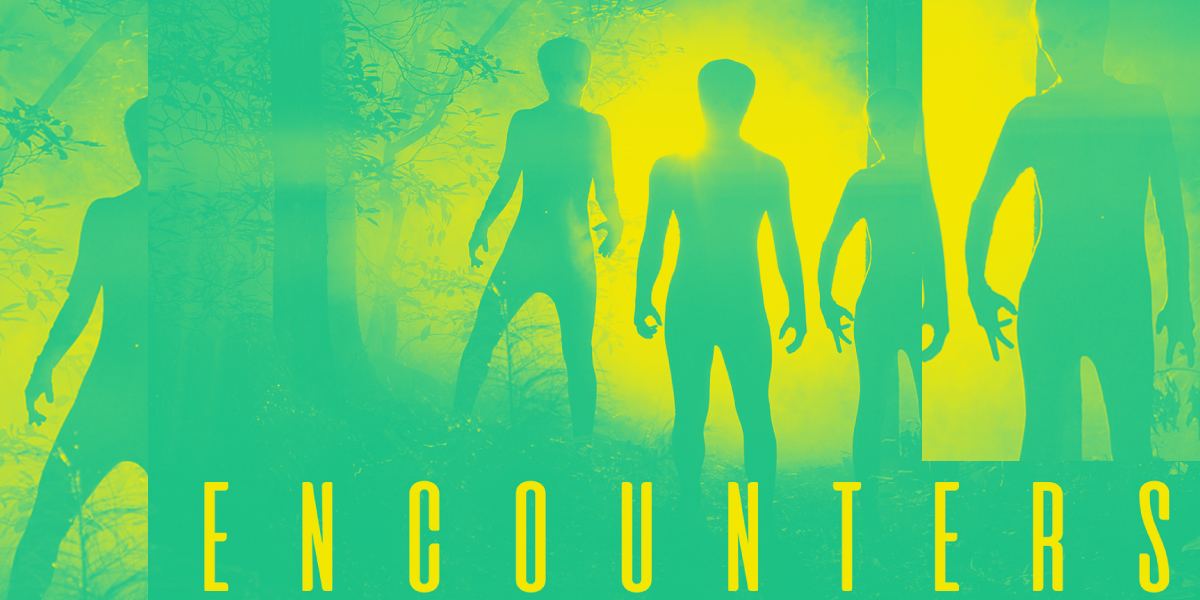
Luke Pilgrim and Brad Kennedy on launching their sci-fi anthology series Encounters
The team behind Sozo Bear Films discuss making short films on a budget, crowd-funding through live events, and how they divide up responsibilities on set.
Luke Pilgrim and Brad Kennedy are the two brains behind Sozo Bear Films and the upcoming sci-fi anthology series, Encounters, which they are currently crowdfunding for over on Seed & Spark. The first episode of Encounters is now available to watch online and we were so taken by it, that we reached out to the filmmakers to discuss the project, their background, and the lessons they’ve learned along the way.
How did you guys first meet and get involved in the film industry? What's the background of Sozo Bear Films?
We met while we were in film school at the University of North Georgia in 2012, but we didn’t truly begin collaborating together until 2014, well into the last couple of years of our college careers. We really got our start professionally from our senior capstone project which was a short film called The Apology Service. We landed our first client off of the short film and from there we began our own production company, Sozo Bear Films.
You've had great success at festivals with your short films. Was the end-goal always to move towards larger projects?
In a way the end goal was to move onto bigger projects, but at the same time we recognize that there is a certain type of skill that goes into telling shorter stories and we recognize that we’re pretty good with the format. We figured for our next step to move forward, it would be more manageable to create the several short films under one unifying theme than try to tackle a feature length film.
What was the biggest lessons you learned on these early shorts?
The biggest lesson we’ve learned from our short films is to always design the short within your limitations. That doesn’t mean that you have to restrict your creativity, but more so, if you only have so much budget you can work with, you get creative with what you have and create the best movie you possibly can within those parameters.
Where did you first get the idea for Encounters and why an anthology series as opposed to another short or even a feature film?
The project actually began when we were making a commercial for our company, Sozo Bear Films, which we wanted to release on World UFO Day. In fact, the abduction scene in episode 1 of Encounters is actually the footage from that commercial. After completing that little promo, everyone from our cast and crew to our composer were asking us, “Why isn’t this a short film?” And so the two of us sat down and figured out what was salvageable from the commercial, so that we wouldn't have to completely start from scratch. We kept the abduction scene, with a few minor visual tweaks and more ominous music, and wrote a new beginning and ending for the film. And then we thought, well we really liked this horror/sci-fi vibe and the idea of ending on a darker note and exploring a unifying theme so we decided to expand. For us, a feature is not as manageable currently and we really feel like we can reach more people with shorter content.
But what we knew we could achieve was multiple short films that we package together to end up with something about as long as a feature but filmed and consumed in smaller portions.
After watching the first episode, the quality is amazing and I love the tone of it. There's some clear Twilight Zone / X-Files / Spielberg influences. What kind of movies and TV did you guys grow up on and how has that influenced you as filmmakers?
Spielberg was such an integral part of my childhood. We both grew up watching his films and that “larger than life, movie magic” sensation that he always cultivates is something that we are constantly striving for. And The Twilight Zone and X-Files are definitely influences for this series but we are also big Coen Brothers fans and we really like directors like Zemeckis, Kubrick, and Scorsese. We’re big fans of The Duffer Brothers as well and Stranger Things is another awesome show that influences our work because they have so perfectly paid homage to Spielberg and other sci-fi and horror films that we love.
What's the plan for Encounters once it's all done?
This year we are working the first episode of Encounters at festivals while we are finishing raising the budget and filming the next episodes. Our goal is to release the next episode at our Night At The Movies event next year and then release an episode every three months after that.
Why the decision to crowdfund? Why Seed & Spark? How has that process been for you so far?
We crowdfunded for our first film through Kickstarter and we raised $5,000. We had a great experience with it but we felt like after that we didn’t want to constantly have our hand out. So over the past few years we have funded two films, Sunnyside Drive and The Amazing Anti-Fart Formula, as well as the pilot for Encounters, on our own. When we decided to expand into an anthology, there was just no way we could afford to film all of the episodes independently. We were going to have to find some help. So we asked Terrell Sandefur, who helped found the Macon Film Fest, to come on board as our producer. So we are raising $10,000 through Seed & Spark but that’s only a portion of the budget which will allow us to film the next two episodes. And the remainder of the budget will be raised outside of Seed & Spark through private donors.

How are you guys able to get such quality on such a limited budget?
I think a big part of how we are able to make films without breaking the bank is because we always have a very clear vision before we get to set. Brad and I usually are the ones writing the film so we understand it extremely well from the beginning and we break down the scenes and storyboard them in detail so that we don’t waste any time on set. Since the beginning, we’ve been really hands on with everything. I’m usually operating the camera. Brad’s making sure we are on schedule or working with the actors. Brad and I both edit and I do the color correction/sound design. So we’ve both always worn so many hats that we’ve been able to make work that looked really good without spending very much money.
You kicked off your campaign with an in-person screening, which is brilliant. What was the strategy behind that and how did you go about raising money in the room?
Well it was important to us that everyone was excited and having a good time. This was our second year hosting Sozo Bear Presents: A Night At The Movies and it was an awesome evening. We had a lot of great films from all over the country and Q&A with the filmmakers.
Then we premiered Encounters at the end, had our own Q&A, and then made the announcement about the series and our crowdfunding campaign. We raised close to $4,000 that first night.
We wanted to promote the campaign at the moment when our fans would be most engaged with the pilot episode and we figured it would be a no-brainer to begin the campaign right after the premiere of Episode 1. We were very conscious that we needed to present it as a way for people to join us on this sci-fi / horror journey and not in a way that abuses the relationship with our festival attendees. We tried our best to take note from Steve Jobs and Apple keynote presentations on how to present our campaign in a way that people would leave the theater excited to be a part of what will come next with Encounters. And we believe that the results of the evening reflect that people are excited to join us on this journey.
As co-writer/directors how do you divide up responsibilities and have a united front throughout the process?
We’ve just learned over time who has which strong suits and we let each other lead in those areas. We always consult with each other on important decisions and most importantly we always treat each other with respect. There’s no ego kind of stuff when you are co-directors. Because you both have equal say. It’s really natural for us and we depend on each other a lot when we are trying to make quick decisions on set. It’s great to be able to talk something through really quick, pros vs cons, and then give the crew or cast their direction.
What's the biggest piece of advice you would give to filmmakers wanting to kick off their own filmmaking careers?
Make movies. Literally, that’s it. There will always be a ton of reasons why you aren’t making movies. Like you don’t have the right budget or the right camera or the time. You may be working another job right now but have to find the time after work or on the weekends to create. You just have to take that first step and make a piece of work. Because getting started can be scary and paralyzing. And your first projects might suck but that’s okay. You’ll learn so much from sucking that you’ll never learn if you let excuses stop you from making movies.
What's next for you guys?
We’re going to be filming Encounters for a while. But we also have a lot of commercials and music videos and docu-promo films that we are producing every week. We are working with someone on a feature film as well. And of course we’ll be out there on the festival circuit in support of Encounters: Episode 1 this year! If you’d like to see any of our work you can visit www.sozobearfilms.com. And be sure to like and follow us on Facebook, Insta and Twitter to keep up with our filmmaking adventures!
Where can we find info on Encounters and what's the best way for us to get the word out?
You can pledge and read all about the series at seedandspark.com/fund/encounters. And the best way to help is to just share like crazy on social media. If you don’t mind sharing our posts as they go out on Facebook or you can even make your own posts and just put the link to our Seed and Spark campaign and tell people what we are trying to achieve. Every pledge and every share is so important to us and we are so thankful that people are excited about this series and really want to see it come to life!
By the time this goes to print, Encounters may be all the way there, but please visit seedandspark.com/fund/encounters and give what you can. Even the smallest amount goes a long way. And even if you can’t afford to give anything, clicking “Follow” is worth just as much.

Melanie Addington, Executive Director of Oxford Film Fest, is changing the game for Mississippi Film
Melanie Addington, executive director of the Oxford Film Festival and president of the Mississippi Film Alliance, give some great insight into how she first got involved in the scene and what makes their festival unique.
I had the pleasure of meeting Melanie Addington when our first feature film, This World Alone, was accepted into (and won!) Oxford Film Fest this past February. Melanie is the executive director of Oxford Film Fest, the president of the Mississippi Film Alliance, and a megaphone for indie filmmakers of all types with a special focus on the LGBTQ community and female filmmakers. Since these are not the first things that pop into your mind when you think of Mississippi, we thought we’d chat with Melanie about how she got involved in the film festival world and where she’s going from here.
Tell us about how you first got involved with Oxford Film Fest and share your vision for the festival.
I moved to Oxford from San Diego where we had independent film all around us in theaters. When I moved to Mississippi, we had a four-screen theater with only studio films. Seeing that the festival was launching, I was very excited and attended the first year. Then a friend mentioned he screens for the festival so I got involved as a screener. Then I worked my way up the volunteer ranks until I was a co-director. Eventually the other co-directors wanted to retire or hand it off as it had gotten too big for volunteers. Luckily a board was developed and they realized we needed full-time leadership. I left my career in journalism and moved over to this which is where I really belong anyway. As a volunteer, I traveled all over the country attending film festivals and taking good ideas and also learning what not to do. Our mission has always been driven towards hospitality to the filmmaker and attendees. I have pushed it one step further towards a more active model of not just having a good time but providing real resources for filmmakers. So award money, workshops, industry people at the festival, working towards more distributors and more resources as we continue to evolve.
With Oxford you've got a massive LGBTQ presence and some boundary-pushing content in the films you program, yet you're in the middle of the Bible Belt. Can you talk a little about your desire (and potential struggle) of finding a platform for these underserved voices?
So going back to that active model, that also involves a wee bit of activism. When our state presented HB 1523, a law that lets businesses legally discriminate against LGBTQ and single mothers, our festival made a statement that it was not right. Well, we got a lot of flack for that. So, instead of sitting down and shutting up, we launched a full LGBTQ series rather than just one or two films we had shown each year. Meanwhile I was crunching alumni numbers while building our database up and saw the percentage of female directors was dismally low (like 24% I believe back then?). So I made it a focus to find a better way to equality. We created a discount for female directors. That has helped push my programmers to look at more female driven work, helped more female directors submit so we can even consider their work, and helped continue an important discussion in our industry. We followed it up with a female filmmaker forum the past three years. It has been inspiring. So we wanted to do more. Going back to being in the middle of the Bible Belt, yes, we try to serve as a welcoming oasis to all voices. But we are aware we alienate some by saying we don't discriminate. And that is pretty OK with me. Probably not our target audience to independent film anyway.
With the programming at Oxford, you also lean towards true independent film over some of the bigger names in the industry ... where does your passion for independent film come from and why is "supporting the little guy" important to you?
You know, I truly did inherit that model from the founders of the festival and my former co-directors. The festival has just always wanted to bring in cool people and cool films. We have a great theater chain, Malco, that does its job 365 bringing in bigger films, even indies. That is not what we are here for. We are here to champion new voices that may otherwise get tuned out. Sure we program a film or two that is bigger, such as Sundance winner Always in Season this year. But our true mission is to bring films to our audience that they otherwise would not find on their own.
I'm sure a lot of people don't understand just how festivals get funded. Could you explain the struggle of keeping something like Oxford afloat and why it's necessary to do things like fundraisers?
Absolutely. People always assume that, oh, you sell tickets to the movies, so you shouldn't need funds. And that would be lovely if we charged $145 per ticket to make the money needed to run a festival the way we do it. Sure, we could just not provide hotels or transportation or food for filmmakers to spend less, but why make a sucky festival? It is so important to us that people who come to Oxford don't have too many economic barriers to do so (hence why some screenings and all workshops are totally free and that is underwritten by sponsors and members donating to us). Non profit festivals usually get funding three ways: grants, sponsors, and earned income such as ticket sales and festival submission fees. We use all grants to pay a limited amount of money to our staff, we use all sponsors to pay for the overall festival, and earned income goes to any filmmaker needs.

What's the Female Filmmaker Retreat, why did you start it, and how can a female filmmaker get involved?
So with our focus on female directors the past three years and our shift to March in 2020, we wanted to build upon this focus. In the back of my mind when I started as Executive Director in 2015, we were going to build our year round programming (we did) and launch more educational programs such as retreats. We started with a kid camp last year in the summer and are continuing that. We launched free workshops (we had panels in past fests but ticketed). The next logical step was a retreat or extended workshop. With the move to March and our ongoing support of female filmmakers, it just felt like a nice place to start with filmmaker camp - with a female filmmaker retreat. So this is our first one and we will launch the application process once we have raised the funds by July 1. We will have it on our website. The goal is for it to be totally free but we will see how the funds shape up to pay for flights. It will definitely be free housing, materials, meals etc.
This year we are starting with basics - a focus on post-production for women with a second or later feature film that is currently a work in progress. Basically, we want to help people who are sort of stuck finishing up get over the last humps with mentors, support, work in progress screenings with feedback, and just some down time to clear their mind.
What advice would you give to someone looking to start their own film festival?
What value are you bringing to the table by adding a new festival in this day and age? When we started 17 years ago there were about 500 festivals. Now there are thousands. What can you do that is different? How can you stand out? How can you support filmmakers? How can you support your community? Is there a way to support a festival already in your town? Then I would join Film Festival Alliance and go to Arthouse Convergence (happens before Sundance each year for all film fests and independent theaters) and follow those around that have been doing it right for awhile. Also, producing a film festival is just like producing a film - it takes a village and the leader needs to be able to lead but also listen and learn.
What about people who already have film fests in their town and don't know how to best get involved. What do you wish you had more of?
Volunteers. Financial Support. Attendance. When people in town say, oh yeah, I am always busy that weekend, I wonder, do they realize it is an entire 5 days and that I know likely busy means they were on their couch watching Netflix? Or people who say it is too expensive to get a VIP pass. I explain we have free screenings. Volunteers earn free passes. Sponsors get a tax write off. There are so many ways to get into a film fest besides just buying a VIP pass. Also, I wish I had people who just tried. I hear from people that don't know what a film fest is so they just don't even show up. Why not? It is art. You are experimenting. Trying. Learning. Expanding. Just do it!
What advice would you give for a filmmaker currently navigating the film festival circuit? Any insider advice on how to get accepted at more festivals and how to stand out at the ones they get accepted to?
Start with making a great film. There are a lot of good films on the circuit. Don't edit to a fest deadline. Submit only once you have the film you are ready to release to the world. But beyond that, research and create a fest plan. Know what film festivals like your kind of film, know what festivals have rules and follow them (don't submit to a women's film fest when you are an all male cast and crew, for example). Also, don't forget the lost art of the cover letter. Of 1,500 films last year only about 220 wrote a cover letter. And guess what? They had a higher acceptance rate compared to those who did not write a letter. Making connections and showing that you are passionate about playing that fest, not just any fest, makes an impact, even if just a small percentage.
Where can we find information about helping out Oxford and all the amazing things they're doing for independent film?
Well I am glad you asked! We put everything on our website at www.oxfordfilmfest.com plus we recommend signing up for our monthly e-news.
If you’d like to help Melanie carry out her vision of inclusivity in Mississippi and around the world, please visit https://fundly.com/2020-film-festival to help her raise some money and even gets some extra perks! She is 1/10 of the way to raising $100,000 for Oxford Film Fest and the Female Filmmaker Retreat.

Raymond Carr on crowdfunding his "ET and Goonies meets the kids from The Wire" film Joyriders
Raymond Carr walks us through crowd-funding his new short Joyriders, which takes all your favorite 80s sci-fi adventures and explores them through the eyes of inner city kids of color.
I first learned about Raymond Carr after getting a tour of his spaceship. That should tell you just about everything you need to know about Raymond. He’s an Art Director, Production Designer, and Puppeteer whose work has been seen on Cartoon Network, Nick Jr. and Discovery Channel. The aforementioned spaceship is a fully immersive set he built for his upcoming short called Joyriders, which takes all your favorite 80s sci-fi adventures and explores them through the eyes of inner city kids of color. Raymond is currently crowdfunding the short on Seed & Spark, and I thought it would be a great time to chat with him about his early influences and his desire to provide more representation for people of color in the sci-fi world.
Tell us a bit about your background. How long have you been working in film? How'd you end up in that world?
Raymond: I've been working in the industry since 2005. My first show was a Nick Jr. kids show called Lazytown that was shot in Iceland. I got into the indie film scene in Atlanta through a film group called Dailies. We were a bunch of young filmmakers who really challenged each other to make quality work. One of the most notable projects from that group was a film that went to Sundance and sold theatrically called The Signal. I am still very tight with all those cats and we still challenge each other.
Tell us about Joyriders! What's the story? How did this first come together?
Raymond: The story is about three rowdy kids from the inner city. They stumble upon a dying alien who fuses their minds together enabling them to fly its spacecraft. Now, these ghetto astronauts are the keepers of the most important discovery in human history and must decide whether to use their new found consciousness to help the world that's never cared about them, or escape into the unknown. The film asks the question, what would society do if they realized that their most forgotten members have suddenly become their most important? Joyriders depicts young underprivileged girls and boys of color in the genre of 80's/90's sci fi adventure films. Think ET and Goonies meets the kids from The Wire.
I have a borderline unhealthy love with sci fi films, and growing up black it never even dawned on me that a person of color could be the chosen one for an adventure like this. So the germ of the idea has always been around. Films like Attack the Block really pushed me towards the idea that I could make something like the films I loved.
Joyriders is heavily influenced by 80's family adventure sci-fi. What are some of your first film memories that have made the biggest impact on your life?
Raymond: The biggest influence for me are some pretty obscure stuff. Besides Star Wars and Star Trek, I'd say a big one for me was Flight of the Navigator, as well as Robotech. These were just beautiful and sad coming of age stories that had such a joyful sense of adventure. Robotech is still one of the most exciting and powerful stories I've ever seen in media. Of course, that's through a strong lense of nostalgia.

I love that you're putting an emphasis on underprivileged kids of color as your main characters. Why do you think we've seen so little of this in films up until just recently and what can more filmmakers do to push in this direction?
Raymond: I think people of color have really started to influence the box office with our money in a significant way. Also we have started to gravitate towards more nerd culture, too. When I was growing up it was illegal to be a black nerd, but now it's way more mainstream.
I think the main thing white and mainstream filmmakers and content creators can do is to stop thinking of POC and black people as "other." Yes, you should be respectful when you depict a POC on screen, but don't think they're any different than the other characters in your cast.
Having gone through the exhausting crowdfunding process myself I understand just how much work it can be, but you're off to an INCREDIBLE start raising over half your funds in the first 10 days. Are there any tips you can give to filmmakers looking towards crowdfunding?
Raymond: Well, we are still fighting to get funded and with everyday dollar matters. I'd say if you're thinking of doing one, start doing research now! There are a lot of tutorials and training opportunities out there. Also, be realistic about your goals. It's going to be harder than you imagine.
You've got a good budget for a short film (although maybe it's still small for the scope of what you're doing). Did you ever consider trying to do it as a feature? Is that still the end-goal?
Raymond: Yup! This is a proof of concept for a large project. We are developing it as a feature and a series. The script is 24 pages, so it's either the first act of a film or the first episode of a series.
What's up next for you after Joyriders?
Raymond: Next is production! We're going to do the festival thing, but we plan on doing some local screenings as well.
Any last bits of advice for filmmakers who wanna follow in your footsteps?
Raymond: DON'T DO IT! JK. Just don't be afraid to think weird. Lean into your interest and what you're passionate about. Be personal and valuable and your audience will follow.
You can learn more about Raymond and Joyriders at www.seedandspark.com/fund/joyriders. He’s only got a few days left on his crowdfunding campaign, so join us today in supporting to help Raymond bring this film to life. Remember, even if you can’t support the film financially, just clicking that “follow” button on their campaign makes a world of difference!

How To Start A Writer's Group with Pepper Reed
Pepper Reed gives insight on the writing groups she’s currently a part of, what she loves about them, and even how to go out there are start your own!
I first met Pepper Reed through the online screenwriting group I run, ScriptBlast, and was quickly inspired by Pepper’s focused productivity. She let me in on the secret that a big part of her consistency is due to the fact that she’s part of not one, but two writing groups who inspire her and hold her accountable. I’m a big believer in community and these kinds of groups should be a requirement for every writer. If for no other reason, then for the power of knowing YOU’RE NOT ALONE. I thought it’d be a great idea to chat with Pepper all about HOW TO START YOUR OWN WRITER’S GROUP.
Tell us about your writing journey and the writer's groups you're involved in right now.
I started writing my first script in college. It was never finished, but there are still things in it that I come back to. I was an actor then. Later I wrote a short that turned into my first feature after I left LA and moved back to Oklahoma.
I stopped writing for a while. I was trying to figure out how to get into the industry and move towards my goals. I started script supervising for indie films and shorts. That’s when I really started writing. By the time I moved back to LA last February, I had drafts in various stages for seven features, two shorts, and a pilot already written. I’d also written the script for a music video I directed. I had a couple of people who would read my work and give me notes, but part of the point of moving was to kick everything into high gear.
I’m currently in two writers groups. The first one I started about two months after I moved to Los Angeles last year. The second one I just joined a month ago. Both groups are all women. With the first group, that was just how things worked out. I had posted in several groups (on Facebook and Google) that I’m a part of looking for a group to join and couldn’t find one that worked the way I wanted it to, so I created my own. Then I posted in the same places asking if anyone wanted to join. It ended up that only women responded.
The second group was organized by a local women’s tv writers organization in LA. They help women who want to write for TV. This group is interesting because we all write genre pieces, i.e. Sci-Fi or Fantasy.
I usually have a several scripts going at once. Currently, I have my spec. I just finished revisions based on notes from both of my groups and so it is basically done, but I might add a snarky line of dialogue or two before I submit it. I have a short which is going to be shot in March, so it is done, but then an actor might give me a comment, so it could have a change. I have a pilot that has been to one writers group but not the other. It’ll go out later this week and I’ll have a rewrite after that. I have another pilot idea that I’m thinking on and will write once I’ve submitted the other to the fellowships. Finally, I have a feature which has had two full drafts, but needs a good rewrite. It has been marinating on the back burner for a few months and is about ready for me to stir things up as soon as these fellowship applications are done.
Some people don’t work this way, and I can completely understand. For me though, it helps. One day I can work on my spec, then next my feature. And if I’m blocked or having trouble with one project, I can move over to another one for a little while and take the pressure off.
Why is it important to you to be a part of a group?
I wanted a writers group so I was getting notes from people who worked in the industry. Reading scripts regularly and learning how to give and receive notes is incredibly important. Plus there is the added benefit of having built in deadlines. With my first group, we know well in advance when our turn is coming up.
How do they work? How often do you meet? What's an average group like?
I was surprised that I had to create a group myself. I wanted a group that would meet once or twice a month and we would read one of the members’ entire script in advance of the meeting and give notes at the meeting. Most of the groups I found in LA, you would bring in 5 to 10 pages and people would read them right then and give notes. I didn’t find that helpful. If you need accountability to make sure you do your work, yes, but I don’t have that issue.
Both of my groups meet every other week, one on Mondays and one on Thursdays. We send our scripts to the group a week in advance to give everyone plenty of time to read them and make notes. We talk about what we’re working on, exciting meetings, events we are going to, finding scripts for episodes of shows we want to spec. A lot of the talk at the moment is about the TV writing fellowships. We give our notes to the person whose script is up and then, if they have questions, they ask those.
What's the biggest benefit you've personally gotten out of the groups?
This industry is really about relationships, but a lot of writers are introverts. It’s much easier to get to know people when you are in a smaller group (some of those networking events are insane) and you have a built in topic of conversation. I’ve made some really good friends, which can really be a challenge, especially in a city like LA.
You're part of an all women's writers group and an all genre (sci-fi/fantasy/horror) writers group. Do you find a deeper connection in these kinds of like-minded groups?
My Sci-Fi/Fantasy group got references and Easter eggs that I’d written into my Lucifer spec, which my other group didn’t get, but I get great notes in both. And since both groups are all women, I think they can push me to go deeper. I know that their comments are coming from their own experiences as women.
I write for the girl that I was growing up. When I was young I didn’t feel like I fit in anywhere. I was an outsider. But I connected with characters in the books I read and in the films and tv show I watched. Now, I use paranormal and fantasy characters as a metaphor for “the other.” If you can connect with a vampire, if you can empathize with a werewolf, maybe that can help you understand your neighbor who doesn’t quite fit in. Having a group that understands and enjoys these metaphors can be helpful when they might read a script multiple times, since my Sci-Fi/Fantasy group is about half the size as my original writers group.
What is it about genre film & tv that draws you to it?
I love being able to see inside people minds. Film and television are visual adaptations of imagination. We are painting the screen with light and color, in some cases, ideas that were originally imagined hundreds of years ago.
What tips do you give for starting and/or running a successful writers group?
Make sure that the people who are joining want the same kind of group you want. When I was first looking, I had posted a very clear “ad” but people kept coming back to me saying they were interested but would then describe a group like all the ones I didn’t want.
I’ve met with most of the members individually as well as with the group, just to get coffee and chat. When I started my first group, I knew one of the women and had met one of the others. Everyone else was a complete stranger. We meet at my apartment most of the time now, but in the beginning we met in a public space.
As for keeping it going, my first group made it through a summer break and a winter hiatus for the holidays. I’d say be very specific about when you’re taking the break and for exactly how long. Know in advance who is up when you get back, otherwise, things will fall apart.
You can follow along with Pepper’s writing journey on Instagram at @pepperreed .

Kevin O'Brien on How He Captured an Authentic Voice between Faith and the LGBTQ Community in At the End of the Day
We interview writer/director Kevin O’Brien about his film At the End of the Day and how he found his own creative identity through amplifying a voice that is so rarely heard in such an honest and empathetic way.
I had the privilege of meeting Kevin O’Brien at the Oxford Film Festival while we were screening This World Alone. Kevin’s film At the End of the Day pulls off the impossible: an honest film at the intersection of faith and the LGBTQ movement, a rare dramedy that moves you to tears with its authenticity. I sat down to talk with Kevin about how he found his own identity through this unique story and found a large audience who identifies with it as well.

Kevin, tell us a little about At the End of the Day and how it all came together.
At the End of the Day is a dramatic comedy that explores the tension between the church and the LGBTQ community, specifically focusing on LGBTQ youth facing religious rejection. We follow Dave, a conservative, Christian professor who experiences a profound change when he finds himself planted in a queer support group to undermine their opening of an LGBTQ youth homeless shelter. While the movie is not subtle in its topic, from a wider perspective it deals with love, family, and what it looks like to discover your own truth. Most of us don't take the time to listen to or validate the lived experiences of others, and that's a thing that is dividing our relationships. I started writing the screenplay in 2014, spent a few years raising funds, we shot the film in January/February of 2017, and held our world premiere at the TCL Chinese Theatres at the Dances With Film Festival in June 2018. Now the film is out on DVD, BluRay, and Digital.
You're tackling some pretty heavy subject matter here, yet you choose what (on the surface at least) is a light-hearted genre to explore it. Why comedy/dramedy?
My first attempt to tell a story about this subject was much heavier, and a bit melodramatic. At some point I realized that a better way in would be through comedy, as comedy is a great disarming tool for storytelling. It was not a task I took lightly, covering such a deeply hurtful topic with a lighthearted tone, but I got a lot of feedback from my LGBTQ friends throughout the whole process. It was important to me that those who lived these experiences felt heard and represented. The drama, the heart-wrenching moments, were not hard to find, as there is still so much ignorance and fear in the world, especially within Christian institutions. The comedy was so important and nerve wracking, hoping to walk the tightrope.
At the End of the Day is a rarity in that it explores the cross-section of the LGBTQ world with the faith-based world. Was there a fear at any point that you thought, "There's no way either of these audiences will show up for this?"
I've had that fear from the beginning, yes. I've had some people ask me, "How are you going to make a film about faith and have gay people in it?" I've also had the question, "How are you going to make a gay film without sex in it?" My answer has always been, "Because there are queer people of faith, and there are a lot of aspects of life that don't involve sex." I knew the audience was very specific for this movie, and that's who I made it for. I certainly made the kind of movie I wanted to see, and I know there is a large underserved audience for it.
The film has one of the more authentic voices I've ever seen captured on screen, to the point that I was brought to tears a number of times. What's your personal experience with this world and how did you capture not only your own voice, but seemingly the voice of an entire generation who is longing to be heard?
Thank you for that - being authentic was truly my number one priority. I grew up as a straight, white, cisgender male in an evangelical church, so that part of the story I knew forward and backward. I was able to pull from a lifetime of relationships and experiences to write the characters who lived in that world. I did not, however, have any personal experiences within the queer community, so I knew I had a ton of studying to do. I am not a reader, but I know I read more books in the 6 months of writing than I did in the entirety of my life before. Not only did I read a ton, but I asked my queer friends and acquaintances about their personal stories. I asked a lot of questions, and I tried to capture the essence of their experience. While many of the lead characters are straight, I was intentional to make the actual heroes of the story to be the support group, the way they stuck together, and exemplified true love to Dave.
This is a subject matter that could easily come off as "preachy" (for lack of a better word). How did you navigate the difficult balance so well in your writing?
I am not sure how well I did that; I think it depends on who you ask. I did my best. I don't think there's a formula for it, it's more of a gut reaction, and I had to listen to my gut. That process was present all through the writing, through production, and certainly into editing. It even exists in the marketing of the film. It's a hard thing to do to not be preachy, when your film is decidedly calling out a theology that is dangerous and damaging to marginalized people. I am certain that people in stark opposition to the LGBTQ community will consider this preachy, but I didn't write it for them. I wrote it for those who have some empathy they can't explain toward the LGBTQ community. Those who grew up with a narrow world-view, and who, like me, are starting to feel a sense that something is not right with that. I also wrote it for those in the LGBTQ community who have faced religious rejection. I want their story to be heard. I want them to feel represented. And I want them to know they are whole just as they are.
What's the most powerful response you've gotten to the film so far?
I've had so many LGBTQ people who grew up in an evangelical church or attended a Christian school (either high school or college) who have thanked me in tears for telling their story. I've had people tell me that their conservative friends watched it and liked it okay, and a few days later their daughter came out. They still had so many questions, but because of the movie, their first reaction was, "We love you and will always love you." But the most powerful response was probably after the screening at the Orlando Film Festival, when 3 of the 4 youth who shared their real stories as part of the film, watched it for the first time and were honored to be part of it. That was a beautiful moment.
What advice would you give to a young filmmaker out there trying to find their own identity and voice in their work?
There is a quote from Elizabeth Gilbert that I have printed and framed in my office. I also have it as my phone's lock screen. It has been vital to my confidence and my ability to keep going: "Recognizing that people's reactions don't belong to you is the only sane way to create. If people enjoy what you've created, terrific. If people ignore what you've created, too bad. If people misunderstand what you've created, don't sweat it. And what if people absolutely hate what you've created? What if people attack you with savage vitriol, and insult your intelligence, and malign your motives, and drag your good name through the mud? Just smile sweetly and suggest - as politely as you possibly can - that they go make their own fucking art. Then stubbornly continue making yours.” - Elizabeth Gilbert, Big Magic
At the End of the Day is now available on Bluray, DVD, and digitally on iTunes, Amazon and Google Play.

Finish Line Script Competition Founder Jenny Frankfurt on Finding Your Voice
I think some writers are born with a way of writing. However, a lot can be done to try and create something that isn’t there to begin with. That’s reading, watching films and TV and really studying different genres…
As a screenwriter, the concept of IDENTITY is always first and foremost in my mind. In part because so much emphasis is put on “voice” as a way of standing out in the very large crowd, but also due to the fact that so many voices are underrepresented in Hollywood films. We’re beginning to see a shift towards more diversity on screen and behind it, but it often feels like a giant ship to get turned around.
We reached out to former literary manager Jenny Frankfurt to pick her brain about how to find your voice as a writer, how to encourage diversity as a filmmaker, and what motivated her to find her own identity through a career change.
Jenny transitioned from the roller coaster world of Hollywood lit management to running the Finish Line Script Competition, a screenwriting contest that not only offers real, legit access to Hollywood insiders for winners but also has the unique distinction of giving you notes on your script so you can re-write and re-enter to better up your chances of winning.

Tell us a little about how you first got into the film industry and why the screenplay world specifically?
I started ‘floating’ at William Morris in NYC, which means I was a permanent temp there. I worked with a lot of different agents and in many different departments and it was a great education, but my first assistant job was with the head of the Theater Department. At William Morris. In NYC! Wow. So, I learned a lot about writing, which I was already quite enthralled with, being an avid reader. And I learned that for this agent at least, that his playwright clients, in order to have plays produced, has to also make a living writing screenplays or working in TV. They all did and some of them are some of the biggest show runners around still. This allowed them to make a living while pursuing their writing dreams. He just didn’t want starving artists, so the commissions paid for the difficulty of putting up a play in NYC even though these are some of the the best playwrights around. Very smart business strategy. It’s longevity and the financial freedom to get the writing right.
What kind of stories are you drawn to and why?
I love dark pieces and character pieces. Equally I love to laugh and I love great action scenes. But I want emotion and theme to work together most of all. And to feel something while I’m reading.
You went from being a lit manager to running a screenplay contest. What was the biggest motivator for the change?
Burnout. 15+ years of management and I really wanted to feel control and have the freedom to take time and help writers get their work in its best shape. I love working with writers, directors, even actors! I still have a real sense of management when our winners are chosen and we take the next step in setting up meetings and getting their material to people other than the mentors in the competition. I’ve always had a strong sense of who will respond to specific material so I work a lot with quarter-finalist and semi-finalist scripts too and make sure people in the industry I think are a good fit for the genre/tone/writer are introduced to their work, whether they’ve won or not.
What makes Finish Line different and why did you set it up the way you did?
When I was a manager and then afterwards when I took some time off, I read a lot for competitions and for agencies and so on. I’d been doing that since I was about 19. Anyway, I would read scripts that people submitted for packaging at agencies or for big script competitions and they were just not there yet, but they were close! I thought, “This writer needed a script consultant to work with them and it would have been such a better submission!” Writers get intimidated by those deadlines and end up sending in scripts that aren’t ready for competitions. So, I created Finish Line, where you can work on the script while entered and then, as many people do, end up improving the script not just for us, but then it’s ready to submit the new and improved draft to other competitions (or representatives or producers) as well.
There are a lot of screenwriting "gurus" and competitions that seem to exist solely to make money by taking advantage of young writers. How can writers best avoid these traps?
The first thing to do is look at the prices. $65, $75 for a submission is insane. That, in my eyes at least, is simply to gouge the writer and make the money because the name recognition of the competition is high. Also, if competitions offer notes, what kind of notes are they giving? Are they helpful or just a brief look at the script and some random number that tells you very little about how to improve the draft? Basically, are you getting your money’s worth and what do you get if you win? We have ridiculously reasonable prices because as people who worked with writers professionally for years, we know money is tight. And we want to give you all we can to make sure you’re getting the best notes so you can improve. So I’d rather get great scripts and give great opportunities to finalists and others than roll in the dough because I can. I’m probably a terrible businesswoman, but I care about writers.
With a major (but surprisingly feet-dragging) push towards diversity and female empowerment in Hollywood, are you finding that reflected in the scripts you're receiving (both in the writers and what's represented in the screenplays)?
A little bit of yes and a little bit of no. Some of the best scripts I read for Finish Line have female leads that really inspire and are creative and eclectic. These are written by both men and women. And some women write great male characters; it’s not that. So, we’re not necessarily lacking there and some, though not all of my favorite scripts from our competition over the past 3 years have had female leads. BUT, we don’t have as many female applicants and I don’t know why and it bums me out cause though we’ve had great female runners up and semi and quarter-finalists, we haven’t had a female Grand Prize Winner yet. Of course, the best script wins, but as a woman creating a competition and having a lot of outreach in the industry, I would love to have a woman win and have the opportunity to push her career forward and mentor her and introduce her to mentors. So women – please enter! I know you can write so come on over here and show us what you got!
What can writers do to encourage diverse voices? What about filmmakers?
I think it’s important to write about what you know. And with filmmakers they ought to seek out the most authentic writing they can from the most authentic writer. However, this is not always easy. Our 2017 Grand Prize Winner, R.B. Ripley won with a TV pilot called “Sugarland” and without knowing the writer’s name, people thought it was written by a woman because the female lead and her voice were so spot on. As well, last year, our Second Runner Up wrote an urban themed pilot called “The Chop” and it’s as authentic as they come, but he’s a 20-something year old white guy. It’s just his voice, and we recognized the strength of that.
Basically, if you’re writing from an organic place and it comes out as genuine, it doesn’t matter what gender, skin color or ethnicity you are. But your lane may be broader than others. Don’t step outside it for the sake of ambition. It’s usually pretty obvious to a reader when writers are trying too hard and then it ruins the experience.
How important is "voice" in the screenplays you read? How can a young writer "find their voice?"
Oh God, it’s everything. Listen, there are only so many stories out there, but it’s how they’re told that makes all the difference. A perspective, a tone, a POV; all of this differentiates one Holocaust movie from another, one slapstick comedy from another, one horror movie or post-apocalyptic sci-fi movie. The visuals and emotions a writer can create with their voice is what makes a script special.
Imagine something that Sorkin has written and then imagine the exact same story being written by Paul Thomas Anderson or Quentin Tarantino. They’d be completely different stories, even if they were exactly the same story. That’s voice and obviously it separates style and genre and tone, which we all individually and personally respond to.
I think some writers are born with a way of writing or come to it on their own. It’s just a gift; we know that. However, a lot can be done to try and create something that isn’t there to begin with. That’s reading, watching films and TV and really studying different genres. To this end, it’s not that we want writers to mimic or copy other voices, but somewhere within themselves, their voice, combined with the appreciation of writers and filmmakers’ voices that they respond to can create a new one.
What would you recommend for someone who wants to get into the lit management game?
To be a literary manager, most people either go through an agency, or get a job as an assistant at a literary management company or production companies. I mean, the key is reading a ton of scripts, talking to writers, knowing writing and good writing and how to make writing better and how to communicate with talent to help them help themselves. It’s learning how to sell a style of writing from a specific writer. It’s about meeting people who can buy material, solidifying relationships, reading, watching films, really immersing yourself in the world you want to be a part of. I became a manager off of being an assistant on a manager’s desk. I started working with my own clients and started making money for the company (Handprint Entertainment), so they had to promote me. Know your stuff; that goes a long way.
Knowing what you know now, with your career where you started to where you are now, would you change anything?
I would stop comparing myself to others. There are people I was an assistant with who run studios, work with top talent all over the world, and are continuously thanked at the Oscars and Emmy’s. They took paths I didn’t and I couldn’t. I had terrible social anxiety since I was a teenager and it prevented me from getting promoted sooner. I was great once I got out and about, but a lot of the time I couldn’t get out. I worked really hard and trusted that that would also pay off. It does to a certain degree, but it’s the schmoozing combined with the hard work that really gets you ahead. I hate that it’s that way, but it’s true. The good news is that even if I wasn’t out every night at various parties and premieres. I was building strong relationships that I have until this day. And I ended up creating Finish Line, which is really the dream job for me. I can work with writers, call on my industry friends to help as mentors and use my management skills to propel the writers and their work to the right people. And sometimes I can do it in my bathrobe.
You can learn more about Finish Line Script Competition and enter your screenplay at FinishLineScriptComp.com or follow them on Facebook, Twitter, and Instagram.
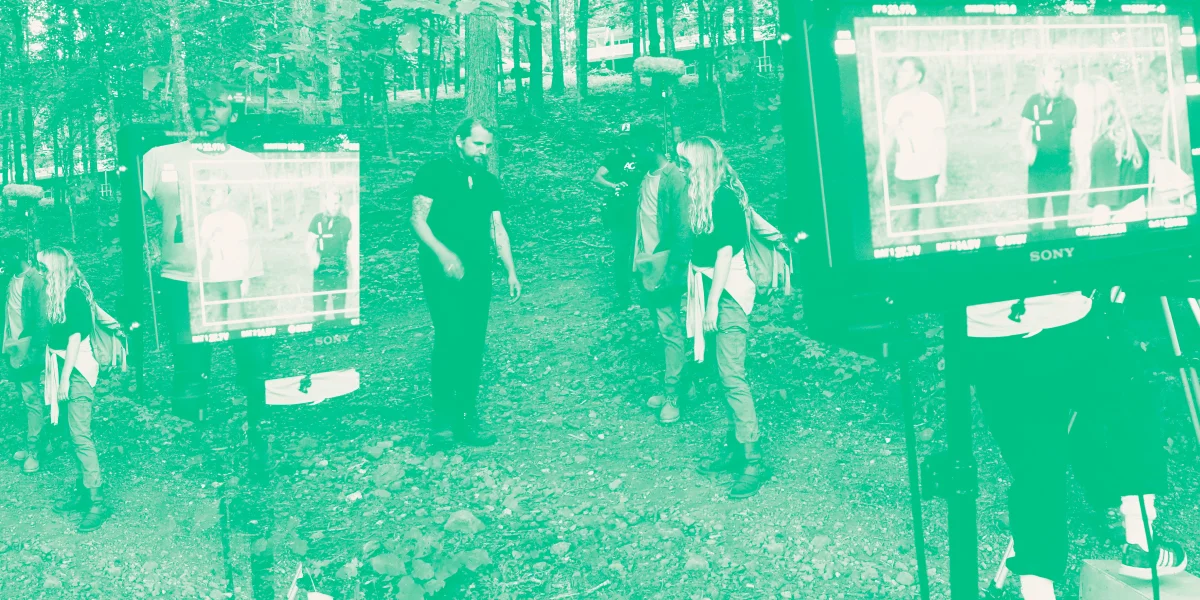
The Director and Stars of This World Alone on Their First-time Feature Experience and What They Learned from Each Other
In this industry, the final product is not the experience. I had such a rich experience working on This World Alone and that will never change no matter how the movie in its finality is received. I believe maintaining focus on process and growth is one of the most valuable lessons I learned…
In addition to running this website, Mirror Box Films is a production company and the first film we made was called This World Alone. It’s a post-apocalyptic thriller about three women attempting to survive in a world without technology or power. We set out to explore both the beauty and horror that comes from that world as well as how it affects the mother/daughter story at the heart of the film.
As the writer and producer of the film, one of the more fascinating pieces that was so foreign to me was that of the relationship between director and actor. So, since we’re talking about BEGINNINGS this month, I thought it’d be a great idea to sit down with first-time feature director, Jordan Noel, and first-time feature stars Belle Adams (“Sam” in the film) and Re Roach (“Dart”) all about their experiences working with each other for the first time.

Jordan, This World Alone was your first feature as a director. What was your journey like leading up to that?
JORDAN: After we made our first short film in 2011, Rooney’s World, our sights were set on making a feature. We actively developed several scripts but nothing really materialized until spring of 2017 when Hudson Phillips sent me a script for a short film that I loved. He then told me it was part of a feature script idea and my immediate response was “this is it, let’s shoot the feature this summer”. He quickly busted out the first draft for the full feature and we were off to the races. I believe he started writing the feature in May 2017 and we were on set and in production in late July shooting the movie. While it was certainly harrowing - we also moved so rapidly from conception to execution that there was no time to stop and say, “Oh $%#&, what are we doing?!” It was a really fun and exciting ride.
Re and Belle, what about you guys as actors?
RE: At that time I had just come back from New York, for school. I finished working on two shows at the Alliance Theatre and preparing for or working on a show at Kenny Leon's True Colors Theatre Company. Hudson messaged me on Facebook inviting me to read for some characters on a project he was working on at his house. At first, I was going to ignore the message and move on, because I didn't know him and I thought maybe he got the wrong person, but he knew someone in the cast. I made that leap of faith and attended the reading. Then I was invited back for the This World Alone reading later on in the year, and next thing you know, I'm sending in a self-taped audition one morning and got the job either the same day or the next day.
BELLE: I have known since I was a little kid that I wanted to be an actor so I just gunned for it. I studied theatre performance in college, graduated a year early, then made my way up to Los Angeles and things just started to fall into place. I started auditioning, had some network TV success, and in the process of all of that I met the crew that offered me the part of Sam in This World Alone. If I had to boil it down I'd say my journey was surreal and unexpected. It's interesting. I have always wanted to be a professional actor, so I kept my focus on working towards that, but never actually had the expectation that I would get there until I looked up and saw where I was.
Had you always known you wanted to be an actor / director?
RE: No. I didn't know that you could pursue acting as a career until I was in middle school. I wanted to be a Marine Biologist until I saw how much math was required, and I soon realized that I was not a fan of the Orca's and Dolphin's that swam up to me at Seaworld when I was in elementary school.
JORDAN: Not specifically, no. I had no concept of me as a director even being a possibility growing up. My family didn’t even have a tv, much less a camcorder. I loved movies but never ever imagined I’d be in a position to direct one myself. But life is strange and here we are. If I look back at some of my artistic endeavors through my 20s it starts to make a lot more sense and much of it points to a hidden desire to direct.
BELLE: For the most part, yeah. When I was a kid I tried all the things. The way I remember it my parents threw all kinds of activities and sports at the Belle wall. I played basketball, soccer, was a cheerleader, figure skated, danced, did gymnastics, karate, you name it I probably did it. Then at the end of each of those classes, sport seasons, whatever it was, Mom and Dad would ask if I wanted to continue on. Each time was an easy, confident "no". Then I did my first musical. I was Bagheera in The Jungle Book. I'm sure you can guess what I said at the closing of the show when the question "want to keep doing this?" was asked. I was all in and have been ever since.
How did you get started?
BELLE: Well, it was that first musical that really got me HOOKED. But before that, as a little one, I had been in commercials and on Cartoon Network. Though, at age 6, that mostly felt like playtime. Theatre was really where I first fell head over heels for acting.
JORDAN: I got my first DV camcorder in my early 20s when I started touring a good bit with bands. I started documenting everything. Touring is an insane experience and a constant swirl of storytelling / story-making and story-witnessing. I just wanted to document it all so I could someday remember something of it. A few years later I taught myself to edit by creating a short travel documentary about an Italian romp in 2006 with Steven Grubbs (who wrote the ‘theme song’ for This World Alone). Then in 2010 a mis-sent email from a band manager to a band I was doing visual art for inspired a split-second decision to say that I would direct a music video for the band. In the following two years I directed 10 more music videos and our first short, Rooney’s World, which came about after a chance run-in with an old acquaintance, Hudson Phillips.
RE: I got my start in the church. But ever since I was little, I was always break-dancing, singing and reenacting movies with my action figures and other toys I could find around the house, along with my brother, who wasn't too far behind. I attended a big church when I was little and did a small role in the middle of Marietta Square during the Juneteenth Festival, and then, the drama ministry I was involved in gave me the lead role in their annual Christmas play. I was hooked ever since, and the rest is history.

What was the biggest lesson you learned on your first feature?
BELLE: I learned that in this industry, the final product is not the experience. I had such a rich experience working on TWA and that will never change no matter how the movie in its finality is received. I believe maintaining focus on process and growth is one of the most valuable lessons I learned after being on TWA.
RE: RELAX!!! Since This World Alone was my very first feature, I was everything but relaxed. I was excited, scared, and anxious all at the same time.
JORDAN: I learned so much about myself personally - it ended up being a real, inward emotional and spiritual journey in which I came out the other side hardly recognizing myself. This was a good thing. A shedding of callouses and walls and protective shell I hadn’t even known I’d built up in my adulthood. So I’d argue that the personal transformative lesson was probably the biggest but that’s probably not really what you’re asking so I’ll give a professional answer as well: working with actors. These two lessons are deeply intertwined. I essentially got a step closer to figuring out my directing style and process and what that can look like, how I can approach it. Just like any good story, I think directing has an arc of its own. I’m only at the very beginning of that trek and with every step forward the broader and deeper and more expansive the road ahead becomes.
What did you guys learn from working with Jordan?
BELLE: I learned what a real relationship with a director looked and felt like. Being open and honest about my own process and needs as an actor was a breeze with Jordan. He gave space and presence for that kind of collaboration.
RE: Trust. On set I was asking him a question or maybe explaining to him where I was a little stuck in a scene. Jordan walks over and tells me that he completely trust me and my choice. He not only believed in me and trusted me artistically he caused me to shift my thoughts and look within myself. Trust your talent, believe in your choices.
What did you guys learn from working with Belle?
RE: Have FUN! The cast and crew for This World Alone were phenomenal! But when I was acting across from Belle in a scene, she was so calm, open and she was having a blast. Meanwhile, I was rehearsing lines in my head that I already knew and taking everything so seriously. But once I saw Belle enjoying the process, I slowly started getting out of my head and enjoy the process as well. One of my favorite behind-the-scenes moments was when we were making the montage sequence in the church. We were so exhausted that day it was laughable. And in that montage, we're doing nothing but laughing at each other.
JORDAN: How much time do you have? First off, Belle is brilliant which makes learning from her all the easier. I think the most crucial learning specifically with Belle was about trust. Collaboration is all about trust in any venture but because of the subject matter and the emotional themes we were exploring, complete trust was required. The work involved some serious vulnerability and at times painful empathy. Belle had to trust me to effectively support and love her in her work and I had to prove myself to be trustworthy and supportive. If an actor is willing to splay herself out emotionally then I must meet her there. I believe the bridge is trust.
What did you guys learn from working with Re?
JORDAN: Resilience, determination, diligence, willingness, drive, and the art of the positive mental attitude. Re is nothing short of inspiring. For starters, he’s a fantastic actor. Prepared, curious, and always asking great questions. Dart is a complex character with some very difficult and complicated emotional scenes. He’s my favorite character and also the most difficult to direct. On top of tackling the difficult complexities of the character, Re hates nature. Ha! That’s a bit of a over/mis-statement but he’s not at all into bugs or tall grass or thick woods. And yet, that’s where we were day after day. Re was always smiling and in great spirits. One of the days in the middle of a take in some tall grass a bug flew directly into his eye. He didn’t let it shake his resolve one bit. As soon as that little bugger got out of his eye he was ready to continue the work. His work ethic challenges me to attack the work tirelessly with a positive, encouraging, steadfast attitude.
BELLE: I learned to chill out, laugh and not take myself too seriously! Especially within our actual scene-work. It was easy to relinquish control after being on set with Re for a bit.

What advice would you give to young actors looking to break into film?
BELLE: Go for it only if you really believe you can't do another thing in this life that will satisfy you. Hold onto you. Work to improve, never to impress. Take your time and try not to sweat the small stuff. Recognize where you're at, and start from there. Comparison is the thief of joy! You're running a marathon, not a sprint, so enjoy it and take deep breaths.
RE: Honestly, since I'm still young and striving to break into film myself, I don't know what advice I can share. I will say, always be a student. Don't stop learning or wanting to learn more, about your craft and yourself. Be nice, Be positive, treat others with respect, and be present. Also, enjoy and trust the journey you are on. I'm still working on that last part myself.
What about first-time directors?
JORDAN: Two things: (1) Do the work. It’s going to take a lot of time and a lot of sacrifice. Your friends/family will wonder where you’ve been. You’ve been doing the work. Keep doing the work! Slow and steady wins the race… but it requires that you just keep slogging away toward that finish line. You’re already doing the work… just keep doing it! (2) Find a champion of a filmmaking partner. You can’t do it alone. Or if by some miracle you can - you shouldn’t. Find someone that encourages and challenges you. Find someone to keep you accountable for doing the work. Have them also keep you artistically accountable. Making movies is insane enough without trying to go it alone. It’s really really hard. You’re gonna want someone on your side. Hudson Phillips is my champion… and hopefully I’m his. Sometimes I turn back and look at the footprints in the sand and only see Hudson’s.
Dawwwwww… thanks Jordan! You can find out more about This World Alone on our website or find us on Instagram, Twitter, and Facebook.

The First One: Ciara Bagnasco's Journey to Her First "Real Book"
It helped me immensely to plan out the book before I started writing it. I love the process of planning out details that will come back later in the story and make you go “OH! OH MY GOSH!!! WHAT?? DID THEY PLAN THAT?” And the answer is...
We all start with the blank page. Every time we attempt to create something new, we’re greeted by its absence. But how do you start if you’ve never begun before? With “Beginnings” being our theme this month, I thought it was appropriate to speak with someone beginning all over again. Today, we talk with Ciara Bagnasco to find out what it’s like to be in the midst of writing their first “real book.”
First, who are you? Tell us a little bit about yourself
Hi! I'm Ciara, and I currently live in Orlando, FL. I like to think of myself as always having been a "creative person", and I love finding new outlets for my creativity. I've been a singer/songwriter, a graphic designer, a cross-stitcher, a set designer, and now I've ventured into one of my long-loved passions… writing!
What’s your current project?
I'm currently working on a novel, and I'm about two to three years into working on it at this point. My book is about a young boy named Charlie who discovers that he is a part of a magical, underwater community which he accidentally almost destroys. He must then set out on an adventure to save this community and the magic or else it will be lost for all eternity.
What did this project come out of? How did you overcome that first blank page?
I wrote my first two books in high school for English projects, and I was hooked. I wrote a lot of poetry in middle and high school, but after discovering how much fun it can be to write a book, I could never get over the idea of writing a real book one day. About five years ago, I started brainstorming about what kind of book I'd like to write. Originally I was going to write a post-apocalyptic type book, but halfway through planning it, I realized I didn't really like what I was planning. It was all too sad, and there wasn't enough fun. And if I didn't like it, why would anyone else? So I started the process all over again. I've always loved Fantasy and the idea of magic, so I picked up my main character (Charlie) from the first book and plopped him into this one! It originally started out as a book about mermaids, but of course so much has changed since that first day I started planning it. I'm so excited about the direction it's currently going!
As far as overcoming the first blank page, it helped me immensely to plan out the book before I started writing it. There are a lot of people who can just start writing without any idea of where they're going, but that is NOT me! I love the process of brainstorming and planning out details that will come back later in the story and make you go “OH! OH MY GOSH!!! WHAT?? DID THEY PLAN THAT?” And the answer is... yes!
What is your routine when writing, if you have one? How do you keep your work consistent with all the other distractions life provides?
To be honest, I don't have much of a routine. Having a full-time job can be really challenging to work around, so I've found that if I plan "writing dates" with other friends who write, I'm much more likely to get work done! Having people who keep me accountable has made a world of a difference when it comes to actually writing my book. In 2019, I made it a goal of mine to have the first draft completed by the end of the year. I decided to post about my writing and my goal on my social media in hopes that others online would help keep me accountable, too. And so far it's working!
You aren't done with it. When do you anticipate finishing it? How can we help encourage you to finish it?
As I said, I want to have the first draft done by the end of 2019. This is a totally achievable goal since I already have the entire book plotted out - all I have to do is write it! (Which honestly is much easier said than done…) I'm hoping that in 2020, I can finish all of my edits and start working on getting it published. But we'll see what the future holds! Again, accountability is key for me. Having people check in on me and set up writing dates with me is the most helpful way to encourage me!
What is your goal with the book?
My goal is to get it published. Obviously, I would love for it to be wildly successful, but I will be so proud of myself for finally telling this story that I find fascinating. I hope that others will fall in love with the story as much as I have!
What are some of your other creative outlets? Also, what is inspiring you lately? How do you think those feed into this project?
I'm a craft person, so I love to crochet and cross-stitch. Music is also a huge thing for me, as I love to play piano and guitar and sing. I've honestly been so inspired by my other writer friends. Seeing them work hard and getting their work published pushes me to want the same for myself. They are so full of helpful advice and encouragement, and of course they always check in on me to make sure I'm still making progress. They showed me how to utilize music (like Spotify) to create playlists that I can listen to while I write that will inspire the scenes. They've also shown me how Pinterest can help create a visual board of my book that can inspire me in new and creative ways, too! These have helped me come up with new ideas and find creative solutions to problems I find in my scenes.
I'm always looking ahead, so you may not have an answer for this, but let's say the book is done... What's next?
Well, this book is only Book 1 of 3. I've always loved reading books that are a part of a series, and I thought a trilogy would work perfectly for my story. I've already got the skeleton plot for both books 2 & 3, so the next step would be for me to start plotting out those chapters and writing those books as well! I'm so excited about Book 3 and how everything is going to end that it might make writing Book 2 a bit challenging. But I'm looking forward to facing that challenge and expand the boundaries of my creativity!
If you want to keep up with Ciara and her work, you can find her on Instagram at @ciarasunflower.
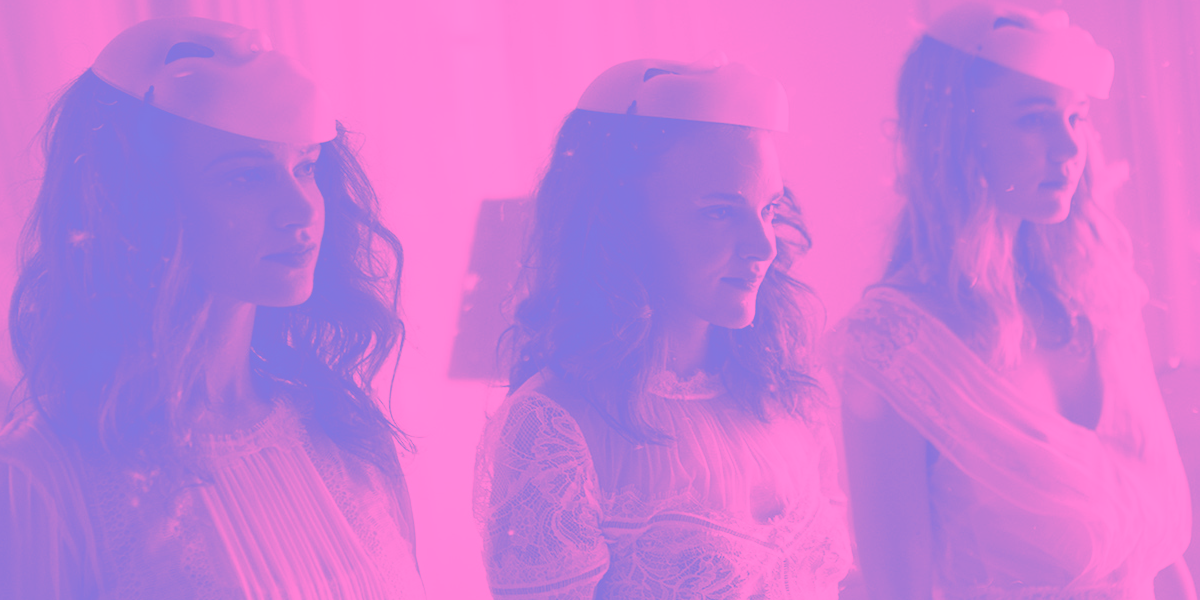
Writer/Director Mitzi Peirone on Braid, the First Cryptocurrency-Funded Feature Film
Not only was Braid her first feature as writer and director, it was also the first feature film fully funded by cryptocurrency (raising a reported $1.7M in just two weeks). And no, I don’t super know what that means either…
Mitzi Peirone, the writer and director of the psychological horror heist film (how’s that for a “genre” film?) Braid, knows a thing or two about beginnings. Not only was the film her first feature as writer and director, it was also the first feature film fully funded by cryptocurrency (raising a reported $1.7M in just two weeks). And no, I don’t super know what that means either, but luckily we got in touch with Mitzi to explain it to us.
Starring Madeline Brewer (The Handmaid’s Tale, Cam, Black Mirror) the story follows two wanted women who decide to rob their wealthy but psychotic friend who lives in the fantasy world they created as children. In order to take the money they have to take part in a deadly perverse game of make believe… and IT LOOKS AWESOME.
We spoke with Mitzi to learn more about her filmmaking journey, what advice she offers to first-time filmmakers, and just what the hell that cryptocurrency stuff is all about.
Braid is your first feature film. How did you take it from initial idea to final film?
Braid started as an existential philosophical quest: I wanted to understand what separated reality from dreams, what that line between real and imagined was and whether that line existed at all. I started reflecting upon the fact that since childhood we instinctively play make-believe, we practice and rehearse life to a subconscious degree, without anyone telling us to, we just naturally inhabit roles and play by made up rules. I realized afterwards that as adults we still operate under the same belief system, that we abide to imaginary conventions and societary rules, playing the parts we believed were right for us. Everything is invented; names, jobs, laws, politics, philosophies, religions, geographical borders, even time, all taking part in this great play of existence.
We are still kids playing make believe, adults in global sandbox. I realized reality was an extension of our thoughts and that we are only as powerful as we believe ourselves to be. So the idea for adults playing dress up stuck in a mind game came to mind pretty early on, I was about 23; the heist propulsion of the story came afterwards, but I always wanted to make something that made the audience feel like they were getting lost in their own minds too, instead of watching and feeling the psychological downfall of the characters by association, I wanted the camera and script and colors, editing, sounds all of it to lose its mind too. I wanted to know what it was like to be incapable of discerning waking life from dreaming.
What themes did you set out to explore with Braid and how much of yourself is reflected in the final product?
Themes of existentialism, philosophical pondering, semiotics, perception of reality, time and the realms of dreams, how they affect our world: traveling through the layers of consciousness that we like to perceive as separate, are yet at once intertwined; fantasies, memories, hallucinations, daydreams all braided into one, finding us stuck, tangled and strangled in this deadly mind fever. There are parts of me in all three characters, their delusions, their wandering minds, their violent passions, their psychological manipulation, their decadence.
Braid in the end is a form of cautionary tale, a psychedelic odyssey without an exit that warns us how potent yet dangerous dreams can be, how easily they can enable us and how quickly they can trap us in the walls of our own heads: paranoia, fears, doubts, delusions, procrastination all live on the dark flip side of dreams and imagination. Being paralyzed by fear is like being stuck in a recurring nightmare. And that is made up, just as much as any other dream that can propel anyone to their rosiest futures. But here comes the element of time: in dreams time slows down. Braid warns you not to dream for too long without taking action or by the time you wake up it might be too late.
Braid was the first film fully funded by cryptocurrency. Can you tell us a little about how you decided to fund in this fashion and how exactly it works?
I didn’t have the connections to get financing from a studio, nor did I want to use crowdfunding platforms that did not offer a return to contributors. I also wanted full creative control of the movie and needed final cut. The tokenized world is full of intelligent opportunities for alternative funding, I think it’s really great for independent artists: I partnered up with the CEO of Consensys, a leading blockchain tech company through which we created a crowd-selling platform for the film that offered 30% of the net profits in exchange for 1.7M to be raised in two weeks: our investors will be the first ones to be refunded and receive an additional 15%.
The reason why we used cryptocurrency is because of its underlying technology, the Blockchain: it is peer to peer technology that enables smart contracts at every transaction, these are also known as “if… then” contracts, which means that if the investment generates profit, then the investor will automatically receive their share. The sale started in June 2017 and it was fulfilled by our deadline. We were in production for 5 weeks, post production for 6 months and premiered at Tribeca Film Festival in April 2018. The film was released in theaters nation-wide in February 2019. World-wide rights were acquired by Blue Fox Entertainment.

What's the biggest surprise about making your first film?
My biggest surprise was how glorious being on set was. It is the most testing yet blissful experience, being on this fantastical journey with a group of people that becomes your family by having a shared lucid dream in mind, all working within this sensorial orchestra together. The artistic process is a miracle; out of nothing, suddenly, everything.
What advice would you give to an up-and-coming filmmaker looking to make their first feature?
My advice to a first time feature filmmaker would be to make the movie about what doesn’t let you sleep at night. Whether it is uplifting or terrifying, the motif behind the story has to be so invincibly important you will do anything to make it happen. Countless things will get in your way, countless sacrifices you will have to make and even after it’s done and out into the world there are chances that it will be misunderstood, berated, insulted and inevitably dissected without you being able to utter a word about it, and people will make what they want of it. But it will also shake some people from the bottom of their souls and that’s when it all pays off: when you make another human being feel less alone. Storytelling is about community, it’s to make us all feel closer, and you as the artist must show your wounds in order to heal them.
Braid is now available on VOD across all platforms: iTunes, Amazon Prime, Vudu etc.
How Hannah Black and Megan Peterson got their First Film Produced by the Duplass Bros.
“Raise funds for your feature? Gain an audience? Oh...and potentially have The Duplass Brothers executive produce? Heck yes!”
I first discovered Megan Peterson and Hannah Black while prepping for the This World Alone crowdfunding campaign. Megan and Hannah had (very) successfully funded their first feature, Drought, and we passed around their fundraising video to show everyone what a great fundraising video could be. As we continued to follow along with their journey, we were happy to learn that you couldn’t find two harder working, kinder, and more accessible filmmakers in the business. Their hard work paid off when Drought was chosen as the winner of the Hometown Heroes contest which brought on Mark and Jay Duplass as producers. Drought is currently in post-production and should be hitting the festival circuit in the fall.

Tell us a little about Drought!
Megan: Drought is a feature length film about a girl, Sam, her brother Carl, best friend Lewis, and estranged sister Lillian that find themselves on a crazy adventure to chase a storm. Carl is on the Autism spectrum & obsessed with weather, but their small town is going through a drought. All he wants is to chase a storm he is predicting. The gang ends up together on a fun adventure mixed with learning about forgiveness and the importance of family.
How did did you guys first meet and how did this big journey all this come together?
Megan: Hannah and I met in a Meisner class 5 years ago at Actor's Arsenal, an acting studio in Wilmington, NC. During the 2 year program, our acting coach, Ron Fallica, showed us Mark Duplass' SXSW talk encouraging filmmakers to make movies on the weekends with friends. So we did that!
Hannah: Megan and I had created a couple of short films and discovered that we complemented one another very well. We enjoyed and respected what the other person brought to the table and had a blast working together. She's pretty much the best! Shortly after wrapping a short film in the summer of 2015, I came to Megan with the story of what would later be, Drought. Our visions completely aligned and we quickly realized that the story deserved a longer format.
Megan: We would meet and structure the story on Tuesdays, Hannah would write and send me 5 pages a day, and in a month we had a first draft.
Hannah: We were so jazzed that we had a real life feature film in our hands that we were ready to make it on the spot. Thankfully, two of our very good friends read it over and encouraged us to keep tweaking it and make it the best it could be. We are so grateful for them and their advice because the first draft was bad... like really bad. Megan and I would meet to discuss story, I would go back and re-write a draft... and re-write again... and again.
Megan: Fast forward three years and 7 1/2ish drafts later, we were ready to make the film but didn't know how it would all come together.
Hannah: We had no idea how to make it, let alone get the finances. Just when we were about to shelf it, Seed&Spark made an announcement that they were doing a Hometown Heroes Rally. Raise funds for your feature? Gain an audience? Oh...and potentially have The Duplass Brothers executive produce? Heck yes!

And all those “potentialities” came true! You guys successfully crowdfunded your movie and now have the Duplass Brothers on as producers! How did this happen?
Hannah: Its absolutely insane right?!! We are still pinching ourselves.
Megan: We still can't believe it but it is true!! It's a pretty crazy story. In the summer of 2017, Hannah texted me a No Film School article titled "The Duplass Brothers Want To Fund Your Feature." Her text only included the article & 13 exclamation marks.
Hannah: Like I said, we were ready to shelf Drought. We had no idea how to get the finances we needed. Megs and I have always looked up to Mark and Jay Duplass and had naturally taken their way of filmmaking and implemented into our own movie making style. When we saw that Seed&Spark was doing the Hometown Heroes rally with a chance to win the Duplass Brothers as executive producers, we quickly got to work.
Megan: The Hometown Heroes Rally focused on encouraging filmmakers to create their stories in their own towns with local casts & crew, which was exactly our hope for Drought. With 6 weeks to get all of our material together, we entered the rally, meaning we would run a crowdfunding campaign for 30 days.
Hannah: Crowdfunding was the hardest thing we had ever done. It is a full time job and with a tiny team of two, we were working 12 hours a day on the campaign and then had our normal day jobs. Together, we lost 20 pounds in the one month of crowdfunding. However, Seed&Spark really sets you up for success to raise all your funds and provides you with all the education you will need to run a smart, concise, and clear campaign. This is not a plug by the way. Seed&Spark really is the best. If you are filmmaker and need to raise money, use them! They are kind and work so hard and are changing the game of independent filmmaking.
Megan: To qualify to pitch to the Duplass Brothers, we would have to raise our funds of $24K & be in the top 10 out of 73 teams with the most followers. At the end of the competition we had accomplished those two things and had the opportunity to create a 30 second pitch video (yes, only 30 seconds?!!?) that the Duplass team would watch along with the other qualifying team pitches. Then on Nov 4, 2017 we gathered with our close family & friends to watch the LIVE announcement of the winners. When Mark announced that Drought had won the Executive Producer-ship & a 25K no-interest loan, the room erupted with an energy we had never felt. Then we were on our way to make our movie with them on our team and double our original budget. It was, and is, unreal!
Hannah: We still cry about it.
Is this a personal story for you? How much of your own life or personal emotions ended up in the film?
Hannah: Drought was originally inspired by the students I used to teach who were on the Autism spectrum. These kids were pure joy and magic to me. The way they look at the world and the unique gifts they brought to the classroom were inspiring. Some of my students had siblings and to see their bond was so special. I really wanted to highlight that particular sibling relationship. However, as drafts progressed I also realized that Drought had also become a love letter to my sister; who is different than me in every way, and to anyone who has a sibling that they love and so desperately want to understand.
Megan: I believe every story you create has a touch of your personal life & emotions on some level. The theme of the movie is very personal to me. Growing up I wanted to fit in and find my place but I was given the label as the "shy girl" or the "nervous girl". I took those labels as less than. My hope through the film is that people will realize no matter the label you have been given, or have given yourself, you are more than that. Our differences make us wonderful and unique and appreciating that about each other will change our perspective for the better.
You guys co-directed Drought. How is the process of directing with another person? How do you divide up responsibilities?
Hannah: It was an absolute dream. I say this because Megan is an incredible human. The fact that I was able to collaborate with her and go on this journey together has been one of my greatest gifts in life. We are complete opposites but really respect and value what the other person brings to the table.
Megan: For me it is wonderful! Especially because we are wired so differently in personality strengths. Where I lack in something, Hannah can come in and fill that gap, then vice versa.
Hannah: We divide a lot of responsibilities depending on what we excel in. I know what I suck at and it is almost always what Megan can do with natural talent and grace.
Megan: We are also actors.
Hannah: On set, we were both playing leads while also directing. Whoever was not heavy on acting in the scene would usually take the lead in directing.
Megan: It is nice having a co-director when you are in a scene and they are able to take over the director role for that moment. The pressure feels less since you know that you have a teammate in the same role that you can pow-wow with to make decisions together.
Hannah: And if you are wondering, yes, we are jealous of one another's gifts and simultaneously cheering each other on.

What's the one thing you know now that you wish you knew before you started making the film?
Megan: You do not need to be and should not be responsible for everything. Holding all the responsibility for everything puts tremendous pressure on you and isn't healthy for you and the people around you. That is why you create an awesome team! You can share responsibilities and give full ownership to your crew. Once you do that and let them do what they are there to do to their fullest, you are free to focus on what you are there to do. It creates a really healthy working environment and brings in more creative people to the mix leading to a better product. This is challenging in low budget filmmaking as each person carries the weight of multiple jobs. We created an open space for dialogue for ourselves and crew to express if they felt they were taking on too much or not being given freedom to do their role. (Also, Hannah had full permission to call me out on things like not feeling responsible when the grip truck was stuck in sand because we had three fully capable crew working on the solution).
Hannah: I wish I would have known that you don't have to be an expert at everything. I really struggled with feeling incompetent if I did not know how every single thing worked. It could become a downward mental spiral if I saw everyone around me buzzing around set knowing exactly what to do. Imposter syndrome at its finest my friends! But that was on me. That is why everyone has different roles on set. It is okay to say you don't have an answer or do not know how to do everything. Celebrate the things you excel at and laugh at the things you struggle with.
What advice would you give to a young filmmaker just starting out with the dream to make a movie?
Megan: It's ok to start small. Make a one minute short film on your phone. Find a partner in crime. Someone who is there to encourage you, challenge you, collaborate with you. They don't even have to live in the same town! Be prepared for the process to feel like a marathon at times and then turn quickly into a sprint. You can go to film school, but you don't have to. We didn't. However, spend time everyday to work on your craft. We have been in classes for years and study the art of filmmaking with all of the amazing resources technology brings us.
Hannah: Find your people to collaborate with. Study all elements of filmmaking. If you are a director, take an acting class. It’s important to understand the role that each person brings to set so you can encourage and support them.
Megan: Most importantly, don't give up. It is a really tough industry but it is possible and you can accomplish your dreams.
Hannah: Above anything else, be kind.
To learn more about Drought and Megan and Hannah’s journey, check out @droughtthemovie wherever you lurk on social media!