

Mirror Box Podcast Ep10 - Redefining Success for Independent Film
Sonya and Hudson chat through July's theme and tackle what INDEPENDENCE means to them and how they've learned to redefine success as indie filmmakers and creatives.
Sonya and Hudson chat through July's theme and tackle what INDEPENDENCE means to them and how they've learned to redefine success as indie filmmakers and creatives.
Now available on…
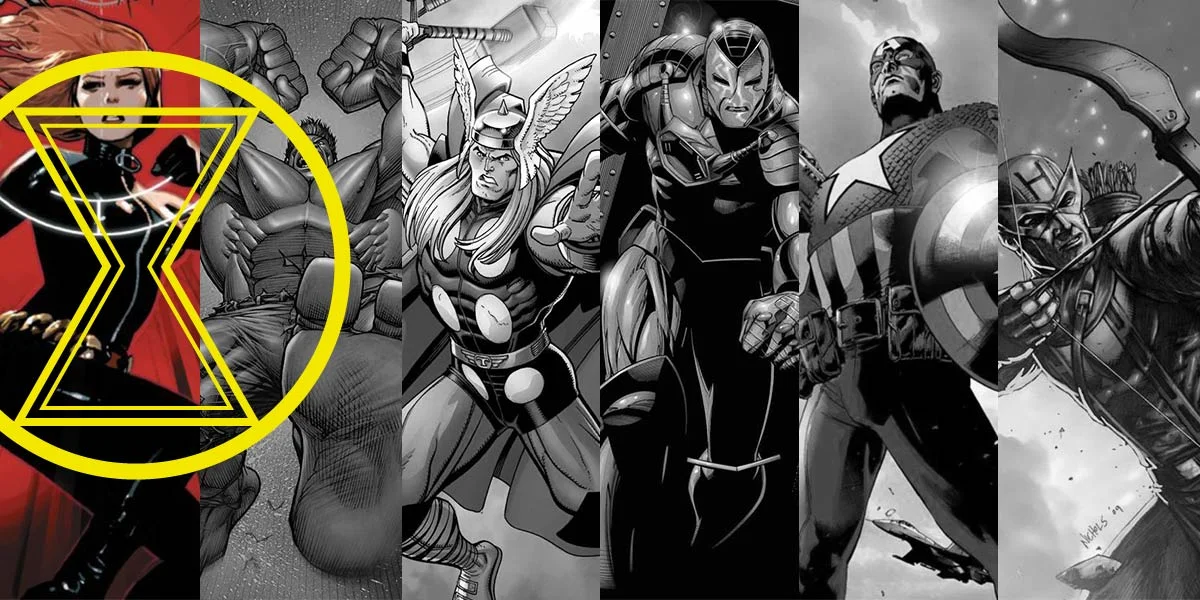
Avengers Week - Black Widow: The Strongest Avenger
Welcome to Avengers Week here at Mirror Box! Each day, we’ll feature a piece from our incredible writers that highlights each original member of the iconic team and discuss the cultural impact and relevance these characters have on the big screen! Hudson Phillips gives us his own take on the big screen history of the redheaded (and sometimes blonde) Russian assassin herself, the Black Widow!
Welcome to Avengers Week here at Mirror Box! Each day, we’ll feature a piece from our incredible writers that highlights each original member of the iconic team and discuss the cultural impact and relevance these characters have on the big screen! Hudson Phillips gives us his own take on the big screen history of the redheaded (and sometimes blonde) Russian assassin herself, the Black Widow!
Black Widow, aka Natasha Romanoff, aka Nat (to those closest to her), played by Scarlett Johansson in the Marvel Cinematic Universe, first showed up in one of the worst MCU films, Iron Man 2, under the guise of Tony Stark’s personal assistant, Natasha Rushman. Natasha is, of course, revealed to be a SHIELD spy but unfortunately comes off as a bit of a Mary Sue in the film. She’s beautiful, talented, speaks multiple languages, holds her own in a fight against a hallway full of goons without messing up her hair … but there’s seemingly nothing there underneath it all, despite Johansson’s best attempts.
While the character (and the film) left a slightly bad taste in my mouth, in hindsight, I’ve also realized that Natasha is a spy who does what it takes to get the job done and in this case, that job was getting close to Tony Stark, who just happens to be into vapid women (with true love Pepper Potts being the exception). She needed to be a bit one note to get the job done. And if Natasha is good at anything, it’s getting the job done.
Then along comes 2012’s The Avengers with Joss Whedon at the helm. Whedon has a long history of writing smart and funny and vulnerable women, and he brings a new depth to Natasha’s character in the film.
We catch up with Black Widow while she’s “working”. Seemingly taken captive, she’s doing what she does best. Undercover spy work. She’s a master of convincing others that they are running the room when she’s secretly in control the whole time, as we see many times in this film.
In fact, you get the feeling that Natasha never enters a room without guaranteeing she’s in control. When she later goes to recruit the Hulk, she’s prepared with a small army surrounding the building. When she meets Thor and Loki, she tells Steve, “I'd sit this one out, Cap. These guys come from legend. They're basically gods.” She knows her limits.
However, after the Hulk is let loose on the SHIELD Helicarrier, Natasha is forced to move far past those limits. She finds herself in a situation where she’s no longer in control and coming face to face with the Hulk, she is petrified. Maybe for the first time in her life?
We also learn a bit of her backstory in The Avengers. An assassin in the KGB, Natasha killed the wrong people and SHIELD was tasked with taking her out and sent their top bow-and-arrow sharp shooter (and Nat’s future best friend), Hawkeye, to do it. Instead, he saved her life and recruited her into SHIELD. And for this, she owes him a debt.
She’s constantly plagued by her past. This “red in her ledger” that she’s trying to wipe out. And this seems to drive her story through all of these films.
Having faced down the Hulk and survived, we finally find Natasha standing side-by-side with her super powered team by the end of The Avengers, diving head-first into fighting aliens. A situation she has zero control over. Control issues feel much smaller when the world’s about to end.
In The Avengers, we learn that Nick Fury, head of SHIELD, has secrets. He keeps things from the team in order to manipulate the results. He is a spy after all. And Natasha, unlike the rest of the team, isn’t phased by this. She understands how the world works. She’s okay with lies. And this theme is fully explored when we catch up with her in Captain America: The Winter Soldier.
There is no truth to Natasha. Truth is fluid. Truth is whatever it takes to get the job done at the time. But, after so many years of living lies, Nat ends up not knowing who she truly is.
After SHIELD is revealed to be secretly run by the terrorist organization HYDRA, the lack of truth starts to take its toll. Natasha says: “When I first joined S.H.I.E.L.D. I thought it was going straight. But I guess I just traded in the KGB for HYDRA. I thought I knew whose lies I was telling, but ... I guess I can't tell the difference anymore.”
And at the end of the film, she makes a choice to release all the secrets of HYDRA, and therefore SHIELD into the public. Including her own “ledger.” This decision is her ultimate acceptance of who she was and a defining moment in who she’s become.
We’ve seen Natasha the spy, we’ve seen Natasha the soldier, we’ve seen Natasha the friend. And by the time we catch up with her in Avengers: Age of Ultron, we get to see Natasha, the human being.
She becomes the one who helps Hulk get back to Banner with her “the sun’s getting pretty low big guy” lullaby. And of course Natasha would fall in love with the one guy who scares her the most. We’re teased of a romance between her and Banner: “He's not like anybody I've ever known. All my friends are fighters. And here comes this guy, spends his life avoiding the fight because he knows he'll win. He's also a huge dork.”
And in one particularly touching scene, as they discuss their future together, Banner says he can never have kids because of his affliction. And Natasha says she can’t either, having been sterilized as part of her training. “They sterilize you,” she says. “It's efficient. One less thing to worry about. The one thing that might matter more than a mission. Makes everything easier. Even killing. You still think you're the only monster on the team?”
A few people got up in arms claiming that she was referring to not being able to have kids as being a monster, when in reality she meant being made a killing machine, her humanity being stripped from her. Banner and Nat see a reflection of themselves in each other in this way.
Natasha is softened even more when we learn that Clint has a family. And she is a part of this family, with Clint even naming his unborn child after her (although it turns out to be a boy and the name becomes Nathaniel), and them calling her “Aunty Nat.”
By the end of Avengers: Age of Ultron, after Natasha has yet again stood beside her fellow superheroes as an equal and yet again saved the world, she takes on a new role–that of leader–as she agrees to whip the “new recruits” of the Avengers into shape.
In Captain America: Civil War, the Avengers are ripped apart after their actions come under scrutiny as the world continues to lose lives in the wake of their battles. They are asked to come under the guidance of a UN lead oversight committee, or live as fugitives, with Iron Man, War Machine, and Vision agreeing, and Captain America, Falcon, and Scarlet Witch refusing. Black Widow initially agrees, but also finds the grey in the middle, allowing Captain America to escape at a pivotal moment in the film.
Natasha is in Civil War what we all should strive to be in the world of politics. To be so vehemently on one side or the other means you lose all your humanity, turning friends into enemies. Yet, you’ll notice, the only one who shows up at Peggy Carter’s funeral to be there for Steve, is Natasha. She’s able to do what’s right for her friends, even if it doesn’t align with her beliefs.
By the time we get to the Infinity Saga (2018’s Avengers: Infinity War and Avengers: Endgame), Nat must face the toughest question of all: What do you do when you are in charge of a supernatural army and even all the supernatural people can’t keep the world safe? Black Widow leads her team to battle … and loses, with big bad Thanos’s snap wiping out half the life in the Universe.
At this point Natasha has given her entire life atoning for her wrongs … and once she’s done that, with interest, what’s she left with? This is the only world she knows. But at some point it went from being a job to being a family. “I used to have nothing,” she says. “Then I got this. This job ... this family. And I was ... I was better because of it. And even though ... they're gone ... I'm still trying to be better.”
She throws herself into her job, leading a team, not just helping the world, but the entire Universe, with the likes of Captain Marvel and Rocket Raccoon under her leadership. And this is her entire world. She is plagued by the snap and feels the weight of it. No matter how many great deeds she does, she finds herself unable to atone for something so massive. Or does she?
When the two “men” (Ant and Iron) come up with a plan to time travel and collect the stones, it’s up to Natasha and Clint to collect the Soul Stone and undo Thanos’s snap. The two non-super powered Avengers travel to the far off planet of Vormir where they are put to the ultimate test. In order to get the Soul Stone and defeat Thanos, they must make a sacrifice. One of them must die. And after a brilliant, edge-of-your-seat battle between the two of them to commit suicide, Natasha ultimately wins and sacrifices her life for the soul stone. This act saves the world.
The thing that makes Black Widow such a great character is that as opposed to her other human counterpart Hawkeye (“The city is flying, we're fighting an army of robots and I have a bow and arrow.”), Natasha never once considers that she’s NOT super-powered. She is right there standing toe to toe with them without blinking an eye.
And I think that’s because she does have a super power. That power is her humanity. Her willingness to sacrifice everything for the greater good. Her willingness to put her own desires aside to be there for her family. And that’s something we can actually strive for.
The thing about The Avengers is, I’ll never have a chance to build an arc-reactor, or turn into a green giant, or to be a god. But I can be like Nat.
Black Widow is our window into this fantastical world. She is human. She is vulnerable. She makes mistakes. But she might just be the strongest one of all.

Avengers Week - Hulk: Always Angry
Welcome to Avengers Week here at Mirror Box! Each day, we’ll feature a piece from our incredible writers that highlights each original member of the iconic team and discuss the cultural impact and relevance these characters have on the big screen! In our next piece, Colby McHugh explores the cinematic career of a certain gamma irradiated individual who could probably benefit from some therapy. Of course, I’m referring to the Incredible Hulk!
Welcome to Avengers Week here at Mirror Box! Each day, we’ll feature a piece from our incredible writers that highlights each original member of the iconic team and discuss the cultural impact and relevance these characters have on the big screen! In our next piece, Colby McHugh explores the cinematic career of a certain gamma irradiated individual who could probably benefit from some therapy. Of course, I’m referring to the Incredible Hulk!
“You wouldn’t like me when I’m angry.”
That famous line has been quoted for almost forty years now, originating in the Bill Bixby led television show that began back in the 70’s, and has since (hopefully) been taken over by the cleverly written line from the original Avengers (2012), in which Bruce Banner quips to Captain America, “That’s my secret, Cap. I’m always angry.”
There aren’t many superhero led productions that have been both successful in the early years of the comics AND still in the modern day.
The Hulk is one of the few. Yes, yes, I know he hasn’t had a solo movie since 2008 and probably won’t anytime soon, but he’s still an integral reason that the films he does appear in are so successful.
Bruce Banner has had one of the stranger cinematic histories of the Superhero Age of movies. His first appearance in film was Ang Lee’s Hulk, which I’m shocked to say came out all the way back in 2003. I was very much a child back then, so it’s crazy to think that the Hulk has more or less been in the consciousness for nearly twenty years, and most of my life.
Back then, the only other superhero movies with any critical acclaim were Spider-Man and the X-Men franchise. Daredevil, an unfortunate Ben Affleck led film, also came out in 2003, but the less said about that, the better. (I definitely also saw this one in theaters and liked it, but don’t hold it against me. I was naïve.)
Lee’s Hulk was not very well received and frankly, has not aged very well. Ang Lee deserves some credit though. His Hulk was more introspective and not quite as destructive or violent as he’d previously been portrayed in the comics, and audiences just didn’t get it. The story itself is a bit too convoluted and don’t even get me started about the weird, comic book-y editing. Either way, not the best cinematic debut for our big green friend, despite some solid casting in Eric Bana and Jennifer Connelly as Banner and Betsy Ross.
The next effort, 2008’s The Incredible Hulk, directed by Louis Leterrier, was a shift from Lee’s film in many ways. Bana and Connelly were recast, with Edward Norton and Liv Tyler stepping in. Leterrier, who previously directed the first two Transporter films, certainly had more of an eye for action than Lee had, so the CGI was much more expansive than the last film. It’s been a few years since I’ve seen this one, but I definitely remember enjoying it much more than the first. Plus, who doesn’t love Tim Roth chewing up scenery as the villain? It still wasn’t a huge success with critics though, and I think this was around the time Marvel realized the Hulk wasn’t really built for solo movies.
Thus, his next appearance in the aforementioned Avengers film was a breath of fresh air. Recast yet again, this time with personal man crush Mark Ruffalo. Needless to say, I was pumped. With Joss Whedon taking the reins of the still fresh Marvel Cinematic Universe, it was so refreshing to see both Banner and Hulk play important roles. With all the quippy, clever writing that Whedon was known for, he was able to create scenes and conversations that thrived off of the characters being themselves and interacting with one another. This was the first right step Marvel had made with the Hulk cinematically, and it’s easy to see why they’ve let Ruffalo keep the role. He’s just great.
And with that right step, the MCU almost immediately took a step back with Avengers: Age of Ultron, which tried to cram far too much into a single movie, including a poorly thought out romantic relationship with the Black Widow. It’s not a bad movie, by any means, just not quite up to the level of the films leading up to it. Plus, from everything I’ve read, there was a fair amount of studio meddling that all added up to make Joss Whedon leave the franchise, and eventually help DC finish Justice League.
The Hulk would be entirely left out of Captain America: Civil War for reasons that would be explained in his next appearance of Thor: Ragnarok. This Taika Waititi led sci-fi comedy really opened both Banner and Hulk up to an entirely new style of film that they both were very much able to thrive in. Getting to see the Hulk himself interacting and speaking with Thor throughout the film was such a refreshing change of pace. They gave the Hulk a personality! And with that, it added tons of depth to the internal conflict that he has with Banner; a conflict that would be explored further in 2018’s Infinity War.
Within the first five minutes of that film, the Hulk is beaten SO badly by Thanos that he essentially refuses to make an appearance throughout the rest of the three-hour long movie. That bold choice would allow Banner to be the hero and make his mark on a film that is chock full of superheroes that are interesting in their own right. And of course, being one of the original Avengers, he survives that fateful “Snap” at the finale.
Which leads us into our most recent, and potentially my favorite, Hulk appearance. Endgame deserves credit for MANY unexpected choices (the five-year time jump, FAT Thor, etc), but giving us Professor Hulk was such an inspired decision. As an avid comic book reader, the idea of having a smart Hulk/Banner hybrid is not that crazy to me, but I NEVER expected to see that kind of fan service on screen. And to make things even better, it totally worked, at least in my humble opinion.
Almost every interaction and conversation he has in Endgame made me smile, particularly when he offers Paul Rudd a taco after he loses his own. Talk about a wholesome moment.
With all the characters from Endgame, we don’t really know where this next phase of the MCU will take us, but after seeing Professor Hulk on the big screen, who knows what’s possible!
Are we going to get an Amadeus Cho as the Totally Awesome Hulk? I certainly wouldn’t be opposed. What about Thaddeus “Thunderbolt” Ross as Red Hulk? Ridiculous, but maybe not too far fetched. My hope is that eventually, they’ll introduce She-Hulk, because who doesn’t wanna see a green skinned, super strong lawyer that could kick your ass? I know I do.
I’m pretty excited for the future of the MCU, regardless of what they decide.

Avengers Week - Iron Man: I am Human
Welcome to Avengers week here at Mirror Box! Each day, we’ll feature a piece from our incredible writes that highlights each original member of the iconic team and discuss the cultural impact and relevance these characters have on the big screen! This first piece is from Alex Oakley, as he takes a deep dive into the one that started it all: Iron Man!
Welcome to Avengers Week here at Mirror Box! Each day, we’ll feature a piece from our incredible writers that highlights each original member of the iconic team and discuss the cultural impact and relevance these characters have on the big screen! This first piece is from Alex Oakley, as he takes a deep dive into the hero that started it all: Iron Man!
“The truth is … I am Iron Man.”
Robert Downey Jr. improvised this shocking revelation at the end of 2008’s Iron Man, and set the tone for the future of what would become the most successful and ambitious film universe since Luke Skywalker first stepped out across the sandy Tatooine in 1977. In an interview with Deadline, cinematic-universe-runner Kevin Feige revealed that the improvised line and the success of Iron Man gave Marvel Studios the confidence to take chances and treat the Marvel Comic Universe like guidelines, not scripture.
Now, 11 years and 20-odd films later, and we’ve reached Endgame–a cultural event so massive that it is a global phenomenon. Avengers: Endgame featured the culmination of the Infinity Stones arc, radical changes to some of our favorite characters, and great successes and character moments for others …
…
…
…
And the death of Iron Man.
The death of the character that started it all.
The end (maybe) of Robert Downey Jr.’s onscreen life in the Marvel Cinematic Universe.
From a box of scraps in a cave that saved his life to the snap that ended it, Tony Stark has appeared as a major or supporting character in nine Marvel films (not including his cameo in the post-credit scene for The Incredible Hulk (the one from 2008, not to be confused with The Hulk from 2003 directed by Ang Lee that Monica and I talked about in April on our podcast Shot for Shot which you can check out Here). Arguably more than any other character in the MCU, we have seen Tony Stark grow, and change, and learn, and mature, and suffer. We have seen his character arc in every peak, and every trough.
And quite frankly, Tony Stark’s arc has been analyzed to–pardon the pun–death:
You can find thinkpieces comparing the rise of Tony Stark to the rise of Marvel Studios; The Washington Post called him the ‘best thing’ to happen to the Marvel Universe; and there are even pieces explaining how he could come back! (Not that resurrection is particularly uncommon for the superpowered jetset.)
There are pages and pages and pages of world-wide-web-wordsmiths looking at the nitty gritty details of each and every scene. People who binged every movie in chronological order without sleep in preparation for Endgame. I am not those people. I am a 12-year-old who saw a movie in theaters about a Marvel superhero that I kind of knew about but wasn’t super popular, and grew up to be a 22-year-old who cried audibly at the funeral for that same superhero. Discussions of masculinity, emotional imbalance, and a crushing fear that displaying negative emotions in any context will label me as ‘weak’ all aside, I don’t cry often. Particularly at movies. I can count the movies that have made me cry on one hand, and most of them center around the death of a dog. (Here’s lookin’ at you, Marley & Me.) So why, all of a sudden, did I, and countless other Marvel fans in movie theaters the world over find ourselves crying at the death of the character? Crying at Pepper Pots sending the ARC reactor out onto the lake by their cabin? Crying at Happy telling Morgan Stark how much her father loved cheeseburgers? What about Tony Stark got us so heavily invested? The character arc of Tony Stark has been, and will continue to be, analyzed literarily, narratively, and figuratively until the end of time. But I think what often gets overlooked in these nitpicks and video essays is not how Tony Stark changed and evolved from Iron Man to Endgame, but what that change means to us as an audience. Why did we feel so strongly about the death? Why was his change in Iron Man, and in Civil War, and in Endgame so impactful to us.
A film is a narrative. It has a beginning, a middle, and an end. Point A to point B. The protagonist starts one way, evolves through the narrative crucible, and comes out the other side changed. And that’s it. That was Iron Man. But then Iron Man 2 rolls off the assembly line. Point A for Iron Man 2 is not Point A for us or Tony Stark. Suddenly it’s Point C. We begin the film with knowledge of and investment in Tony Stark. But this is not unique.
What makes our investment in Stark at the beginning of Iron Man 2 any different than our investment in Woody and Buzz in Toy Story 2? Or Luke in The Empire Strikes Back? The short answer is that it isn’t. But after Iron Man 2, Tony Stark truly begins to tread on untested Hollywood ground. The Marvel Cinematic universe expanded beyond the scope of the Iron Man films, and we see the origins of Thor, and Captain America. And then we get the big fish: The Avengers, an ensemble movie FOUR YEARS in the making. (It seems almost silly to think about how ambitious this was in 2012.) Avengers was new, exciting, and different. And while we still get to see our swaggering Stark take on Loki and the Chitauri, he is sharing the screen for the first time with a full roster of costumed crime fighters and super geniuses. He is still a main character, but he is no longer the main character. We see him grate with Captain America and Thor and Hulk and Fury. We get the famous “genius, billionaire, playboy, philanthropist” line. We get all sorts of trials and tribulations for our super-roster that culminates in the splash-page-like panoramic shot that defined the Battle of New York for us. And at the end of it all, Iron Man has become a leader, a fighter, and more of a hero than ever; willing to sacrifice himself for the safety and survival of mankind. And then they go get Schwarma.
Then comes Iron Man 3. A radical shift in the Iron Man film MO. Tony’s confidence is gone. He is paranoid. He is suffering from PTSD brought on by his near-death experience destroying the Chitauri mothership in the Battle of New York. The events proper of this film aside, what makes Iron Man 3 stand out amongst Iron Man’s arc for us as audience members is that we see him truly suffer as a human being. Not suffer as a genius. Not suffer as a man in a super-powered suit of armor. But suffer as a man, as any of us could, and many of us may have suffered. We see Stark grow in Iron Man 3 in ways that we haven’t gotten to see any of our other heroes change yet, because here, he grows not only through external conflict, but through internal conflict that occurs on a much more personal level than the normal subset of superhero problems.We get to see how this internal change further affects him in Age of Ultron, in which Tony actually manages to create the villain in an effort to protect Earth from another invasion.
However, I think what truly was able to cement Tony Stark into the heart of Marvel’s audience, after all of this, is that Age of Ultron marks the moment in the MCU where Stark is no longer our central protagonist. Following Age of Ultron, Tony Stark appears in four films: Captain America: Civil War, Spider-Man: Homecoming, Avengers: Infinity War, and Avengers: Endgame. Civil War and Homecoming are where Tony Stark really evolves from a superhero protagonist to a well-rounded character developed beyond the scope of any character in a film universe we’ve seen.
Let’s start with Civil War. The protagonist of Civil War is Captain America, clearly. And we know that, from behind the scenes of it all, Helmut Zemo proved to be the puppetmaster antagonist. Yet, even with all the manipulation, Civil War gave the audience a rare opportunity–to see Tony Stark as an antagonist. I’m not saying Iron Man was a villain in Civil War, but I am saying that he was directly against the ideology of the protagonist of the film, and served as an obstacle for Cap and Falcon. We got to see Tony play the bad guy.
On the absolute inverse of that, we have Spider-Man: Homecoming, the not-an-origin story for Tom Holland’s plucky portrayal of Peter Parker that we were introduced to in Civil War. Here we see a penultimate new development for Tony Stark. The audience has gotten to see him as a playboy, a genius, a protagonist, a hero, an antagonist, and now we get to see him as a mentor. This movie cements a new kind of relationship for Tony, one that ages him, and makes him very different from the womanizing, high-roller we first met in 2008. We all know we gasped when Tony actually stepped out of the Iron Man armor to chastise Peter before taking away his suit for his recklessness, leading to a much more stressful and high stakes final battle with the Vulture.
This relationship is further fleshed out in Infinity War, where suddenly Tony finds himself not only a mentor to Spider-Man, but a protector, as they both become stranded on Titan and have to face down Thanos with Doctor Strange and the Guardians of the Galaxy. A role which he fails as Thanos defeats them, takes the time stone from Strange, and finally, the mind stone from the Vision, and snaps. Successfully eliminating half of all life, including Peter Parker, from the universe. We all know how harrowing it was to watch “Mr. Stark …. I don’t feel so good” in theaters in 2018.
And then we get to Endgame, with what proved to be the most heartbreaking (for us) development in the life of Tony Stark yet–fatherhood. If you, like me, went in to Endgame with the sneaking suspicion that the MCU was gonna have to lose either Cap or Stark, the reveal of little Morgan Stark, as cute as it was, dropped a rock in your stomach. Tony was willing to sacrifice himself at the end of Avengers back in 2012, so how could it be possible to make it more difficult for him to be willing to do it again in Endgame? Morgan. Give him something that he never had that truly could bring him to doubt the worthiness of sacrifice. Early on in Endgame, it does. Stark refuses to take part in the Time Heist because while he is still the hero that we have known and loved for over a decade, he is that hero with a child. A family. A cabin on the lake with his wife and his child. Unlike Natasha, unlike Clint, unlike Cap, the Iron Man we see in Endgame moved on. He found happiness through it all. He was lucky, and we got to be there with him.
What made Stark so different from any other character in the MCU, or in any film franchise ever at this point, was not that he appeared in more movies, or had the best lines or the coolest fight scenes or the most interesting conflicts–it was that we, the audience, got to see so many different facets of him grow and change over a decade. Eleven years is a long time. No one is unchanged after eleven years, which means, more than any other character on screen, we didn’t just get to watch Tony Stark grow and change, we got to watch him grow and change with us. As our hero, our mentor, or our friend. And now we have to go on without him. But we will, just like the MCU will. We will go on knowing that we are all the better for having had Tony Stark on our silver screens.

Mirror Box Podcast Ep9 - Geek Out: Independence Day
Alex and Monica geek out over the 90s action flick masterpiece INDEPENDENCE DAY (probably maybe possibly the greatest patriotic film of all time).
Alex and Monica geek out over the 90s action flick masterpiece INDEPENDENCE DAY (probably maybe possibly the greatest patriotic film of all time).
Now available on…
June's Theme: Character
Unfortunately, we can't avoid conflict in life. But what if great storytelling can gives us a better way to frame and respond to that conflict?
Anyone who has ever watched a movie or read a book has a pretty good idea of what the character journey looks like. A character starts in a place of longing. They are pulled out of their safe world. They go on an emotional or physical journey to new worlds. They face an antagonistic force that pulls everything away from them. And then, when they are at their lowest, they learn from the lessons of the journey, rally to defeat the antagonist, and grow and change into a better version of themselves. Or something like that.
This is the same story from Toy Story to Scott Pilgrim to Jesus to Bridesmaids.
We understand that in order to get to a place of change, a character must first face obstacles and crisis. When a character is stuck in their ways, it takes the pulling apart of their safe lives in order for them to see the world in a different way.
But why is it so hard for us to recognize the character journey when we’re the character on the journey? Why do we lose sight of this when we face obstacles and crisis in our own lives? Why can’t we see obstacles as what they actually are? An opportunity to define our story.
Crisis always reveals a person’s true character. If you really want to get to know someone, build a piece of Ikea furniture with them or try navigating the New York City subway together.
Obstacles bring out our fears and flaws. They make us reevaluate our wants and needs. They force us to change. No one ever became great by staying in their comfort zone. How boring would Raiders of the Lost Ark be if Indiana Jones turned down the opportunity to look for the ark because he didn’t wanna take time away from his teaching?
As writers, we’re basically playing god. And not a benevolent one. A real twisted, sadistic god. Because we need characters to change and the more difficult we can make their obstacles, the more they’ll change. If I need to get a character from emotional point A to emotional point B, I ask myself, “What obstacles should I put in their way to get them there?”
Great characters are defined by their choices, not their circumstances. So are you.
Hopefully as humans, we are constantly growing and learning and challenging ourselves. And just like for our characters, growth comes from how we react to difficult situations. Without conflict there is no story, there is no growth, there is no arc. Without conflict, a character journey isn’t an arc, it’s just a flat line.
Another example for those of you who are parents: How do you get your kids to learn? You can teach them something over and over again, but what they really remember is what they experience. Do you remember your parents telling you to not play with matches or do you remember that time you burnt your finger?
One of the hardest things about being a parent is letting your kids get hurt. Physically, when they are kids, you have to let them fall off the bike in order to learn how to ride. And emotionally, when they are teenagers, you have to let their hearts get broken in order to learn how to love. In order to learn and change, we have to face adversity. Otherwise it’s all theory.
In 2017 I wrote and produced a movie called This World Alone (find it in a film festival near you!) and the main theme in that film is exactly what we’re talking about here. In a post-apocalyptic world, two mother figures raise their daughter, Sam, with opposing world-views. Sam’s biological mother, Connie, raises Sam as a survivor, cautioning that the world is driven by “only the strong survive,” whereas their family friend, Willow, raises Sam to protect nature and see the world as filled with light. But it’s not until Sam is forced to leave their safe compound and go out into the world that these world-views are put to the test. It’s not until she faces conflict that she learns what she really believes.
I know that there are very real obstacles that are much deeper and more difficult in life than what we see in the movies. I don’t mean to make light of sickness, death, or suffering by making the comparison. But, those things will come for us no matter what. No matter how much we cocoon ourselves off, we can’t avoid conflict. But, maybe we can start to look at them a little differently: Not as circumstances that define us, but as opportunities to be defined by our choices.
Around the site this month, you’ll find more articles exploring great characters in genre film and what you can learn from them to build your character (wink, wink).

Mirror Box Podcast Ep8 - Study Up: Exploring the Importance of Supporting Characters
This month, Alex and Monica do another historic walk through the world of supporting characters, what roles they play in film and literature (hint: they’re important), and teach us some new words along the way.
This month, Alex and Monica do another historic walk through the world of supporting characters, what roles they play in film and literature (hint: they’re important), and teach us some new words along the way.
Now available on…
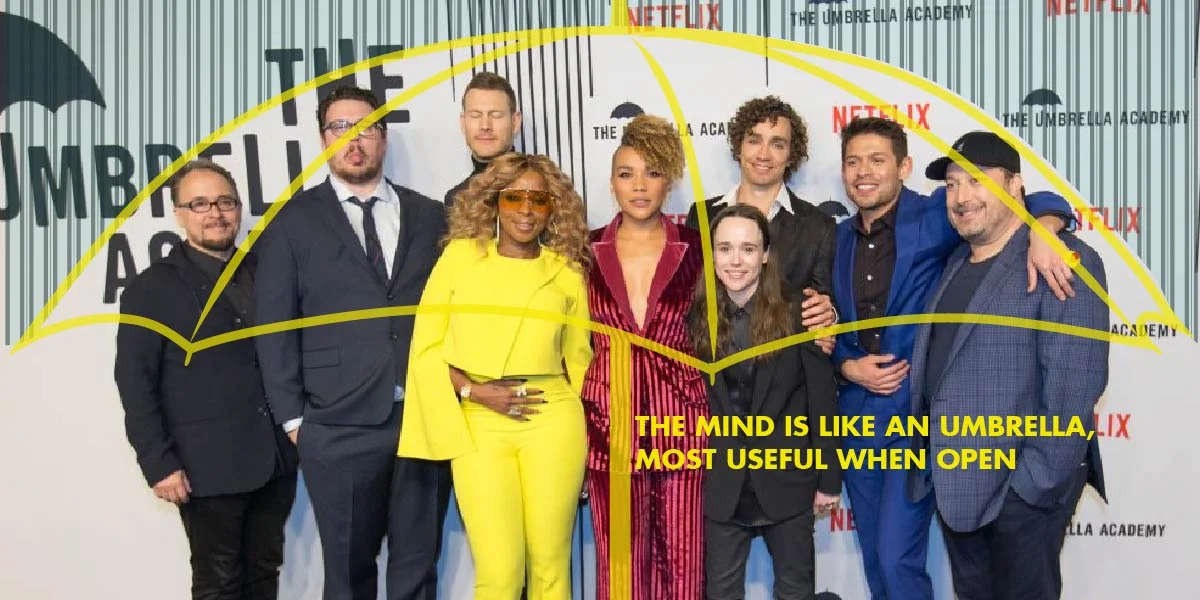
The Umbrella Academy: Celebrating The Unconventional Family
CK Love geeks out over our favorite TV (and comic book) dysfunctional (super) family, the Umbrella Academy.
The comic book series, The Umbrella Academy, is the brainchild of writer Gerard Way (also the lead singer of My Chemical Romance) and artist Gabriel Ba. The tv series, now shooting its second season, took the comic and expanded the story with Steve Blackman (Fargo, Altered Carbon) as the showrunner.
This unconventional family is a collection of sorts. Chosen from thousands of children born on the same day, their father ‘adopted’ seven of them from around the world, discovered they each had special talents, and called them the Umbrella Academy.
In both the series and comic, we meet the siblings when they reunite after years of being apart following the death of their father. This reluctant group of super heroes spend more time dealing with their own family dysfunction than using their talents to make the world a better place.

One of the siblings Number 5 (The Boy) can travel through time and comes back with dire news: The world will come to an end in seven days. He sees something in the future that tears his heart out. He is determined to stop it from happening and needs his siblings help. Number 5 wants to save the world. He wants to save his family.
Number 5’s altruistic request that his family help him save the world, puts them into conflict with who they are as a family, and who they are as individuals. They struggle with their “specialness” - their father having never taught them how to reign in their powers - and are more neurotic than ‘woke’. Their reunion is uncomfortable and fraught with sibling rivalry. Some may argue that they are not worthy of super hero status (they would agree!), and it is a very Eastern spiritual traditional concept that you clean your own house before you make any attempts to tackle the world’s problems.

Each sibling laments their “ability - all except one. Vanya (The White Violin, Number 7) feels like a misfit among misfits. She wishes to be like her siblings. She is a quiet, unassuming classical violinist who balks at the idea of being first chair because she has been told all her life that she is not special.
We all can relate to that and what happens to her - what we all want personally – the opportunity to prove that we are special, that we have something to offer the world. And that someone in a position of power will help showcase this innate talent. For Vanya, it is a double-edged sword. She is discovered to be the most special of all, but the one person who recognizes it also wants to use her talents for evil.

Klaus (The Séance, Number 4), a tormented soul, he is able to see dead people and is frequently visited upon by their deceased brother, Ben (The Horror, Number 6). By virtue of their relationship, we get a deeper understanding of the family dynamic. Ben offers Klaus insight into the world around him that Klaus is oblivious to in his constant inebriated state – and it is this relationship that shakes Klaus out of his stupor and … uses his talents for good not for evil.
Diego (The Kraken, Number 2), the brother who is a master at throwing knives and manipulating objects hurtling through space, seems to be always losing someone. This creates tension in his character. It occurs to me that his super power is not his knife throwing skills but his heart, and is the reason he decides to help Number 5.
The big sister, Allison (The Rumor, Number 3), in the graphic novel alters reality with the truth which is a hope that those of us who think we are “woke” have, that we will always rise to the occasion. The significance of this unusual super power is not lost on me in these times, and the fact that a woman was endowed with this kind of power is reflective of what we hope we would do – cut through the crap of life and tell the truth.
That’s why in the tv series, it is not far-fetched that she has an over stimulated sixth sense. She worries and frets about the siblings – but Vanya most of all. This character epitomizes the “real” mother the group never had. Big sisters always take this role – sometimes to their detriment. And Allison is no exception. Her “meddling” as Vanya identifies it, kept them separate throughout the years.
The big brother, Luther (Spaceboy, Number 1), is the most forgiving and therefore naïve of them all, making excuses for their father as to why he performed an experimental surgery that turned him into a “freak” with super-strength.
Luther becomes the “ideal” father figure, protective, strong, stubborn. His and Allison’s “unconsummated love relationship” echoes loudly the lack of familial stability this unusual family never had with their adult parents. We all want to think our parents have only our best interests at heart, but the UA puts “father” into the villain seat. And the struggle of the siblings to come to terms with their childhood and all it entailed serves as the drama of the graphic novel and series.
The sweetness and quirkiness of the story comes from the fact that each of them, as they move in the world as victims of villains, have their own personal reasons for doing what they do. And more than anything else, because they feel outside of everything, because they were separated and segregated by their father from the rest of humanity, they have a keen sense of loyalty. The thrust of their action is always:

Mirror Box Podcast Ep7: June's Theme - Character
Sonya and Hudson (who clearly couldn’t get his mic to work right in this episode) take a look at the theme of CHARACTER. They discuss their favorite movie characters, walk us through how to write great characters, and how to apply and recognize those lessons in our own lives.
Sonya and Hudson (who clearly couldn’t get his mic to work right in this episode) take a look at the theme of CHARACTER. They discuss their favorite movie characters, walk us through how to write great characters, and how to apply and recognize those lessons in our own lives.
Now available on…
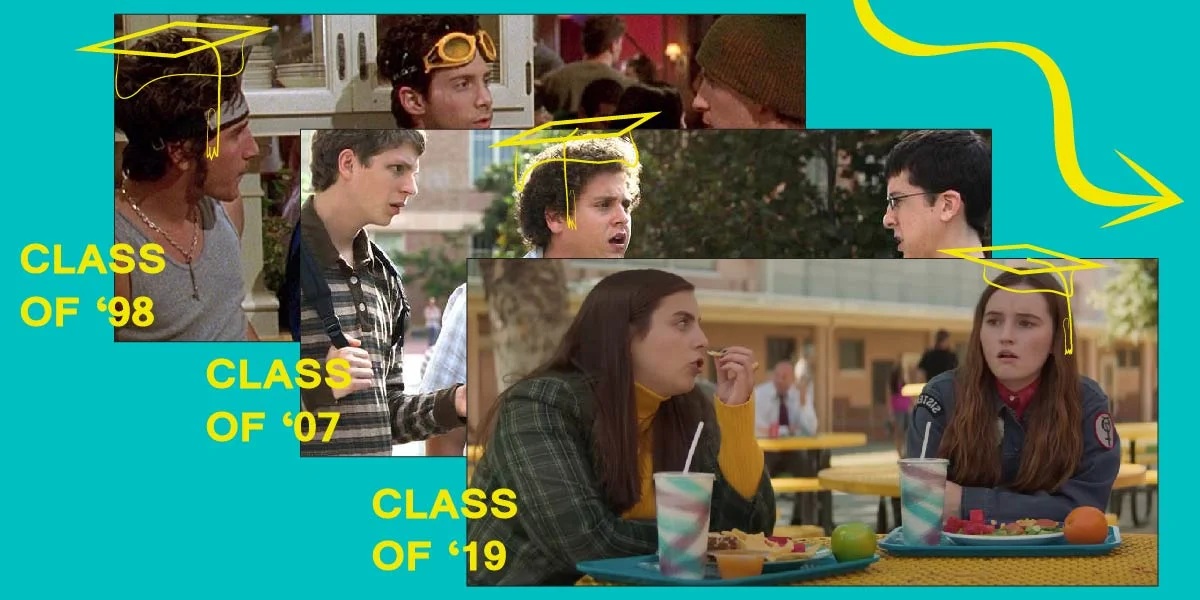
Booksmart, And The Generational Tradition It Follows (And Breaks)
Olivia Wilde’s Booksmart takes cues from teen comedies of the past, but changes the formula enough to make it totally unique and totally enjoyable.
Teen comedies are a staple of American cinema, starting way back in the 80’s with the John Hughes explosion and continuing all the way until today with Olivia Wilde’s excellent directorial debut, Booksmart.
That said, these movies tend to ebb and flow throughout the cultural consciousness, making their presence known in some years and completely disappearing in others. As I’m writing this, we’re in a bit of an upswing in quality teen movies, thanks in part to the efforts of streaming platforms like Netflix and Hulu.
Booksmart falls into a subcategory of teen movies that I like to describe as “One Crazy Night” movies. George Lucas’ American Graffiti (1973) was the first teen movie to utilize this idea, with those characters cruising the streets of southern California on the last day of summer vacation. Ferris Bueller was trying to have one last day of hooky before graduation. The 90’s had Empire Records, which had its teens fighting to keep their local record store from being bought by a big corporate franchise and (starting to see a pattern?) only having one night to do it.
Booksmart follows two very smart (duh) senior girls that have spent the entirety of their high school careers studying and making sure they get into a great college. After a world shattering realization that even the people who partied and had fun all throughout their four years are ALSO getting into those great schools, Molly (Beanie Feldstein) and Amy (Kaitlyn Dever) embark on a last-ditch effort to go and party, find love, and let loose the night before graduation.
I’d like to take this sub-category and specify it a little further, because Booksmart was not the first film to put forth this idea. It follows the schematics first put into place by movies like Can’t Hardly Wait and Superbad. Both of these films involve pairs of outsiders who never partied or had sex in high school and are now about to graduate. With the thought of heading off to college without experiencing those things looming overhead, these characters do everything in their power to have a good time, and possibly profess their love to a guy/girl that they’ve secretly had crushes on for years. And oh yeah, all of this needs to happen before the sun comes up. The parallels are certainly all there.
It’s also very interesting to think how this style of movie comes out almost every ten years or so, starting with Can’t Hardly Wait back in 1998, and Superbad following nearly a decade later in 2007. Almost like each generation of high school students get a movie like this. I was too young to see Can’t Hardly Wait when it came out, so that viewing came much later in life.
Superbad, however, has a much softer place in my heart. It was one of the very first R rated movies I ever snuck into. I have a distinct memory of buying a ticket for Rush Hour 3 and feeling a very strange mixture of guilt and excitement as I walked into that theater. As poorly as some aspects of that movie have aged, I still love Superbad and all the weird, memorable characters and situations Seth and Evan encounter that night.
Looking at Can’t Hardly Wait and Superbad through today’s cultural lens doesn’t really do them any favors. What it does do, however, is give us a pretty accurate snapshot of those decades. They are 100% products of their times, and that softens the blow a little bit, in my mind. Booksmart does a great job of being very specific in the same ways. It is very much a 2019 film, filled with tons of cultural references and jokes that will almost certainly age strangely in ten years or so until the next great teen movie comes out.
If you had told me the next great teen movie was going to be directed by Olivia Wilde, I might not have believed you. She proved me wrong. So, so, wrong. The directorial choices she makes throughout the movie are really impressive. It’s shot better than a teen comedy has any business being and it just oozes with style. The choice to have those two protagonists be girls in a genre traditionally dominated by sex crazed boys is so refreshing. Last year’s Blockers did something similar, and while it was much broader than Booksmart, it was still very entertaining and funny. I would have included it on this list because it also takes place throughout one night, but the story focuses just a LITTLE too much on the adults for my liking.
Wilde showed the world that girls can be just as vulgar and funny as the boys, and I’m hoping a new trend is starting. Give me more teen comedies involving guys AND girls. Literally everyone can relate to these films in some small way.
Booksmart is not perfect, by any means, but teen movies almost never are. Neither are teens, so maybe that makes sense. The archetypes and characters this genre uses are universal, and will continue to be relevant for years down the road.
There will always be outsiders in high school, and there will always be films made about those outsiders.
I’ll watch all of ‘em.
Luke Pilgrim and Brad Kennedy on launching their sci-fi anthology series Encounters
The team behind Sozo Bear Films discuss making short films on a budget, crowd-funding through live events, and how they divide up responsibilities on set.
Luke Pilgrim and Brad Kennedy are the two brains behind Sozo Bear Films and the upcoming sci-fi anthology series, Encounters, which they are currently crowdfunding for over on Seed & Spark. The first episode of Encounters is now available to watch online and we were so taken by it, that we reached out to the filmmakers to discuss the project, their background, and the lessons they’ve learned along the way.
How did you guys first meet and get involved in the film industry? What's the background of Sozo Bear Films?
We met while we were in film school at the University of North Georgia in 2012, but we didn’t truly begin collaborating together until 2014, well into the last couple of years of our college careers. We really got our start professionally from our senior capstone project which was a short film called The Apology Service. We landed our first client off of the short film and from there we began our own production company, Sozo Bear Films.
You've had great success at festivals with your short films. Was the end-goal always to move towards larger projects?
In a way the end goal was to move onto bigger projects, but at the same time we recognize that there is a certain type of skill that goes into telling shorter stories and we recognize that we’re pretty good with the format. We figured for our next step to move forward, it would be more manageable to create the several short films under one unifying theme than try to tackle a feature length film.
What was the biggest lessons you learned on these early shorts?
The biggest lesson we’ve learned from our short films is to always design the short within your limitations. That doesn’t mean that you have to restrict your creativity, but more so, if you only have so much budget you can work with, you get creative with what you have and create the best movie you possibly can within those parameters.
Where did you first get the idea for Encounters and why an anthology series as opposed to another short or even a feature film?
The project actually began when we were making a commercial for our company, Sozo Bear Films, which we wanted to release on World UFO Day. In fact, the abduction scene in episode 1 of Encounters is actually the footage from that commercial. After completing that little promo, everyone from our cast and crew to our composer were asking us, “Why isn’t this a short film?” And so the two of us sat down and figured out what was salvageable from the commercial, so that we wouldn't have to completely start from scratch. We kept the abduction scene, with a few minor visual tweaks and more ominous music, and wrote a new beginning and ending for the film. And then we thought, well we really liked this horror/sci-fi vibe and the idea of ending on a darker note and exploring a unifying theme so we decided to expand. For us, a feature is not as manageable currently and we really feel like we can reach more people with shorter content.
But what we knew we could achieve was multiple short films that we package together to end up with something about as long as a feature but filmed and consumed in smaller portions.
After watching the first episode, the quality is amazing and I love the tone of it. There's some clear Twilight Zone / X-Files / Spielberg influences. What kind of movies and TV did you guys grow up on and how has that influenced you as filmmakers?
Spielberg was such an integral part of my childhood. We both grew up watching his films and that “larger than life, movie magic” sensation that he always cultivates is something that we are constantly striving for. And The Twilight Zone and X-Files are definitely influences for this series but we are also big Coen Brothers fans and we really like directors like Zemeckis, Kubrick, and Scorsese. We’re big fans of The Duffer Brothers as well and Stranger Things is another awesome show that influences our work because they have so perfectly paid homage to Spielberg and other sci-fi and horror films that we love.
What's the plan for Encounters once it's all done?
This year we are working the first episode of Encounters at festivals while we are finishing raising the budget and filming the next episodes. Our goal is to release the next episode at our Night At The Movies event next year and then release an episode every three months after that.
Why the decision to crowdfund? Why Seed & Spark? How has that process been for you so far?
We crowdfunded for our first film through Kickstarter and we raised $5,000. We had a great experience with it but we felt like after that we didn’t want to constantly have our hand out. So over the past few years we have funded two films, Sunnyside Drive and The Amazing Anti-Fart Formula, as well as the pilot for Encounters, on our own. When we decided to expand into an anthology, there was just no way we could afford to film all of the episodes independently. We were going to have to find some help. So we asked Terrell Sandefur, who helped found the Macon Film Fest, to come on board as our producer. So we are raising $10,000 through Seed & Spark but that’s only a portion of the budget which will allow us to film the next two episodes. And the remainder of the budget will be raised outside of Seed & Spark through private donors.

How are you guys able to get such quality on such a limited budget?
I think a big part of how we are able to make films without breaking the bank is because we always have a very clear vision before we get to set. Brad and I usually are the ones writing the film so we understand it extremely well from the beginning and we break down the scenes and storyboard them in detail so that we don’t waste any time on set. Since the beginning, we’ve been really hands on with everything. I’m usually operating the camera. Brad’s making sure we are on schedule or working with the actors. Brad and I both edit and I do the color correction/sound design. So we’ve both always worn so many hats that we’ve been able to make work that looked really good without spending very much money.
You kicked off your campaign with an in-person screening, which is brilliant. What was the strategy behind that and how did you go about raising money in the room?
Well it was important to us that everyone was excited and having a good time. This was our second year hosting Sozo Bear Presents: A Night At The Movies and it was an awesome evening. We had a lot of great films from all over the country and Q&A with the filmmakers.
Then we premiered Encounters at the end, had our own Q&A, and then made the announcement about the series and our crowdfunding campaign. We raised close to $4,000 that first night.
We wanted to promote the campaign at the moment when our fans would be most engaged with the pilot episode and we figured it would be a no-brainer to begin the campaign right after the premiere of Episode 1. We were very conscious that we needed to present it as a way for people to join us on this sci-fi / horror journey and not in a way that abuses the relationship with our festival attendees. We tried our best to take note from Steve Jobs and Apple keynote presentations on how to present our campaign in a way that people would leave the theater excited to be a part of what will come next with Encounters. And we believe that the results of the evening reflect that people are excited to join us on this journey.
As co-writer/directors how do you divide up responsibilities and have a united front throughout the process?
We’ve just learned over time who has which strong suits and we let each other lead in those areas. We always consult with each other on important decisions and most importantly we always treat each other with respect. There’s no ego kind of stuff when you are co-directors. Because you both have equal say. It’s really natural for us and we depend on each other a lot when we are trying to make quick decisions on set. It’s great to be able to talk something through really quick, pros vs cons, and then give the crew or cast their direction.
What's the biggest piece of advice you would give to filmmakers wanting to kick off their own filmmaking careers?
Make movies. Literally, that’s it. There will always be a ton of reasons why you aren’t making movies. Like you don’t have the right budget or the right camera or the time. You may be working another job right now but have to find the time after work or on the weekends to create. You just have to take that first step and make a piece of work. Because getting started can be scary and paralyzing. And your first projects might suck but that’s okay. You’ll learn so much from sucking that you’ll never learn if you let excuses stop you from making movies.
What's next for you guys?
We’re going to be filming Encounters for a while. But we also have a lot of commercials and music videos and docu-promo films that we are producing every week. We are working with someone on a feature film as well. And of course we’ll be out there on the festival circuit in support of Encounters: Episode 1 this year! If you’d like to see any of our work you can visit www.sozobearfilms.com. And be sure to like and follow us on Facebook, Insta and Twitter to keep up with our filmmaking adventures!
Where can we find info on Encounters and what's the best way for us to get the word out?
You can pledge and read all about the series at seedandspark.com/fund/encounters. And the best way to help is to just share like crazy on social media. If you don’t mind sharing our posts as they go out on Facebook or you can even make your own posts and just put the link to our Seed and Spark campaign and tell people what we are trying to achieve. Every pledge and every share is so important to us and we are so thankful that people are excited about this series and really want to see it come to life!
By the time this goes to print, Encounters may be all the way there, but please visit seedandspark.com/fund/encounters and give what you can. Even the smallest amount goes a long way. And even if you can’t afford to give anything, clicking “Follow” is worth just as much.

Everything is Adaptation
Screenwriter Profound Clarke journeys into the anxiety-filled existential question all writers ask themselves—“am I original?”—and comes through on the other side.
When working on a new piece I find two voices. One voice is my own. The other is a voice that questions if the first voice is mine.
Am I original?
Of course I am. Originality is what I love in art and something I pride in what I do, yet ...
Have I heard this before?
When I write I wonder if the voices in my head are telling tales I’ve heard before. Is this story original? Has it been done before? Finally I’ve found comfort in a universal truth in storytelling:
Nothing you ever write is original.
Terrifying, I know, but please stay with me here. Originality is so treasured in our craft that The Academy gave it a specific award. Not Best Screenplay, but Best ORIGINAL Screenplay. If it’s not original, the only thing accepted is adaptation.
Lean in a bit here while I tell you a little secret -
Everything is adaptation.
Crazy? Not as crazy as you think. Let’s take a look at a few films you may know and love, for example.
The film Poltergeist (1982) is a good start. This iconic paranormal feature was spawned from several minds, starting with Spielberg. He put together a treatment with the help of Tobe Hooper, who took Spielberg’s original Alien Horror concept and tied it to stories he’d become fascinated with in a book he was reading which was about, surprise, poltergeists. But there is adaptation beyond the fundamental concept of book to screenplay.
The Native (DECADES OLD SPOILER ALERT) aspect where the house was built on an old burial ground was inspired by true stories one of the writers came across. Additionally, one of the biggest beats where one of the children in the home is snatched up by a tree outside his bedroom window comes from the real fears Spielberg had about a tree in his childhood. All of this life experience and passing knowledge wrapped up into this iconic horror film that we call original.
No film comes from nowhere. It’s all pieces of you, and in this case, pieces of several writers inspired by the world around them.
Juno, the 2007 film about a teenage girl and the decision to give her unplanned pregnancy up for adoption was penned by Diablo Cody. This was Diablo’s first screenplay (yeah, I know, she’s an anomaly of brilliance) and was actually asked to bring her unique vision to a script after being discovered as a blogger. She thought, “What’s a story that’s never been told?” and came to wanting to tell this little story about this big decision.
Original idea off the top of her head, right? Well, kind of. She herself hadn’t made this journey, but the titular character Juno was very much based off her. The voice of her protagonist is her teenage voice. The decisions the character makes are based off the decisions she believed she would have made in this situation. The journey itself she witnessed from another student in high school, and Juno’s best friend (and baby daddy) was based off her own best friend when she was that age.
All of the dynamics of this film come from moments from her life adapted into the best storytelling elements possible for screen.
Get Out, the 2016 film from Jordan Peele was heralded as a unique original piece of work subverting the horror/thriller genre. To many, this film went to places that they hadn’t thought of, but for others so many pieces of Get Out felt adapted from their own lives. This is because the film, right down to the inciting incident, came from Peele’s experience. “I had a Caucasian girlfriend a while ago. I remember specifically asking if the parents knew I was black. She said no. That scared me.” Peele would go on to say that the meeting was fine, but this feeling and his ability to adapt that into a feature narrative won him an Academy Award.
This goes on and on.
Everything is adaptation.
No movie exists from nothing. All storytellers do is take the world around them and turn these collection of stories they’ve heard, stories they’ve told, into the ingredients to complete a recipe.
We adapt the stories of our lives, both personal and secondhand, into consumable works of art.
In truth, the only part of your movie that can be original … is you.
Mirror Box Podcast Ep6: Study Up: How Horror Films Adapt To Societal Fears
This week Alex and Monica walk us through a deep dive of the 90 year history of horror films and how they adapt to and reflect the fears of society as a whole.
This week Alex and Monica walk us through a deep dive of the 90 year history of horror films and how they adapt to and reflect the fears of society as a whole.
Now available on…
Mirror Box Podcast Ep5: Adaptation
Hudson & Sonya deep dive into all facets of ADAPTATION- from their favorite book-to-film adaptations (and what makes them great), to learning how to follow their filmmaking dreams while adapting to their environmental life changes.
Hudson & Sonya deep dive into all facets of ADAPTATION- from their favorite book-to-film adaptations (and what makes them great), to learning how to follow their filmmaking dreams while adapting to their environmental life changes.
Now available on…
Our Favorite Geek-Culture Adaptations
The Mirror Box staff comes together to give their opinions on the best adaptations that have been made, what stories are begging to be adapted, and other burning questions!
PROFOUND CLARK:
What’s your favorite book-to-movie adaptation?
Adaptation. Naked Lunch. Conventional adaptation would be Hitchhiker’s Guide to the Galaxy.
What’s your favorite comic-to-movie adaptation?
Infinity War/Endgame feels like a cheat (prefer Endgame). Before that it was The Crow, I think.
What’s your favorite game-to-movie adaptation?
Mortal Kombat
What book (or comic or game) most needs to be adapted into a movie?
I’d love to adapt Pale Fire by Nabokov. I would love to see the manga/anime Monster adapted as well to live action.
Who would play you in a movie adaptation of your life?
Donald Glover
What director would be the best fit for a movie adaptation of your life?
It might take Kaufman to see something.
What moment was most defining, yet hardest to adapt to, in your real life?
When I learned adulthood was a myth.
In adapting to changes in your life, what do you consider to be your “core” - the thing that will always stay the same no matter how much your circumstances might change?
Like Straw Hat Luffy, I’ve committed myself to a mindless devotion to passion in others as much as, if not more than, myself.
JACOB YORK:
What’s your favorite book-to-movie adaptation?
American Psycho because it improves on the book in every conceivable way.
What’s your favorite comic-to-movie adaptation?
Into the Spiderverse made me cry because I saw a comic book on screen for the first time. (Scott Pilgrim vs. The World is also on that list, though.)
What’s your favorite game-to-movie adaptation?
SLIM PICKINS, HERE! To my mind, there has not been a truly good video game movie. My answer is Street Fighter, which is great for Raul Julia's unironically wonderful performance as M. Bison.
What book (or comic or game) most needs to be adapted into a movie?
(Here's a deep cut for you.) Suikoden II needs to be an eight episode mini-series.
Who would play you in a movie adaptation of your life?
My wife would say Jason Segel, so let's go with that.
What director would be the best fit for a movie adaptation of your life?
Hiro Murai. He has a way of making the mundane look exceptional.
What moment was most defining, yet hardest to adapt to, in your real life?
There's just not a lot of footage when you're sitting behind a laptop, writing scripts, no matter how good they are...
In adapting to changes in your life, what do you consider to be your “core” - the thing that will always stay the same no matter how much your circumstances might change?
I hope that I will always treat people with empathy, especially when I disagree with them. I want people to know that I'm listening.
ADAM PETREY:
What's your favorite book-to-movie adaptation?
Stalker (1979)
What's your favorite comic-to-movie adaptation?
Scott Pilgrim vs. The World (2010)
What's your favorite game-to-movie adaptation?
I think Super Mario Brothers (1993) wins by default because I haven’t seen any others.
What book (or comic or game) most needs to be adapted into a movie?
Slaughter-House 5 by Kurt Vonnegut
Who would play you in a movie adaptation of your life?
I’d like to think Jake Glyllenhaal
What director would be the best fit for a movie adaptation of your life?
David Lynch
What moment was most defining, yet hardest to adapt to, in your real life?
Moving out for the first time in tandem with my first heartbreak.
In adapting to changes in your life, what do you consider to be your "core"—the thing that will always stay the same no matter how much your circumstances might change?
My goals never change. I know what I want which is to make films. It’s just the situation & circumstances that change around me.
SONYA MAY:
What's your favorite book-to-movie adaptation?
About A Boy
What's your favorite comic-to-movie adaptation?
Scott Pilgrim vs The World
What's your favorite game-to-movie adaptation?
Double Dragon, but only because I had a weird obsession with the movie as a kid, I am well aware that it is not great haha
What book (or comic or game) most needs to be adapted into a movie?
I want a Fable video game-to-movie adaptation and an A Single Shard book-to-movie adaptation
Who would play you in a movie adaptation of your life?
Chloe Bennet
What director would be the best fit for a movie adaptation of your life?
Greta Gerwig
What moment was most defining, yet hardest to adapt to, in your real life?
When I finally got up the nerve to quit my first full time job out of college with no back up plan. I struggled with on and off employment for the next year and a half, but it's been worth it everyday because I'm mentally in such a better place and am finally figuring out what my true passions are.
In adapting to changes in your life, what do you consider to be your "core"—the thing that will always stay the same no matter how much your circumstances might change? It's my support system, without a doubt. If I didn't have my family, significant other, and those who have been willing to take a chance on me *cough* Hudson, you're the real MVP *cough cough* it would be significantly harder to stay sane throughout all of the changes that life throws my way, from unemployment to dream jobs and moving across state lines, that core of people are truly the core that supports my dreams, align with my morals, and always push me to succeed and I hope they can stay by my side in some way forever!
CK LOVE:
What's your favorite book-to-movie adaptation?
Silence of the Lambs
What's your favorite comic-to-movie adaptation?
Wonder Women
What's your favorite game-to-movie adaptation?
Tomb Raider
What book (or comic or game) most needs to be adapted into a movie?
Rachel Rising
Who would play you in a movie adaptation of your life?
Alanna Ubach
What director would be the best fit for a movie adaptation of your life?
David Fincher / or / Lynn Ramsey
What moment was most defining, yet hardest to adapt to, in your real life?
Leaving the life I knew to begin again.
In adapting to changes in your life, what do you consider to be your "core"—the thing that will always stay the same no matter how much your circumstances might change? My silence. I am a very silent and steady person.
COLBY MCHUGH:
What's your favorite book-to-movie adaptation?
Lord of the Rings. It really kickstarted my love of fantasy as a young kid.
What's your favorite comic-to-movie adaptation?
Having just watched Endgame for the second time, I'm having a very hard time not picking that.
What's your favorite game-to-movie adaptation?
Detective Pikachu. It was the most fun I've had in a theater in a while.
What book (or comic or game) most needs to be adapted into a movie?
American Vampire by Scott Snyder and Rafael Albuquerque. Although I think this would work best as an HBO series rather than a film.
Who would play you in a movie adaptation of your life?
David Harbour could definitely play ornery, old man Colby.
What director would be the best fit for a movie adaptation of your life?
Richard Linklater because he's able to find stories in the most boring of places, and my life is exceptionally boring. .
What moment was most defining, yet hardest to adapt to, in your real life?
Ten years ago, when I was diagnosed with type 1 diabetes. It was a real bummer, to say the least.
In adapting to changes in your life, what do you consider to be your "core"—the thing that will always stay the same no matter how much your circumstances might change?
I think my love of stories is what I'll always have to fall back on, no matter what. Movies, books, comics, video games. All of 'em.
MONICA BEARD:
What's your favorite book-to-movie adaptation?
Jurrassic Park
What's your favorite comic-to-movie adaptation?
Spider-Man: Into the Spiderverse
What's your favorite game-to-movie adaptation?
I don't play videogames, so I don't care much for movies based on them.
What book (or comic or game) most needs to be adapted into a movie?
The storylines from the Transformers comics (Political intrigue, space adventures, and ROBOTS, HeLLo?!?!)
Who would play you in a movie adaptation of your life?
Hear me out, I'd like for everyone in the movie to view me as looking roughly like myself, but for the audience to see me as Colin Firth
What moment was most defining, yet hardest to adapt to, in your real life?
Probably when I moved away from all of my family and friends for a semester. It was hard but it really worked out.
In adapting to changes in your life, what do you consider to be your "core"—the thing that will always stay the same no matter how much your circumstances might change?
I'll always find ways to connect with people, I don't have to be alone for long if I just reach out
ALEX OAKLEY:
What's your favorite book-to-movie adaptation?
Lord of the Rings: The Fellowship of the Ring. I got to see the characters I grew up with in The Hobbit and the Lord of the Rings books on the screen and I was amazed!
What's your favorite comic-to-movie adaptation?
Spider-Man: Into the Spider-Verse. It’s the most Comic Book-y adaptation and how unique is it?
What's your favorite game-to-movie adaptation?
Absolutely the Street Fighter movie because Raul Julia’s M. Bison is such a great character that really brings a lot to what is otherwise a just-OK movie.
What book (or comic or game) most needs to be adapted into a movie?
I would love to see a film adaptation of the Garth Nix ‘Keys to the Kingdom’ series! The imaginative and unique universe would make a really standout fantasy film!
Who would play you in a movie adaptation of your life?
Considering I have gotten quotes from ‘The Hangover’ yelled at me in a QT parking lot at 3 AM on multiple occasions, possibly Zach Galifinakis?
What director would be the best fit for a movie adaptation of your life?
Adam McKay, because I trust him to write me some decent dialogue, and I absolutely want bizarre montages representing different aspects of my life a la ‘VICE’
What moment was most defining, yet hardest to adapt to, in your real life?
Probably College? I know that’s a stock answer but College was such a radical lifestyle and LIFE change. I think In the end I got through it alright!
In adapting to changes in your life, what do you consider to be your "core"—the thing that will always stay the same no matter how much your circumstances might change?
I think it’s always most important to do your best to be kind to people, regardless of circumstances. Never assume the worst of people, always expect the best, and remember that it costs nothing to just be kind.
HUDSON PHILLIPS:
What's your favorite book-to-movie adaptation?
I’m gonna go with two ends of the spectrum here, but I love Pride & Prejudice and Fight Club equally.
What's your favorite comic-to-movie adaptation?
Scott Pilgrim
What's your favorite game-to-movie adaptation?
I’m not a gamer guy, but Rampage was a lot of fun.
What book (or comic or game) most needs to be adapted into a movie?
Machine Man by Max Barry is one of my favorite books and also the most “movie” book I’ve ever read. So if anyone wants to hire me to write that one!
Who would play you in a movie adaptation of your life?
So many liberties would have to be taken to make my life story interesting, but how about a combination of Noah Centineo playing young me and Mark Ruffalo playing old me?
What director would be the best fit for a movie adaptation of your life?
Taika Waititi has such a way of blending wacky with sentimentality.
What moment was most defining, yet hardest to adapt to, in your real life?
Losing my dad at a young age, but that very much put me on the path I am today.
In adapting to changes in your life, what do you consider to be your "core"—the thing that will always stay the same no matter how much your circumstances might change?
I hope to always be creating beautiful things with beautiful people, no matter how big or small.

Adapting Yourself: How Jim Cummings Adapted His Own Short with Thunder Road
Jim Cummings is one of those rare filmmakers that was able to successfully adapt his own short film, and with spectacular results. Colby McHugh takes a deep dive into one of his favorite films of 2018, Cummings’ own Thunder Road.
I saw 131 movies in theaters in 2018. And another 58 more outside of theaters. It was … a lot. A small part of me still can’t believe that I spent THAT much time in a dark room watching movies, but the rest of me is ecstatic that I got to see THAT many different kinds of stories on screen. I saw movies of all kinds, from blockbusters to small arthouse flicks, but the movie that might have affected me the most out of all of them was one called Thunder Road.
If you’ve never heard of this film, or are only familiar with the Springsteen song of the same name, then you’re in for a treat.
What you see above is the original, almost thirteen-minute, one-take short film that Jim Cummings (the writer, director, star, etc) made on a very shoestring budget after spending a few years in the industry as a producer of other people’s works.
I had the absolute pleasure of seeing the short at the Atlanta Film Festival a couple of years ago and immediately fell in love with this story and this character that Cummings had created. It made me feel so many different emotions in such a small amount of time. I laughed (a lot), I cried (a little), and was made thoroughly uncomfortable pretty much the whole time (by design). All of that added up to become my favorite short film that I had ever seen.
After the festival, I showed this film to everyone I could think of, if only so I could talk about it more. Friends, family, and pretty much everyone I knew was getting a viewing of Thunder Road.
Eventually, Thunder Road faded from my mind into a distant memory. An incredible memory, mind you, but you can only watch a short film so many times, right? Other movies came and went over the next couple of years, and I moved on.
Fast forward to September of 2018, and I’m in the middle of the pointless quest to see 100 films in theaters (thank you MoviePass). Since I’m a giant nerd and have kept track of the dates of each movie I saw, I can tell you that I had seen 91 up to that point. I began my typical routine of checking the local theaters to see what was playing and if anything happened to catch my attention, generally that was how that night was going to be spent.
So when I visited the website for Atlanta’s famous Plaza Theater, you can imagine my surprise at seeing that there was a Thunder Road screening that very night. In my head, I assumed, “Oh, awesome, they’re showing the short in theaters again! Sure, I’ll go see that.”
But upon further inspection, I noticed a runtime of 90 minutes and began to put two and two together.
Had Jim Cummings gone and made a feature length adaptation to my favorite short film I’d ever seen?
Had I really missed hearing ANYTHING about this?
That’s exactly what happened.
I was ecstatic.
Of course, I made my way to the Plaza Theater and enjoyed those 90 minutes so thoroughly that I knew this was going to be one of my top films of the year (a VERY close #2, in fact).
Jim Cummings succeeded in adapting his own work and, almost more surprising, managed to expand on everything that made the original short so great in the first place.
The story itself is a simple enough one. A police officer in the South struggles to deal with his grief after his mother passes away, all the while trying to be a better father to his young daughter. That’s pretty much it.
But Cummings is able to mine this simple premise for so much more than just sadness and drama. It’s also incredibly funny. I found myself switching from crying tears of sadness to crying tears of laughter scene by scene, and that’s a credit to his script.
For some reason, films that are able to successfully toe the line between drama and comedy like that have always really stuck with me. One of my all-time favorite films is In Bruges, if that tells you anything about me. Cummings has said that he got the initial idea for the short film because he wanted to tell a story that was “funny and tragic at the same time,” which he has certainly achieved.
And while the story and script are great, part of what makes this film so interesting is the process of how Jim Cummings was able to turn a surprisingly successful short film into a full length feature, which is a feat only a few filmmakers attempt.
In the two years after the original short was made, Cummings spent his time writing, directing, and occasionally acting in NINE more one-take short films, all the while writing his script for the Thunder Road feature.
Also during that time, he was making his way around Hollywood, trying to secure funding for the feature, but nobody was biting. The lack of a marketable star actor made Hollywood execs uneasy about financing an indie film that few people would see.
Sick of being rejected, Cummings and his producers just decided to make it anyway, on their own. They pooled their money to get things started and set up a Kickstarter to cover just the preproduction costs, set at 10k. They wound up raising over 36k and after that, everything else just began to fall into place.
Because of the success of the Kickstarter, people from all over the world began to contact him, wanting to invest in Thunder Road. The short film, which could be viewed for free online, worked a bit as proof of concept for what they were investing in.
And just like that, the film was financed.
Filmed in Austin, Texas for around 180k, Thunder Road wound up being a sleeper hit and made its money back quite quickly. It was especially popular in France, for some reason.
I can’t say that I know exactly what Jim Cummings is working on these days, but I can say that I’ll be the first in line for whatever it is. I’d also highly suggest following him on Twitter, because Cummings is consistently one of the most encouraging filmmakers on the site, constantly pushing other creative people to pursue whatever their passion is and make it happen.
The perfect example of this kind of encouragement would be his Lab Curriculum for how to go from Short to Feature, just like he did for Thunder Road. Cummings really lays it all out there and he’s not afraid to pull any punches. It’s absolutely worth reading.
As of writing this, his latest tweet is “Make movies however you can” and I can’t think of a better way to end this. So there.
Adapting To The Unexpected (VIDEO)
No matter how well you prepare for it, problems will always pop up when making a film on any budget level. Filmmaker Adam Petrey walks you through some of the lessons he learned shooting his micro-budget shorts and the creative problem-solving needed to adapt to the unexpected.
No matter how well you prepare for it, problems will always pop up when making a film on any budget level. Filmmaker Adam Petrey walks you through some of the lessons he learned shooting his micro-budget shorts and the creative problem-solving needed to adapt to the unexpected.
TRANSCRIPT
1. PLAN AHEAD
“The enemy of art is the absence of limitations.”
- Orson Welles
You’ll never be able to know exactly what will go wrong but with careful planning you can limit a lot of mistakes. Double check your equipment. Have a well-planned story board and shot list. Rehearse with your actors and crew before you get on set and communicate with them efficiently and don’t waste time on set.
Having a well-laid plan is important and will help you be more flexible when you inevitably have to change it. Don’t be afraid to change things on the fly or throw away the plan entirely if the situation demands it. Use your best judgement and never let pressure get the best of you. You should always be leading by example.
“A lot of times you get credit for stuff in your movie that you didn’t intend to be there.”
- Spike Lee
I have directed short films where half-way through filming I realized we weren’t going to make our day and were way behind schedule. I pulled aside my DP into another room away from the rest of the crew and basically threw away our shot list and began combining and condensing shots together and ended up getting fantastic shots I never expected.
Sometimes problems can be a blessing in disguise because in the moment everything falls away leaving what is truly crucial to telling your story.
2. TRUST OTHERS
You may have heard “If you want a job done right, you’ve got to do it yourself” but this doesn’t apply to film. Collaboration and teamwork are essential to filmmaking. You can’t do it on your own. You have to find hard-working people you trust to be on your team and treat them with Respect.
“Filmmaking is the ultimate team sport.”
- Michael Keaton
You may not know anyone working in film but there are resources online to cast actors, collaborate with writers, find crew members, and more. If you know someone interested and willing to help out without experience, train them on the various aspects of film.
“I think at the end of the day, filmmaking is a team, but eventually there's got to be a captain.”
- Ridley Scott
Remember to always be appreciative of those around you and to never lose sight of your vision. A great project and good leadership will help keep moral high. Always be kind and never let yourself get caught up in the stress of completing a project.
Remember making movies is fun and it’s even better with friends.
3. KEEP IT SIMPLE
Everyone wants to make the next great sci-fi epic but that doesn’t mean you have to overdo it. You can create genre-films on a low budget you just have to get creative. Many of our biggest filmmakers started with heavy genre pieces.
Instead of dealing with the sweeping landscapes and wide scope of high genre works you single out one very interesting detail and do it to the best of your ability. Such as using makeup or prosthetics to create an alien that is found in someone’s backyard or whip up some fake blood for a scene.
Know your limitations, but create the films you want to make!
When dealing with prop weapons in film experiment with things other than guns which are hard to pull off because it’s hard to find a decent replica and visual effects are hard to pull off in a realistic manner.
“With no-budget films, guns don’t work very well, because you can never get the right replica gun, it’s never got the weight to it, and you can’t fire blanks.”
- Christopher Nolan
Maybe instead of an epic shoot-out, you could use weapons such as hammers, baseball bats, and knives which can look way better than a cheesy muzzle flash from a toy gun. Play around with unique objects and see what you can dream up.
4. DON’T FIX IT IN POST
Anyone who has spent enough time on a film set has heard the phrase “We’ll fix it in post.” Nine times out of ten, it’s not going to work.
Some things will never be able to be fixed no matter how much expensive software you own because you didn’t film it correctly when you were on set.
Make sure you get all the shots you want. You’ll thank yourself in the editing room. Don’t leave a scene until you’re happy with what you have. While it may be hard to convince a tired crew to do one more shot it will be worth it in the end.
Especially when it’s not within your budget to schedule reshoots and insert shots to cover up and fix your mistakes it’s important to make sure everything is right.
The audience doesn’t care what excuses you have.
Something that I always try to keep in mind whenever things get tough is that “Pain is temporary but film is forever.”

Melanie Addington, Executive Director of Oxford Film Fest, is changing the game for Mississippi Film
Melanie Addington, executive director of the Oxford Film Festival and president of the Mississippi Film Alliance, give some great insight into how she first got involved in the scene and what makes their festival unique.
I had the pleasure of meeting Melanie Addington when our first feature film, This World Alone, was accepted into (and won!) Oxford Film Fest this past February. Melanie is the executive director of Oxford Film Fest, the president of the Mississippi Film Alliance, and a megaphone for indie filmmakers of all types with a special focus on the LGBTQ community and female filmmakers. Since these are not the first things that pop into your mind when you think of Mississippi, we thought we’d chat with Melanie about how she got involved in the film festival world and where she’s going from here.
Tell us about how you first got involved with Oxford Film Fest and share your vision for the festival.
I moved to Oxford from San Diego where we had independent film all around us in theaters. When I moved to Mississippi, we had a four-screen theater with only studio films. Seeing that the festival was launching, I was very excited and attended the first year. Then a friend mentioned he screens for the festival so I got involved as a screener. Then I worked my way up the volunteer ranks until I was a co-director. Eventually the other co-directors wanted to retire or hand it off as it had gotten too big for volunteers. Luckily a board was developed and they realized we needed full-time leadership. I left my career in journalism and moved over to this which is where I really belong anyway. As a volunteer, I traveled all over the country attending film festivals and taking good ideas and also learning what not to do. Our mission has always been driven towards hospitality to the filmmaker and attendees. I have pushed it one step further towards a more active model of not just having a good time but providing real resources for filmmakers. So award money, workshops, industry people at the festival, working towards more distributors and more resources as we continue to evolve.
With Oxford you've got a massive LGBTQ presence and some boundary-pushing content in the films you program, yet you're in the middle of the Bible Belt. Can you talk a little about your desire (and potential struggle) of finding a platform for these underserved voices?
So going back to that active model, that also involves a wee bit of activism. When our state presented HB 1523, a law that lets businesses legally discriminate against LGBTQ and single mothers, our festival made a statement that it was not right. Well, we got a lot of flack for that. So, instead of sitting down and shutting up, we launched a full LGBTQ series rather than just one or two films we had shown each year. Meanwhile I was crunching alumni numbers while building our database up and saw the percentage of female directors was dismally low (like 24% I believe back then?). So I made it a focus to find a better way to equality. We created a discount for female directors. That has helped push my programmers to look at more female driven work, helped more female directors submit so we can even consider their work, and helped continue an important discussion in our industry. We followed it up with a female filmmaker forum the past three years. It has been inspiring. So we wanted to do more. Going back to being in the middle of the Bible Belt, yes, we try to serve as a welcoming oasis to all voices. But we are aware we alienate some by saying we don't discriminate. And that is pretty OK with me. Probably not our target audience to independent film anyway.
With the programming at Oxford, you also lean towards true independent film over some of the bigger names in the industry ... where does your passion for independent film come from and why is "supporting the little guy" important to you?
You know, I truly did inherit that model from the founders of the festival and my former co-directors. The festival has just always wanted to bring in cool people and cool films. We have a great theater chain, Malco, that does its job 365 bringing in bigger films, even indies. That is not what we are here for. We are here to champion new voices that may otherwise get tuned out. Sure we program a film or two that is bigger, such as Sundance winner Always in Season this year. But our true mission is to bring films to our audience that they otherwise would not find on their own.
I'm sure a lot of people don't understand just how festivals get funded. Could you explain the struggle of keeping something like Oxford afloat and why it's necessary to do things like fundraisers?
Absolutely. People always assume that, oh, you sell tickets to the movies, so you shouldn't need funds. And that would be lovely if we charged $145 per ticket to make the money needed to run a festival the way we do it. Sure, we could just not provide hotels or transportation or food for filmmakers to spend less, but why make a sucky festival? It is so important to us that people who come to Oxford don't have too many economic barriers to do so (hence why some screenings and all workshops are totally free and that is underwritten by sponsors and members donating to us). Non profit festivals usually get funding three ways: grants, sponsors, and earned income such as ticket sales and festival submission fees. We use all grants to pay a limited amount of money to our staff, we use all sponsors to pay for the overall festival, and earned income goes to any filmmaker needs.

What's the Female Filmmaker Retreat, why did you start it, and how can a female filmmaker get involved?
So with our focus on female directors the past three years and our shift to March in 2020, we wanted to build upon this focus. In the back of my mind when I started as Executive Director in 2015, we were going to build our year round programming (we did) and launch more educational programs such as retreats. We started with a kid camp last year in the summer and are continuing that. We launched free workshops (we had panels in past fests but ticketed). The next logical step was a retreat or extended workshop. With the move to March and our ongoing support of female filmmakers, it just felt like a nice place to start with filmmaker camp - with a female filmmaker retreat. So this is our first one and we will launch the application process once we have raised the funds by July 1. We will have it on our website. The goal is for it to be totally free but we will see how the funds shape up to pay for flights. It will definitely be free housing, materials, meals etc.
This year we are starting with basics - a focus on post-production for women with a second or later feature film that is currently a work in progress. Basically, we want to help people who are sort of stuck finishing up get over the last humps with mentors, support, work in progress screenings with feedback, and just some down time to clear their mind.
What advice would you give to someone looking to start their own film festival?
What value are you bringing to the table by adding a new festival in this day and age? When we started 17 years ago there were about 500 festivals. Now there are thousands. What can you do that is different? How can you stand out? How can you support filmmakers? How can you support your community? Is there a way to support a festival already in your town? Then I would join Film Festival Alliance and go to Arthouse Convergence (happens before Sundance each year for all film fests and independent theaters) and follow those around that have been doing it right for awhile. Also, producing a film festival is just like producing a film - it takes a village and the leader needs to be able to lead but also listen and learn.
What about people who already have film fests in their town and don't know how to best get involved. What do you wish you had more of?
Volunteers. Financial Support. Attendance. When people in town say, oh yeah, I am always busy that weekend, I wonder, do they realize it is an entire 5 days and that I know likely busy means they were on their couch watching Netflix? Or people who say it is too expensive to get a VIP pass. I explain we have free screenings. Volunteers earn free passes. Sponsors get a tax write off. There are so many ways to get into a film fest besides just buying a VIP pass. Also, I wish I had people who just tried. I hear from people that don't know what a film fest is so they just don't even show up. Why not? It is art. You are experimenting. Trying. Learning. Expanding. Just do it!
What advice would you give for a filmmaker currently navigating the film festival circuit? Any insider advice on how to get accepted at more festivals and how to stand out at the ones they get accepted to?
Start with making a great film. There are a lot of good films on the circuit. Don't edit to a fest deadline. Submit only once you have the film you are ready to release to the world. But beyond that, research and create a fest plan. Know what film festivals like your kind of film, know what festivals have rules and follow them (don't submit to a women's film fest when you are an all male cast and crew, for example). Also, don't forget the lost art of the cover letter. Of 1,500 films last year only about 220 wrote a cover letter. And guess what? They had a higher acceptance rate compared to those who did not write a letter. Making connections and showing that you are passionate about playing that fest, not just any fest, makes an impact, even if just a small percentage.
Where can we find information about helping out Oxford and all the amazing things they're doing for independent film?
Well I am glad you asked! We put everything on our website at www.oxfordfilmfest.com plus we recommend signing up for our monthly e-news.
If you’d like to help Melanie carry out her vision of inclusivity in Mississippi and around the world, please visit https://fundly.com/2020-film-festival to help her raise some money and even gets some extra perks! She is 1/10 of the way to raising $100,000 for Oxford Film Fest and the Female Filmmaker Retreat.

Adapting to ADAPTATION: Considering a Screenwriter's Middle-Aged Angst
Charlie Kaufman’s Adaptation. creates a meta world of anxiety and neuroses around its protagonist, Charlie Kaufman. CK Love examines these aspects and let’s us in on how she personally relates to them.
I heard it took three years for screenwriter, Charlie Kaufman (Nicholas Cage), to adapt the book The Orchid Thief by Susan Orleans (Meryl Streep): A nonfiction book from an article Susan wrote for the New Yorker about John Laroche (Chris Cooper), an orchid thief in Florida who used the aboriginal natives who had swampland in Florida to skirt around legalities of his poaching. What was a nonfiction story about an obsession with orchids turned into what is described as a “metafilm” about Charlie Kaufman and his writer’s block. Adaptation. became a story about Charlie’s inability to adapt the “non-adaptable” book into a screenplay.
I was hesitant for a while to watch Adaptation. There were a few things stopping me. One was: Did I need to watch another movie about the inner dialogue of a middle-aged white man? My answer to that question is, “Not really.” The reason being: I am a woman without a voice (at the time especially) in film and theatre, and it was my decision to immerse myself rather in films that relate to me as a woman - at that point in my life, this did not.
But I knew that one day I would watch it because of the kind of film it is. I see its merit in the annals of filmmaking. There’s a lot to appreciate. Charlie is really good at subtext and metaphor. He is an artist. At one point, Laroche says, “Adaptation is a profound process. Figuring out how to survive in the world.” And Susan replies, “Some think that adapting is almost shameful like running away.” These two statements illustrate the inner-world struggle of the two sets of characters in the film: Charlie’s inability to accept conventional storytelling (shameful) as opposed to his brother’s enthusiastic adherence to “the rules” (surviving), and Susan’s denial that her marriage is a sham (shameful), and Laroche’s need to move on from one “passion” to another (surviving).
Adaptation. is the perfect title. Darwinism is: in order to adapt, a species needs to fundamentally change its makeup to the point that the original species no longer exists. Take the example of the white moth during England’s Industrial Revolution. Over time the white moth became a black moth. Some speculate that in fact, it wasn’t evolution, but rather survival of the fittest. Meaning the black moth had a better chance at survival than the white moth on the black soot covered trees where the white moth got picked off more often than the black moth by its predators. That kind of adaptation is from outside influences that require change on a surface level, survival of the fittest. It’s not the species changing, it is actually the “brother” of the moth taking over. This kind of adaptation is not deep change.
The adaptation required in the film feels like “if you can’t beat ‘em join ‘em” - giving in to a status quo or a trope of society that asks you to blend. This is evident in the way that Charlie slowly lets his brother’s (his alter-ego’s) influence in and rewrites some parts of the script. In the end, Charlie accepts his brother (alter-ego), essentially allowing himself to give up on his vision, or lack thereof.

What I appreciate about the film is Kaufman’s invention of his brother/alter-ego to help him tell the story. This technique:
Created conflict where there was none. His brother helped to emphasize the story about himself and his rejection of conventional storytelling. Creating the personal conflict. Without it, it is obvious that there is no conflict.
Created drama of a bigger-than-life personality which was in stark contrast to that of Charlie’s own self-loathing.
Illustrated the theme of adaptation. As the story goes on, we can see that the film takes on characteristics that could only be from his brother’s influence and where he might have edited – especially the ending.
The death of his brother could signify the merging or adaptation moment of these two personalities because Charlie does change a little in the end – illustrated by the kiss.
Charlie was mortified to disappoint anyone. That’s what drove him. His inability to act in the world made him ineffectual – in his love life and writing life. At one point, he classifies women as a botanist would an orchid in a desperate attempt to “break the world into bite size pieces to make it smaller,” and more handleable, as Susan Orlean speculated why people become obsessed with things. He resorted to making women objects of obsession so he could masturbate and feel that this is a relationship – similar to the obsessive nature claimed to be the passion of Laroche with his turtles, and then his tropical fish, and finally his orchids. But these obsessions don’t last and ultimately leave us empty. Charlie objectifies Susan to be able to handle the paralyzing fear he had of meeting her. His paralyses created the need to become someone else (his brother), something that he adapted out of desperation and not a willingness to accept the way he truly is.
As spiritual people, experience will tell us that we do not lay down and die to the circumstances of our lives, but rather we become aware of a change that needs to be made and consciously make decisions according to what needs to be done in order to make that change deep and lasting. Awareness. Action. Acceptance. Creates real change. This kind of change or “adaptation” needs a willingness to grow from accepting who you really are because that will increase the quality of your life.
Charlie’s character could only survive this dilemma, this paralysis, his writer’s block, by adapting the bigger-than-life affectations of his alter-ego (his brother). Like the white moth, Charlie as Charlie couldn’t survive his own neurosis or his predators in the Hollywood game like his brother, the black moth, could.
In the end, as an audience member, I don’t relish watching the neurotic inner-dialogue of a middle-aged white man. But as a writer, I appreciate the techniques Kaufman uses to tell an unadaptable story. As an intellect, I am tickled by his wit. As an artist, I resonate with the self-conscious struggle that I and my work be liked and accepted, and to create anyway, in spite of it all.
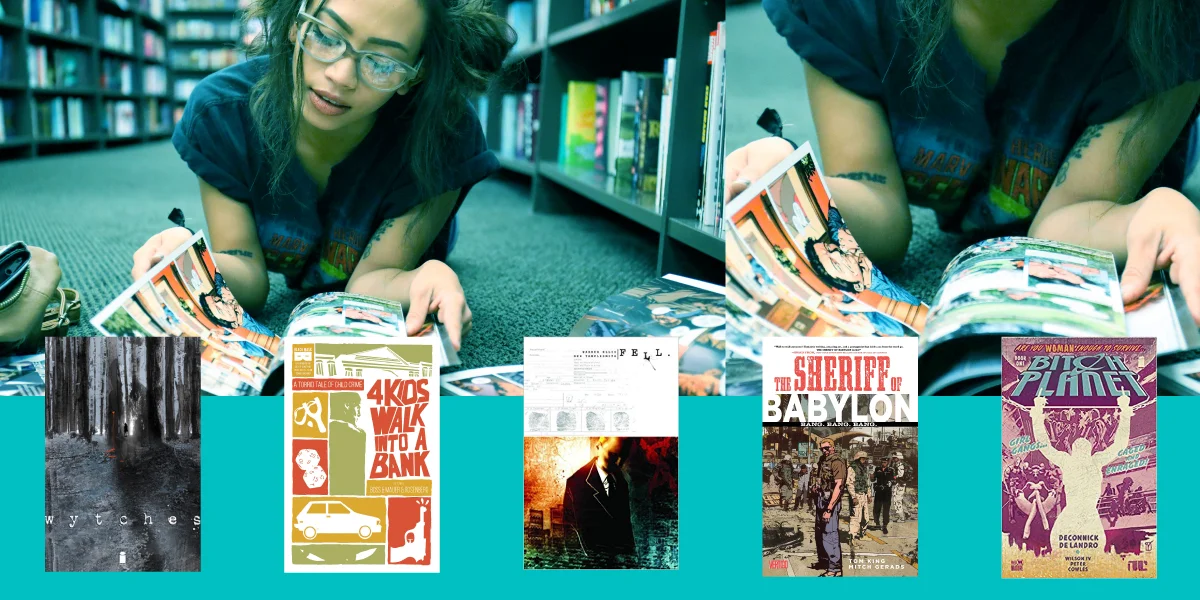
5 Genre Comics Dying to be Made Into Movies
The comic book medium is full of amazing stories just waiting to be adapted into film. Colby McHugh gives us five of his top picks that have not yet been adapted yet, but definitely should be.
(Disclaimer: Please PLEASE excuse any overly nerdy writing in this article due to the fact that I’ve been waiting my whole life to write something like this. Thank you for your consideration in this trying time.)
Before we get started, let me say that I’m of the mindset that comic books and film are two entirely separate mediums that I think get compared a bit too often, generally due to the stupidly huge success of Superhero films in the last decade and a half. Now, don’t get me wrong, I love these movies and I’m pretty much going to see all of them on opening night, but it creates the impression among the general public that comic books are simply a vessel to carry Batman and Spider-Man and Friends from story to story, and eventually to the big screen.
But comics are so much more than that. They’re much smaller operations, generally carried out by three or four individuals, and occasionally by only one! The collaboration between the writer, the artist, the colorist, and anyone else involved has to be completely precise in order to properly tell the story in a clear and enjoyable way for the reader.
I grew up reading nothing but superhero comic books, so I have quite a soft spot for them. It wasn’t until after high school that I realized the existence of publishers outside of the Big Two (Marvel and DC). Image, for example, was a godsend for me. I discovered hundreds of comic series, all different genres, and each in their own self-contained universe. No more shared universes! If I wanted Sci-Fi, Horror, Comedy, or even Romance, there were so many options available to me! I began to realize which writers and artists I enjoyed the most and actively searched out their work. Since then, countless genre stories are released each year through many different publishers. That doesn’t even count the probably thousands of webcomics that are posted all over the place! Comic books are everywhere and like all good and interesting things, they are adapted and made into films, with generally pretty good results.
There are always a few comic books that have received that special UNADAPTABLE label from many filmmakers and comic creators (Brian K. Vaughn’s Saga comes to mind), and I always appreciate those stories. They take the elements specific to the comic book medium and expand them. You know what I’m talking about. Whether it’s a specific storytelling technique or maybe the way a panel is structured, there are sometimes things that make a comic so especially comic book-y, it would be incredibly difficult to adapt into a film.
These, however, are not those comic books (except for maybe one, but we’ll get to that later), and by no means is that a bad thing. These are five brilliantly written, drawn, and colored genre stories that I think would also happen to make some pretty kickass movies, presented in no particular order:
WYTCHES
Writer: Scott Snyder
Artist: Jock
Colors: Matt Hollingsworth
Letters: Clem Robins

A gorgeous and haunting cover from Jock that immediately sets the tone for this story.
When talking about genres, it feels disingenuous to not mention the very distinct genre of horror, one that I’ve grown to love after spending many sleepless nights with the lights on as a kid. That said, even though I love horror movies now, I can willingly acknowledge that there are tons of bad ones out there, and more made each year. But with every well-made and unique horror movie that comes out (as rare as they are), I’m reminded of why I love the genre in the first place. Wytches would have that exact same effect on the genre. Imagine the fear and tenseness that you felt the first time you watched The Blair Witch Project, mix in characters that you actually care about, add in loads of interesting lore and history, and you’ve got a recipe for good horror. The witches presented in Wytches, however, are not the witches you’ve come to know and love. There’s no Harry Potter whimsy here. Scott Snyder has written them as horrifying old creatures with ancient knowledge that resembles nothing we’ve ever seen. What really creates the atmosphere of horror though is the work of Jock and Matt Hollingsworth. The art and colors combine to create a very visceral reading experience that is both scary and sometimes disorienting. That uncertainty that they are able to create would translate so well to film, assuming it’s done right. Snyder’s characters are likable and interesting and I’d genuinely be curious as to who they’d cast. Either way, if you’re a fan of horror, check this one out.
FELL
Writer: Warren Ellis
Artist: Ben Templesmith

A personal bias, but I LOVE that almost half of this cover is just paperwork.
I know this is only my second entry on this list, but I’m gonna have to cheat a little bit on this one. Bear with me, because Fell is worth it. Rather than have this adapted into a film, Warren Ellis and Ben Templesmith’s neo noir crime story would make much more sense as a miniseries, more fit for HBO or Netflix or any of the other litany of streaming services. The reason for this is two-fold. First, each individual issue was written as a standalone story involving the titular character, Homicide Detective Richard Fell, set in the unfortunate city of Snowtown. Second, Fell was originally written by Ellis as a way to experiment with the usual comic book format. He and Templesmith created the book with a smaller page count than normal, instead experimenting with a nine panel grid on each page as a way to compress the story and fit more in each issue. It’s such an interesting and different way to read a comic book and that, combined with Templesmith’s especially striking visuals and mood, create such a unique story that would make for a pretty difficult film adaptation. With the success of more recent adaptations of equally strange genre stories like Umbrella Academy and Deadly Class, I’m much more encouraged by what is possible in the world of television and streaming. I can actually thank Mirrorbox creator (and good buddy) Hudson Phillips for introducing me to Fell a few years ago, and I’m forever thankful for that.
4 KIDS WALK INTO A BANK
Writer: Matthew Rosenberg
Artist: Tyler Boss
Letters: Thomas Mauer

Aforementioned “Saul Bass inspired cover”
4 Kids Walk Into A Bank is a story that wears its influences on its sleeve. Just take one look at its Saul Bass inspired cover. Even if you don’t know that name, you know the style. This book has been described as “Tarantino meets The Goonies” and “Wes Anderson Directs Dog Day Afternoon” and the crazy thing is, both of those descriptions are about as accurate as possible. Tarantino, because of the way it is able to shift from violence to legitimate, laugh-out-loud humor. The Goonies, because of the young protagonists that get to benefit the most from Rosenberg’s genuinely witty writing. Wes Anderson, because of Tyler Boss’s clean and symmetrical, well-designed cartooning and color palette that makes this one of those very comic book-y comic books I mentioned in the intro. And finally, Dog Day Afternoon, because of the “bank robbing out of necessity” aspect. But 4 Kids is so much more than all of those. It’s a love letter to all of the things that the creators grew up loving. Dungeons and Dragons, Sci-Fi, Comedy, and probably a hundred other things I can’t think of right now. It’s so jam packed full of references and jokes, that any adaptation has the potential to make for an incredibly entertaining film. Crime and Comedy seem to go hand in hand, and this would make a fitting addition to the genre. Think The Nice Guys mixed with Stand By Me. Ok, I’m done with the references. For now.
Read this book. It’s so so good.
THE SHERIFF OF BABYLON
Writer: Tom King
Artist: Mitch Gerads

A wartime drama set in Baghdad, written by a former CIA Counterintelligence Officer who himself was stationed in Iraq during the war. That adaptation kinda writes itself, huh? Tom King’s story is about a former police officer-turned-military contractor as he attempts to solve a murder of one of his trainees in Iraq. The thing that makes Sheriff of Babylon different, however, is its inclusion of perspectives outside of just the white protagonist. That is what really gives this story its gravitas. It uses political intrigue in a brutally efficient way, not scared of showing the horrors of what happened out there. The realistic style of Mitch Gerads perfectly matches King’s grounded writing. Something that Gerads in particular excels in (and an underappreciated skill in comics) is the expressions on his characters, or the “acting” of his characters. The same could be said about many of the artists in this list, but Gerads’ work really jumped out to me when reading this for the first time. It certainly helps that King’s narrative structure and pacing kind of matches that of a film, so an adaptation of a story like this would make a lot of sense, and I could very easily see it being entertaining.
BITCH PLANET
Writer: Kelly Sue Deconnick
Artist: Valentine De Landro
Colors: Cris Peter
Letters: Clayton Cowles

Similar to 4 Kids Walk Into A Bank, the influences of Bitch Planet are immediately evident. The old sexploitation movies of the 70’s mixed with the “Women in Prison” trope mixed with B movie sci-fi weirdness. That’s a lot, I know, but Kelly Sue Deconnick takes all of these classic tropes and flips them on their head, instead using them to empower her female characters rather than trap them within those limitations. She has created a world that is equal parts The Handmaid’s Tale, Orange is the New Black, and (somehow) The Longest Yard. Despite all of these influences, Kelly Sue has succeeded in keeping her world unique and lived in, with each character getting some time in the spotlight. This is a brutal story, one that’s not scared of nudity or violence. Coming from a writer like Deconnick, she imbues these aspects with a feminism that is frankly, so refreshing. The nudity doesn’t feel like it’s coming from a male gaze (except for a moment within the story when there is a LITERAL male gaze, but that’s just clever storytelling on the part of the creators), so it doesn’t feel exploitative. If this gets adapted sometime in the near future, I could very easily see it having the same success as The Handmaid’s Tale. I’ve only read the first volume of this series, but I can safely say that I can’t wait to pick it back up again and stay in this strange world a little longer.