

May's Theme: "Adaptation"
The key to adapting to new environments properly is to first figure out your core. What drives your art? Maybe it’s connection with other people. Maybe it’s a value like compassion or honesty. Maybe it’s your intellect or a thirst for knowledge. Whatever that core is, let that guide you as you journey through the ups and downs of your environment.
Every complaint about Hollywood lately seems to be some take on lack of originality. All they seem to make now are sequels, adaptations, reboots, or sequels to the rebooted adaptations. But is that so bad?
Sometimes adaptations are great. I mean, we just got sequel number 22 in an adaptation of an entire comic book universe and it’s one of the most creatively (and financially) rewarding franchises Hollywood has ever put out. And I for one am grateful that the 8-part Harry Potter film series, the 6-part Mission Impossible series, and roughly 1,218 minutes of the Lord of the Rings universe exists. Not to mention classics like The Godfather, Gone with the Wind, or Doctor Zhivago, the sci-fi epics 2001: A Space Odyssey, Blade Runner, or Children of Men, and animated classics like Shrek, Iron Giant, and How to Train Your Dragon. Had these stories not been adapted to new media, you and I may not have ever experienced them.
Adaptation isn’t always a bad thing. In fact, oftentimes it’s a requirement. In nature, organisms adapt to new environments in order to survive. In our own lives, change is inevitable. As our environments change, we have to learn how to adapt ... or die (metaphorically speaking).
Environmental changes might mean you get married or have kids. It might mean you face sickness. It might mean you get a raise or lose your job, or that you catch your big break but that big break doesn’t quite look like you’d hoped. And as you chase your creative goals, all of these environmental changes affect you.
The greatest movie adaptations stay true to the source material. It’s not that they don’t make changes (in fact the best ones cut and rearrange and add in order to best fit the medium), but a great adaptation figures out what the core of the story is and builds everything else around that.
At its core, Harry Potter is about a boy without a family, chosen for a task he’s ill-prepared for, and finding a family in the process (with the antagonist being a mirror image of this—Voldemort choosing power over family). The core of Harry Potter is that love is the most powerful force of all. If you protect that, you can take liberties with the on-screen choices.
In your own life, the key to adapting to these new environments properly is to first figure out your core. What drives your art? Maybe it’s connection with other people. Maybe it’s a value like compassion or honesty. Maybe it’s your intellect or a thirst for knowledge. Whatever that core is, let that guide you as you journey through the ups and downs of your environment.
The truth is you can’t control environment anyway. You’ll only wear yourself out trying. But you can control how you respond to it. Don’t be afraid of adapting. It only makes you stronger.
Poke around the site for the month of May and you’ll find lots of different takes on the theme of adaptation, from filmmakers learning to adapt to the current distribution climate to deep dives into some of our favorite adaptations. Share with us below your favorite book-to-movie adaptation or bare your soul with us and share your “core.”
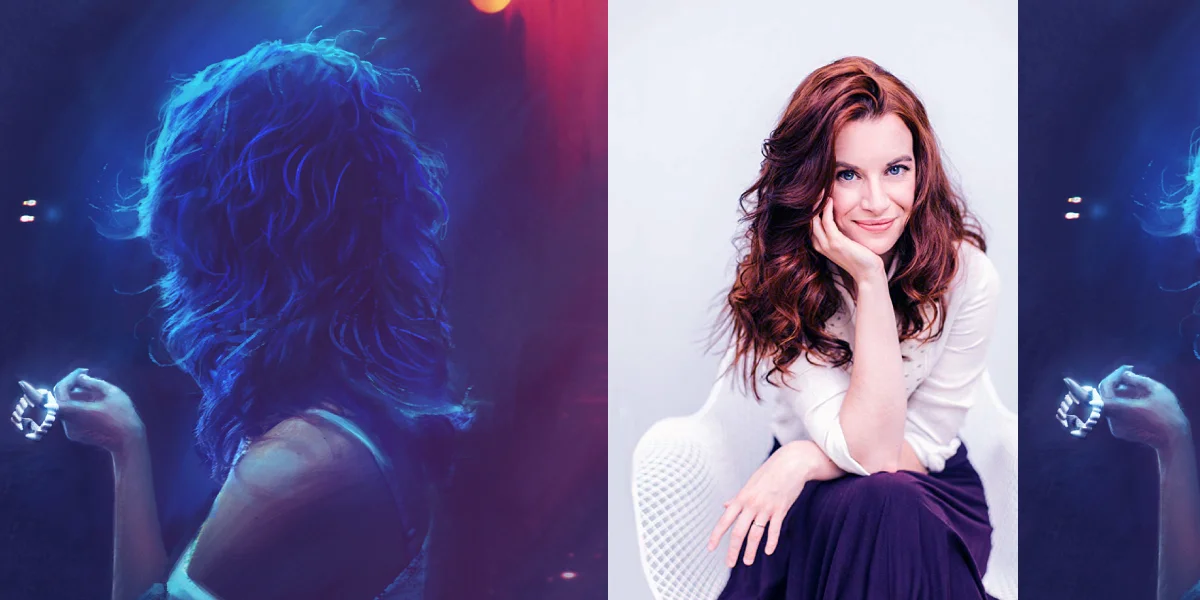
Naomi McDougall Jones on her film, Bite Me, and why she skipped traditional distribution in favor of a 50-city tour
Writer, actress, producer, and women in film activist Naomi McDougall Jones gives us an unprecedented and unfiltered look at the realities of indie film distribution and her decision to forgo a traditional theatrical release for her subversive rom-com Bite Me in favor of a self-booked 50-city tour called The Joyful Vampire Tour of America.
Naomi McDougall Jones is a writer, actress, and producer perhaps best known for her TEDTalk on “What it’s like to be a woman in Hollywood.” Naomi has been a vocal advocate for bringing gender parity to film, both on and off screen and co-founded the 51 Fund to help finance films finance films written, directed, and produced by women.
After discovering her newest film, a subversive rom-com called Bite Me, and her plans to forgo traditional distribution in favor of a 50+ city self-booked tour, I immediately reached out to Naomi to learn all I could from her about her process. I initially asked her a number of questions “off-record,” but she encouraged me to share everything. What follows is an incredibly transparent look at what financing, marketing, and distribution look like in today’s indie film climate and what Naomi is doing to tackle these massive issues.
Tell us about Bite Me and how it all came together.
Bite Me is a subversive romantic comedy about a real-life vampire and the IRS agent who audits her.
This is my second feature film and my second collaboration with director Meredith Edwards.
The story of how it all came together is SUPER long and complicated, like most indie films. I wrote the first draft in August 2013, we shot in August 2017, and the film premiered at Cinequest in March 2019, so it has been quite a long, perilous, joyful, brutal, commando-crawl, heart-soaring process.
As far as I can tell, that describes the process of making almost any indie film. If you want to really get in the weeds with how we made the film, I was making a podcast through the year leading up to production, through production, and then right after, so there is an in-real-time, in-real-detail account of how we got it made if anyone is interested. The podcast is Fear(ful)less: Filmmaking From the Edge, available on iTunes and GooglePlay.
Why this story, why now?
Well, the inciting incident for writing this screenplay was that I was acting on the set of Boardwalk Empire and got to chatting with one of the background actors who, by the end of a 16-hour shoot day, revealed to me that she was a vampire—meaning part of the (as I discovered) real-life worldwide subculture of people who believe that they’re vampires. As I asked her more about this and then subsequently fell down the YouTube hole of vampire vlogs (which is a thing), I couldn’t believe that a) I had never heard about this before and b) that no one had ever made a movie about it. I became pretty quickly excited about the idea of writing that movie.
Around the same time, though, there were three additional impulses that sort of swirled together with that idea and became Bite Me:
A Love Song to Weirdos: I was a super weird and lonely kid (now I’m a pretty weird adult, but have made a career out of it and made friends with the other weirdos). Growing up, I was repeatedly drop-kicked by the experience of watching Hollywood movies like The Princess Diaries that were ostensibly movies for weirdos but a) classified Anne Hathaway as a weirdo when, really, they just put glasses on her and frizzed her hair up, but she still looked like freaking Anne Hathaway and b) by the end of the movie removed Anne’s glasses and de-frizzed her hair so that the hot boy could finally see through to her winning personality. As an adult, I became determined to make a film for and by true weirdos where the girl gets to keep her glasses on at the end of the movie.
What Happened to the RomCom? I am a HUGE fan of great, smart, fresh romantic comedies from the 80s and 90s – think Notting Hill, When Harry Met Sally, etc – and was devastated when, shortly after 9/11, the genre took a hard left turn into dopey Katherine Heigl-land. As I tried to figure out why this had happened, I realized that, post-9/11, to the denizens of a traumatized nation, the giddy, freewheeling optimism that lives at the heart of any good rom-com didn’t really play anymore (except as pure pink-tulle-escapism). With Bite Me, I set out to make a movie that could get back to that late 20th century joyous optimism, while contending with the fact that most audience members would begin the film with a hard-edged 21st century skepticism. By creating a main character in Sarah who begins the film just as cynical as the audience does and, eventually, finds herself falling head-over-heels in goofy love, I wanted to invite the audience to open their hearts and remember what it is to hope.
People Need to Laugh: Set against the backdrop now of post-9/11, Trump, #metoo, climate change, and all of the 21st century terrors we live in every day, I began this script also determined to make a film that, at least for 83 minutes, would fill people’s hearts with a greater sense of joy, hope, love, and, at the very least, would allow them to temporarily set aside their problems and laugh. There is nothing that makes me more joyful now than the prospect of releasing this film via The Joyful Vampire Tour of America and of an even greater opportunity to spread some goofy, joyful, laughter.
To answer “why now”: in this new strange and frightening political time, the themes of Bite Me are even more urgent than when I first began working on the project. At its core, Bite Me is a story about accepting outsiders; about seeing past our external and religious differences to our common shared humanity. It is about learning to love each other and ourselves in the face of a world that tells us not to.
Previously, these messages felt important. Today they feel vital.
Plus, we’re all really going to have to find moments and laughter and joy to survive any of this.

You crowdfunded on Seed & Spark, but you also had equity funding. Why Seed & Spark? Why the need for the split funding?
I’ll be totally honest: it was really, really hard to raise money for this movie for a really, really long time. We found some incredible investors who believed in us and the project over the years for whom we are infinitely and eternally grateful, but we knew we wanted a real budget for this movie of around $500,000 – we made our first film for Imagine I’m Beautiful for $80,000 – and by the summer of 2017 we had scraped and pieced together just barely enough money to get ourselves through production and we decided to take the admittedly risky move of going into production without enough money for post-production.
One of the hardest things about raising money to that point had been that a lot of investors didn’t really “get” what Bite Me was. It doesn’t fit easily into a box, so it was never easy to say, “Oh, just picture this movie plus that movie.” I’m incredibly proud to say that it is really a movie that is only like itself, but that made it particularly challenging to fundraise for. So, by summer 2017, we knew what an incredible movie we could make and we had our cast lined up and they weren’t going to stay attached forever if we couldn’t get the financing together, and we figured that if we could get just get it in the can, that then, at least, we would be able to show future investors footage and cut together a sizzle reel so that they could see and understand what the movie was.
The reason this is such a risky calculation is because if you make the movie under those circumstances and it’s bad, then you’re totally screwed because any future prospective investor is going to ask to see the footage and, if it’s sub-par, no one will ever give you the money to finish the film and you’ll be dead in the water. But, with our investor’s blessing, we took a swing and bet on ourselves that what we’d make would be excellent, and we went through production.
What that meant, though, was that by the end of production in September 2017, we had $0 and now the clock was ticking on getting post-production going. So we went ahead and ran a crowdfunding campaign on Seed & Spark for $35,000, figuring that since we hadn’t done one yet for this film and people were all amped up on photos and footage that had been coming out during production, that we could pull it in.
Going directly from production into a crowdfunding campaign is not something I would wish on my worst enemy, but we have the absolute greatest team on the planet and they muscled through and did it and, because we have the greatest community around us on the planet, we did manage to reach our goal a month later.
In a pretty miraculous Hail Mary – since that $35K still wouldn’t have been enough to get us all the way through post-production and festivals/marketing – my TEDTalk, which I had actually given a year earlier, got put up on the homepage of TED.com. That October, amidst the Weinstein scandal breaking, the talk went viral, and suddenly folks all over the world were writing to me asking to invest in my film – which is any filmmaker’s wildest dream come true – and, through those contacts, I was able to raise the rest of what we needed for post-production and a marketing budget. I fully recognize the privilege and luck of that moment and get weak at the knees with gratitude whenever I think about it.
Instead of traditional distribution, you're taking the film on a 40-city, 3-month tour to get the film out there. How do you see the state of current indie distribution and why take on all this yourselves?
I don’t think any single person who has participated in any piece of indie film distribution over the last five years would say anything resembling, “You know, I think things are just going swell. There is no need to explore anything else because this is really working like gangbusters.” If anyone does say that to you, you should back away slowly because they are probably on a lot of drugs.
Let’s be real. Any filmmaker who has been through it knows that the ways independent films are distributed right now is 100% fucked. Even if you get a distribution deal – as I did on my first film – which already puts you in the 5% luckiest elite category of films, your film will almost certainly get dumped with little fanfare, no strategy, and minimal if any marketing dollars into the vast sea of content and you will be very, very, very lucky if you ever see a single dollar out the other end of it after the distro company and other middle men have recouped their costs and taken their cut.
The thing is, it actually doesn’t make sense that low-budget indie films can’t make money right now. Hollywood – which is sailing placidly off in the direction of mega-blockbusters with increasingly mind-meltingly-bad dialogue - has left a giant market hole for smart, fresh, original movies, particularly if those movies are by and about something other than white men. Domestic audiences hate the films Hollywood’s making (they know this, by the way, and simply don’t care because they are now making $1 billion a film by targeting foreign markets) and, if you spend any amount of time with them, will ask with endearingly sad confusion, “Why don’t they make good movies anymore?”
I am absolutely convinced that there is a sustainable economic model for independent films (if actually marketed, strategically and creatively brought to audiences, and with at least some of the middlemen fees taken out of the equation) to make back their money and then some. On Bite Me for instance, with a budget of roughly $500K, we only need about 100,000 people to buy the film on some platform or another and/or buy theater tickets to see it for us to recoup 120%. That seems eminently possible.
No one has yet cracked what this model is, as far as I know (if you have, please call me!), but it is out there and it’s going to require radical, big-picture thinking to unravel it, as well as filmmakers brave and bold enough to try these things with their own films.
The Joyful Vampire Tour of America is my best guess swing at what that model might be. We’re making a weekly docu-series about it because I want other filmmakers to be able to learn from every detail of what works/doesn’t work for us. If our model works, then others will be able to copy it. If it doesn’t, hopefully others will be able to see what needs to be adjusted and do it better next time.
As to why we’re taking this all on ourselves, I get asked this a lot by other filmmakers who sigh and say, “Yeah, but I don’t want to get involved in all that. I just want to make my movies.” And, yes, obviously in a totally perfect world, I would just get to make my movie and some magic fairy person or machine would come along and get them out to audiences who will love them. But that is not the world we live in – that is particularly not the world we live in for women and people of color – and I actually DON’T care about making movies if no one sees them. The reason I wanted to become a storyteller was not to tell stories, but to tell them to other people. While planning this tour has been a shite-load of work, and it has, it has also been outrageously joyful to get into direct contact with our audiences, talk to them, hear their responses to the film. All of that has made it the greatest gift I could have as an artist and, frankly, I think will make it pretty hard in the future to go back to just handing my films off to someone else to distribute at the end. Getting to design how audiences get to experience our film feels like an extension of the storytelling process.
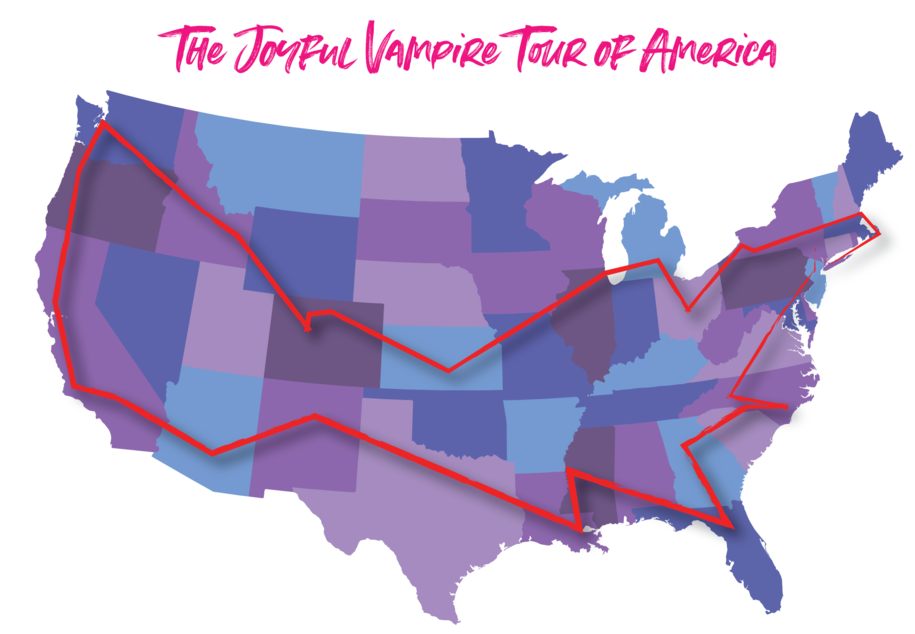
Each stop will be unique in that there will be different types of venues and different types of events in each city. What are some of the outside-of-the-box things we can expect on the tour?
In most cities, the screenings will be followed by a Joyful Vampire Ball or Shindig. These events are a chance to meet the filmmakers and team behind Bite Me, celebrate, laugh, and chat with your fellow audience members, but, most importantly, Joyful Vampire Balls are a chance for each and every person to celebrate whatever makes them feel most joyful.
Everyone is invited to wear a special outfit to their screening/vampire ball – it can be a vampire costume, of course, but it could also be a tiara, wings, a Viking dress, a Christmas sweater – really anything that makes you feel fabulous and joyful. That thing that you love but have thought, “but when the heck am I ever going to wear this?” Wear that. Now.
Part-party, part-event, part celebration, each Vampire Ball is a space where everyone is welcome, nobody is judged, and every uniqueness, large and small, is given room to be expressed.
The exciting thing about this, is that it allows us to design a full-evening experience that expands on one of the main themes of the film – self-acceptance and acceptance of others in all of our uniqueness and fullness. The fact that we get to explore these ideas with our audiences inside the film and then in person as well will make the experience more fun, more memorable, and, ultimately, more impactful.
The other piece of this, though, is that because we were reaching out directly to our audience, we had the opportunity to ask them how they wanted to experience the film. Sometimes they had surprising and wonderful answers, such as in New Paltz, NY on May 11th where the screening is in a yoga studio and paired with a Joyful Vampire Yoga Class. Or MuggleNet – the biggest online Harry Potter fan base – reached out to us because our lead actor, Christian Coulson, played Tom Riddle in Harry Potter and the Chamber of Secrets, and we’re partnering with them to do a screening and Harry Potter trivia night on May 8th in Brooklyn.
How did you find all the locations for the tour?
The first thing we did when we decided to do this was to put out a screening request form to our existing audience fanbase and community and allowed people to request screenings and also asked them if they would be the local host for that screening if we did come to their city. Meaning, not that they had to be the venue for the film, but will they help us get the word out and help us hang posters around town before we got there. And we got 62 screening requests in the first week which was immediately more than we could feasibly do. So we prioritized most of the places that we had somebody who said they would be the local host because based on our past experience, having a local host is one of the biggest predictors of whether a screening will be successful in terms of getting an audience there.
So then we just started calling theaters in those places and literally just took a map and plotted out the places where we’d gotten those request. We drew a line and then saw what else was on the route. Eventually some places have started calling us and asking us to come, so we have added some screenings that way.
How long did it take from the moment you decided to do this to the time you leave on tour?
I first had this idea in November and we spent December doing A LOT of research about this in the form of talking to people who have done something like this before, reading case studies, talking to distributors, talking to sales agents, talking to platforms, talking to producers, really thoroughly sussing this out to make sure we weren’t completely insane to try this. Then I think we decided that we were definitely going to do it around January 6 and the tour begins May 6.
You're releasing digitally at the same time as the tour. Why this decision? Did you consider doing the tour first and then ending it with making it available on digital?
This is obviously one of the big questions in terms of any kind of creative distribution strategy. Our thinking on this was we just live in an age of instant gratification and unless you are Marvel or Harry Potter or some kind of brand that is big enough and dear enough to people’s hearts that they are actually going to remember you three months from when they hear about you, it’s just not gonna work. And also because our marketing budget is not that substantial so the chances of us getting to somebody one time is pretty low and the chances of us getting to that person, having them hear about it, and somehow finding us three months later is almost zero.
Our assumption is that if they cannot immediately buy the movie, we’ve probably lost them and therefore lost that marketing dollar we spent to get to them.
For digital distribution did you go through Quiver or a similar service?
We did it through Quiver and have had a good experience.
How are you finding your audience?
It’s very grassroots. It’s a combination of if there’s a local host getting them to work with their community, get their friends and family out. The theaters, because they’re independent theaters, they often have audiences who are loyal and will come to whatever they’re doing. Social media is a big part of that, particularly to drive online sales. In terms of the local screenings, we’re reaching out to local press for sure. I think that will play a big piece. We’re also researching and reaching out to any groups that are likely to contain our audience. Specifically any Harry Potter fan clubs, any DND clubs, LARPing clubs, cosplay clubs, gaming stores, crystal shops, tarot card shops, women in film groups, and asking them to share it with their members.
There will be a lot of discussion about this in the docu-series so I definitely suggest you tune in for that.
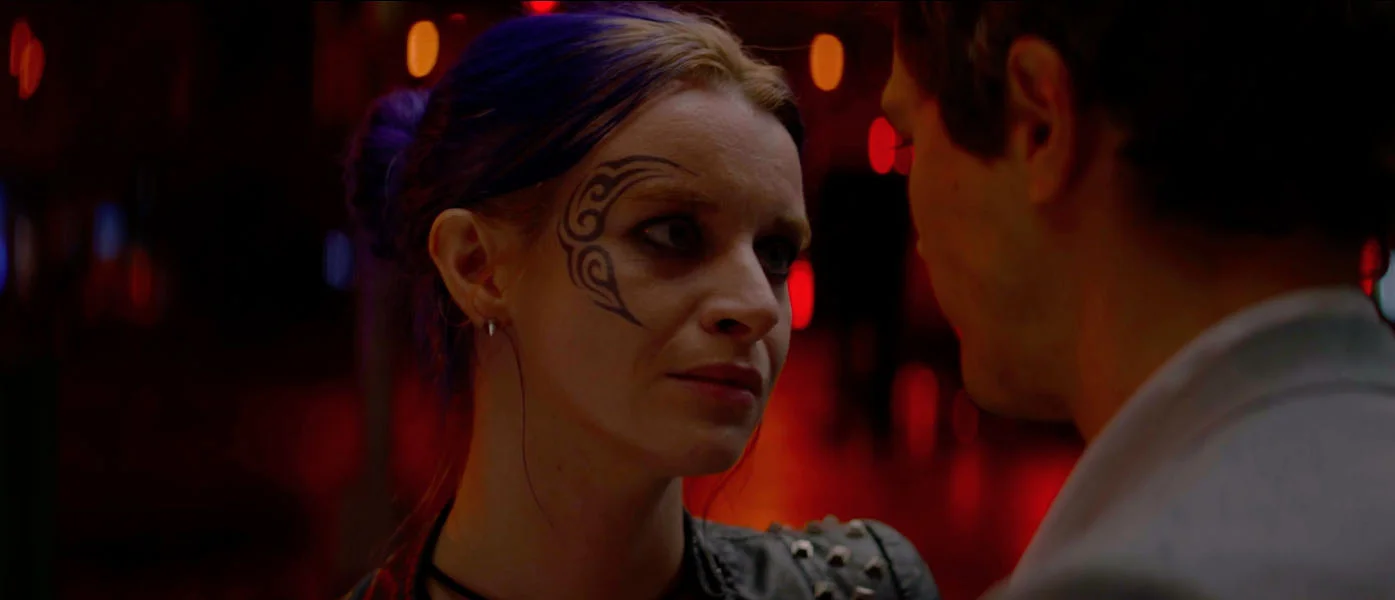
How much help do you have? Is it really just you and your producer? How many people are going on the tour with you?
Functionally it’s basically just me and Sarah, my producing partner. We have been working on this, not full time, but heavily part-time since January 2019. Our executive producers Joanne and Jack have helped a little bit, but more in terms of relationships and strategy. Booking theaters has been Sarah and I. We’ve had a handful of interns on a very, very, very part-time basis who helped with some of that grunt work.
There are three people going on the tour. Myself, my husband, and then the documentary filmmaker Kiwi Callahan who is making the documentary series about the tour. A couple of other team members are jumping on and off for short legs, but it’s basically the three of us.
Is this your sole income right now? Are you paying yourself as part of the tour expenses?
We are paying ourselves as part of the tour expenses, though not enough for it to be anybody's sole income.
Are you working with bookers or PR firms or marketing teams?
We explored working with theatrical bookers but were having enough success calling theaters ourselves that we decided their fees weren’t worth it.
We’ve really gone back and forth on working with marketing and PR. We’re handling local press to places we’re going ourselves. We’re going to hire a PR firm for surgical strikes for one month right at the beginning on tour only. And the reason we decided to do that is because it looks like this is going to be so successful. The fact that we managed to book ourselves for 50 screenings and our first New York screening sold out in the first 36 hours, it’s starting to feel like there’s enough of a story here that it’s actually worth paying somebody to see if we can get some bigger national press, but it’s extremely limited.
The biggest marketing spend is that we’ve hired a social media company called Digital Limit, who is fantastic and I would hire a thousand times over, to run our social media and our paid social media ads. We are spending our biggest chunk of the marketing budget on paid social media ads to convert to digital sales.
How much money did you set aside for social media, PR, & marketing?
We'll get into the weeds of our budget in the docu-series, but the entirety of marketing costs for the tour and marketing/PR/social media all-in is around $100K.
Financially speaking, how much are you hoping to make directly from the tour and how much will be from digital sales / rentals?
We’re going to share all of our financials on the web series, so check that out for a more detailed answer to this. Basically the way it breaks down is we expect to make about $37,000 from ticket sales on the tour. We expect to make about $150,000 from merchandise sales both on tour and through our website. And then we expect to make about $1.5M from digital sales and rentals. Tune into the web series for more information.
What do the venue agreements look like? Are you actually renting them out or is it just a revenue share?
Most places we're doing a revenue share of 50/50 or close to that. There were a few cities - NYC, LA, and DC, I think - where that wasn't possible and we did have to rent
Did you look at sponsors?
Oh yes, did we look at sponsors. We put so much time and energy trying to find branded sponsorships and we came up totally empty. I don’t know why. I think part of it is that you need so much lead time and resources to put into making those deals happen. I feel like we wasted a lot of time and energy in that and it just didn’t work. It seems like a great idea. It seems like it should work, but it didn’t.
So many filmmakers don't think about the end goal. Just making a movie is so difficult, and then they get to the distribution side of things and it's even MORE difficult. What tips would you give for indie filmmakers that maybe haven't shot or even written their film yet? What can they do now in order to best prepare for success once they're done?
I mean, I feel like it’s a pretty common thing to be told that you have to think about your marketing plan and your audience before you’ve even made your film, and I know from first-hand experience that you can often feel like throttling someone for asking you to handle/think about something else when you are in the war zone of just trying to raise money and get your damn movie made in the first place. It can definitely feel pretty impossible to even consider taking on something else at that stage in the game – and also, there is definitely a thing about reaching your audience too early and fatiguing them with information about your film too many years before they can actually watch it.
What I would say is that, at the later script stages, you should spend time doing some serious soul-searching about who is going to want to watch this movie. You don’t have to know 100% and likely you will learn things and be surprised along the way, but you need to have at least some idea that there is actually a group of people that might be interested in this. If you can’t come up with anything, you may need to do some further soul-searching about why you are making this movie and whether it is actually worth the investment of time and resources and heartache required to get it made.
Once you have established for yourself who those people are, make them your True North for all decision-making.
For example, with Bite Me, we always had a pretty good idea that our core audience base would be twofold 1) those who we affectionately termed the mega-nerds (we include ourselves in this category) – those who like Harry Potter, vampire movies, D&D, are LARPers, are involved in cosplay, etc and 2) Women who are looking for smart, feminist rom-coms/content.
When casting the film, then, we knew that we wouldn’t be able to afford A-List actors on our budget-level, but we also knew that actually wasn’t the most important thing to reach our audience. To reach our audience, we knew we needed actors who had fan bases that directly reached and matched the audience for our film. We, of course, sought out wonderful, talented actors, but we also kept an eye on which audiences would know and recognize them. We were lucky enough to get Christian Coulson (Tom Riddle from Harry Potter and the Chamber of Secrets – mega-nerds, check), Naomi Grossman (Pepper from American Horror Story – mega-nerds, check), and Annie Golden (a legend, but also from Orange is the New Black – audiences interested in smart, edgy, feminist content, check).
During the process of making the film and getting it through production and post-production, we mostly kept our attention focused on sharing that journey with our own communities and existing fan bases as filmmakers – posting on social media, sending out newsletters and updates. We didn’t seek out new audience members aggressively or try to cash in on our actor’s fan bases at that stage because a) we had way too much other work to do and b) if we’d caught their attention then, it would still have been years before they could actually see the movie and they would likely have forgotten about it by the time it came out. BUT, through those casting choices and other decisions, we did set ourselves up to reach our correct audience when the time was right – which has been over the last few months leading up to the tour. I would say that has been a highly successful and practical approach.
What advice would you give to someone exploring a similar tour-model of indie distribution?
Do it! It is a shitload of work but we are learning so much and Sarah and I keep saying to each other that it really is so much more fulfilling and less crazy-making than dealing with a distributor. Like even in the worst moments of this it is still better than dealing with a traditional distribution deal where people don’t call you back, don’t care, aren’t marketing your film properly, aren’t putting any resources behind it. This is just better than that, even when it sucks.
Somehow making your film an EVENT feels really important to this model because in this question of if you’re going to release it digitally at the same time, you have to give people a reason to show up in person if you want them to. Probably what that means is giving them an experience that is more than just watching the film. And I think that looks very different for every film. The way I think about it is what is the experience that you want the audience to have in watching the film and how can you enhance that and bring it into the room with an event or a talk or a panel or whatever. I would think about it less in terms of what’s a fun event and more tie it very closely to what is the experience of the film. How can the event be an extension and expansion of that in an exciting way?
But do it and share what you learn. I think that is a really important thing that has to happen next.. A bunch of us trying a bunch of different things and sharing what we learn.
One thing I will also caution you on is I think festivals are great in a lot of ways and I think they are a giant trap and financial sinkhole in a lot of ways. What Sarah and I learned on our past film is that the problem with an extended festival run is that you use up all of your core audience base at the festivals and you don’t make money on them. You actually spend money going to them doing whatever marketing you’re going to do for them, so you’re losing money, you’re not making money, somebody else is making money on your film, using up your audience base. And the other problem we found is because every festival is like a big social media moment for you, people are excited, you’re posting the picture of the red carpet, but by the time your film actually comes out, there is pretty substantial excitement fatigue about it. So what we found is that after doing an extended festival run, you’re kind of back to square one and even a worse place before your festival run.. So our strategy this time was to play very few select festivals, hopefully win some awards, which we did. The ability to say “an award winning film” is a big deal. But as soon as you can say that, more awards don’t really help in terms of selling the film. If you can say “award winning” it’s award winning and move on. I would just think really, really carefully about how playing festivals is going to feed into what you want to do. You risk burning through a lot of money and audience in a situation where you are not making money.

What's your vision for what indie film can become? What conversations aren't happening that need to be happening?
My vision and dream for the future of independent film is an ecosystem in which the means of financing and distribution are fully democratized such that the gatekeepers are removed (except where absolutely necessary) and the one and only thing that determines whether or not a film gets made and seen is whether there is an audience that wants to see it.
Crowdfunding has begun to democratize financing. We need to come up with models and systems for that that are more readily scalable and allow filmmakers to raise more serious budgets – I think equity crowdfunding holds a lot of promise there.
In terms of democratizing the means of film distribution, we are in the very early days of figuring out a sustainable model. I hope the Joyful Vampire Tour is a big step in the right direction. But we need a whole lot more experimentation and bold thinking to crack that egg.
I don’t believe that most filmmakers are thinking radically enough right now about all of this. The problem is that the promise of someday getting picked by the system is so terribly seductive. It’s so easy to go against even your own common sense thinking, yes, but if I just play by their rules well enough, maybe the magical fairy person will swoop down and pick me and all my dreams will come true and I won’t have to do all of this hard work. The problem is that if everyone stays in that hopeful, crouched posture, the gatekeepers remain in power, everyone keeps throwing their content and creativity and talent into the black hole of a system that is so foundationally broken at this point that it is working for almost literally three people and no one else, and audiences continue to wonder why no one is making films when the reality is that people are making good films, they are simply not getting marketed or distributed effectively enough for the audiences who want them to find them.
GET RADICAL PEOPLE. The magical fairy person is not coming (also, even if they did, it is still a way more empowered and fulfilling career mode to build a house that no one can take away from you).
What's the biggest lesson you've learned in the planning of all this?
That it’s possible! The 3am terror right now is that it won’t work. People won’t show up. We won’t make money. It will be a disaster. But we have gotten really, really far in this. It has been possible to book theaters. It has been possible to get the film on the platforms. We’ve sold out or nearly sold out our first five screenings. It seems to be working. So it’s possible. That’s the biggest thing. We didn’t even know we’d be about to get this far with it. So that’s the big lesson.
Where can we find out more about Bite Me and follow along with your journey?
Thank you for asking!!!
Come join us for a screening and a Joyful Vampire Ball/event on our Joyful Vampire Tour of America, May 6-Aug 4. We’re coming to over 40 cities, so there’s a pretty good chance, we’ll be somewhere near you: https://www.bitemethefilm.com/screenings
If you can’t come to a screening, you can watch the film on Seed & Spark, iTunes, Amazon, or GooglePlay starting May 7th (watch it on Seed & Spark if you can – it’s cheaper for you and we make more money).
And if you’re interested in learning more about our distribution process, what happens, and/or just following along on the insane journey of three people traveling the country in an RV for three months with their movie, follow our weekly docu-series on YouTube, starting the week of May 6th. You can see the trailer for the film and docu-series on our channel already and “Subscribe” to get future episodes: https://www.youtube.com/bitemethefilm.

Raymond Carr on crowdfunding his "ET and Goonies meets the kids from The Wire" film Joyriders
Raymond Carr walks us through crowd-funding his new short Joyriders, which takes all your favorite 80s sci-fi adventures and explores them through the eyes of inner city kids of color.
I first learned about Raymond Carr after getting a tour of his spaceship. That should tell you just about everything you need to know about Raymond. He’s an Art Director, Production Designer, and Puppeteer whose work has been seen on Cartoon Network, Nick Jr. and Discovery Channel. The aforementioned spaceship is a fully immersive set he built for his upcoming short called Joyriders, which takes all your favorite 80s sci-fi adventures and explores them through the eyes of inner city kids of color. Raymond is currently crowdfunding the short on Seed & Spark, and I thought it would be a great time to chat with him about his early influences and his desire to provide more representation for people of color in the sci-fi world.
Tell us a bit about your background. How long have you been working in film? How'd you end up in that world?
Raymond: I've been working in the industry since 2005. My first show was a Nick Jr. kids show called Lazytown that was shot in Iceland. I got into the indie film scene in Atlanta through a film group called Dailies. We were a bunch of young filmmakers who really challenged each other to make quality work. One of the most notable projects from that group was a film that went to Sundance and sold theatrically called The Signal. I am still very tight with all those cats and we still challenge each other.
Tell us about Joyriders! What's the story? How did this first come together?
Raymond: The story is about three rowdy kids from the inner city. They stumble upon a dying alien who fuses their minds together enabling them to fly its spacecraft. Now, these ghetto astronauts are the keepers of the most important discovery in human history and must decide whether to use their new found consciousness to help the world that's never cared about them, or escape into the unknown. The film asks the question, what would society do if they realized that their most forgotten members have suddenly become their most important? Joyriders depicts young underprivileged girls and boys of color in the genre of 80's/90's sci fi adventure films. Think ET and Goonies meets the kids from The Wire.
I have a borderline unhealthy love with sci fi films, and growing up black it never even dawned on me that a person of color could be the chosen one for an adventure like this. So the germ of the idea has always been around. Films like Attack the Block really pushed me towards the idea that I could make something like the films I loved.
Joyriders is heavily influenced by 80's family adventure sci-fi. What are some of your first film memories that have made the biggest impact on your life?
Raymond: The biggest influence for me are some pretty obscure stuff. Besides Star Wars and Star Trek, I'd say a big one for me was Flight of the Navigator, as well as Robotech. These were just beautiful and sad coming of age stories that had such a joyful sense of adventure. Robotech is still one of the most exciting and powerful stories I've ever seen in media. Of course, that's through a strong lense of nostalgia.

I love that you're putting an emphasis on underprivileged kids of color as your main characters. Why do you think we've seen so little of this in films up until just recently and what can more filmmakers do to push in this direction?
Raymond: I think people of color have really started to influence the box office with our money in a significant way. Also we have started to gravitate towards more nerd culture, too. When I was growing up it was illegal to be a black nerd, but now it's way more mainstream.
I think the main thing white and mainstream filmmakers and content creators can do is to stop thinking of POC and black people as "other." Yes, you should be respectful when you depict a POC on screen, but don't think they're any different than the other characters in your cast.
Having gone through the exhausting crowdfunding process myself I understand just how much work it can be, but you're off to an INCREDIBLE start raising over half your funds in the first 10 days. Are there any tips you can give to filmmakers looking towards crowdfunding?
Raymond: Well, we are still fighting to get funded and with everyday dollar matters. I'd say if you're thinking of doing one, start doing research now! There are a lot of tutorials and training opportunities out there. Also, be realistic about your goals. It's going to be harder than you imagine.
You've got a good budget for a short film (although maybe it's still small for the scope of what you're doing). Did you ever consider trying to do it as a feature? Is that still the end-goal?
Raymond: Yup! This is a proof of concept for a large project. We are developing it as a feature and a series. The script is 24 pages, so it's either the first act of a film or the first episode of a series.
What's up next for you after Joyriders?
Raymond: Next is production! We're going to do the festival thing, but we plan on doing some local screenings as well.
Any last bits of advice for filmmakers who wanna follow in your footsteps?
Raymond: DON'T DO IT! JK. Just don't be afraid to think weird. Lean into your interest and what you're passionate about. Be personal and valuable and your audience will follow.
You can learn more about Raymond and Joyriders at www.seedandspark.com/fund/joyriders. He’s only got a few days left on his crowdfunding campaign, so join us today in supporting to help Raymond bring this film to life. Remember, even if you can’t support the film financially, just clicking that “follow” button on their campaign makes a world of difference!

Finding Our Identity in Geek Culture
The Mirror Box staff talk about how they identify as geeks (or nerds, dweebs, dorks) in their own unique ways!
ALEX OAKLEY:
In what movie did you first see yourself reflected on screen?
I first saw myself in the character of Timone in The Lion King. I wanted so badly to be a snarky, sarcastic know-it-all. But as I've grown I realized I would much rather be Pumba. Fat, happy, and farting in public.
What creators do you most identify with?
I definitely identify with the band OK Go. They use their platform as a band to blur the lines between music and visual art and spectacle, as well as utilizing it as an educational platform, in ways that few modern bands match. In addition, I'm very fond of internet personality Thomas "Tomska" Ridgewell, as I relate a lot to his struggles with depression, weight gain, and personal growth.
What movie (or other piece of art) most opened you up to a new culture or point of view?
For whatever reason, the movie Holy Motors has left an impact on me no other movie has ever managed to. Its close relation to French Surrealist cinema was one of my earliest exposures to truly non-traditional narratives, and really helped sparked my interest in Film Theory.
When playing a video game or role-playing game, do you play as someone just like yourself or someone completely different? Why?
I definitely use Role-Playing, like DnD, as a way to escape and tell stories. I err more on the side of making interesting narratives with the characters I select. Unless it’s Telltale's The Walking Dead, in which case I must protect Clementine at all costs.
Who's your go-to Mario Kart character?
Dry Bones. Every time. Love that little skeletal friend.
Define yourself using a line from a movie:
"I have a plan to go mad." - Mr. Oscar in Leos Carax's Holy Motors
"Life is a gamble, at terrible odds. If it were a bet you wouldn't take it." - Rosencrantz or Guildenstern in Stoppard's Rosencrantz and Guildenstern are Dead
COLBY MCHUGH:
In what movie did you first see yourself reflected on screen?
The Goonies, because I was a suburban white kid who loved adventures and hanging with my friends, and I had an athletic and cool older brother who I constantly fought with.
What creators do you most identify with?
Stephen King and Brian K. Vaughn. King is obvious, but Vaughn is my all time favorite comic book writer, with some of his best work being Y: The Last Man and Saga. Also Mark Duplass. I think we’d be friends.
What movie (or other piece of art) most opened you up to a new culture or point of view?
Not a specific piece of art, but a genre. I started listening to K-Pop last year because it was great music to exercise to, but I'm a little ashamed to admit that I've grown to love it. Let's be honest though, it's not even a guilty pleasure at this point. It really opened me up to a whole world I never would have found in a million years, and I’m very grateful for that.
When playing a video game or role-playing game, do you play as someone just like yourself or someone completely different? Why?
I like to play someone totally different! What's the point of fantasy if it isn't just a little escapist, right?
Who's your go-to Mario Kart character?
Luigi, because he is a perfect angel of a character and anyone who says anything different is my enemy.
Define yourself using a line from a movie:
"You are one pathetic loser … no offense" - Lloyd Christmas, Dumb and Dumber
JACOB YORK:
In what movie did you first see yourself reflected on screen?
Listen. I'm a straight, white male. It's the honest to God truth that I've never had a moment where the concept of "identity" really resonated with me "for the first time". That said, there are all sorts of problematic dummies who took great pride in their taste in music that I've probably compared myself to before.
What creators do you most identify with?
We're going off the board a bit with music, but Big Data and Jens Lekman hit tones of my personality that I didn't know were there until I heard their songs.
What movie (or other piece of art) most opened you up to a new culture or point of view?
Bamboozled and Hedwig and the Angry Inch. I watched them both in high school and they completely rearranged my perspectives on a great many things. To this day, Hedwig is the thing I watch if I'm down in the dumps and can't seem to get out. I'd watch Bamboozled a lot more but it's not available for streaming and I've lost the DVD in multiple moves. Put that baby on Criterion, please.
When playing a video game or role-playing game, do you play as someone just like yourself or someone completely different? Why?
Like me, more often than not. I like to be good boys. I frankly have trouble playing as "evil" characters. It just doesn't feel right to me. I want that "Good" ending.
Who's your go-to Mario Kart character?
Yoshi. Also my go-to Smash brothers character.
Define yourself using a line from a movie:
It does not define me, but there's one that immediately popped in my head:
"Amsterdam ... I'm New York ... don't you never come in here empty handed again, you gotta pay for the pleasure of my company." - Bill the Butcher, Gangs of New York
MONICA BEARD:
In what movie did you first see yourself reflected on screen?
Lilo and Stich! I too was a weird little girl who lived in her head.
What creators do you most identify with?
I feel like I'm still a little early in my journey to know that answer to that. I guess anyone just starting out, learning how to create in a way that serves yourself and your purpose.
What movie (or other piece of art) most opened you up to a new culture or point of view?
I remember really loving the depictions of chinese culture in Mulan.
When playing a video game or role-playing game, do you play as someone just like yourself or someone completely different? Why?
Someone just like myself! I think it's because I trust my own judgement too much to choose other options. That is, I always think I know the best way to get things done.
Who's your go-to Mario Kart character?
Princess Peach!
Define yourself using a line from a movie:
“Be careful of mankind. They do not deserve you.” — Wonder Woman
CK LOVE:
In what movie did you first see yourself reflected on screen?
The truth is - I never saw myself REALLY in films, sure I felt like Betty Blue when I felt vulnerable and lovesick. Sure I felt like Marianne Faithful in Naked Under Leather when I wanted to express a spirit when I was sick of the societal introjects about women and sexuality and sure, who wouldn't like to kick Harrison Ford's ass because he treated Carrie Fisher like shit. But I never saw myself wholly and fully in film because I do not identify with the woman who is constantly the one waiting for the man to come home. Or being a mom. Or being the ball buster boss of the eighties/nineties movies. I did not see myself reflected because I wasn't. Really. Only recently, are we seeing woman protagonists in film and better ones when we write them.
What creators do you most identify with?
I love it when people follow their inner voice; the art has an emotionality that seems strangely moving in its simplicity. Creators who understand that art is a construct that need not exist in the real world, like David Lynch, Giacometti (sculpture), Yoko Ono.
What movie (or other piece of art) most opened you up to a new culture or point of view?
I will say style of art: Modernism in art, film and architecture.
When playing a video game or role-playing game, do you play as someone just like yourself or someone completely different? Why?
Someone completely different so I can express sides of myself not yet discovered because it's fun.
Who's your go-to Mario Kart character?
Princess Peach. Of course!
Define yourself using a line from a movie:
"Only love can save this world. So I stay, I fight and I give. This is my mission now. Forever." - Diana Prince, Wonder Woman
SONYA MAY:
In what movie did you first see yourself reflected on screen?
Mulan. She was the first kick-butt female character who embodied the strength that I wanted to have as I grew up, plus she was one of the first Asian characters I ever saw on screen.
What creators do you most identify with?
Mindy Kaling and Greg Pak
What movie (or other piece of art) most opened you up to a new culture or point of view?
Snowpiercer came out right as I was leaving home and entering college, and honestly, it's a film that's stuck with me ever since because it displays class struggles and corruption in such a timeless manner. Even though it is set in the future, it touched upon so many relevant issues such as climate change, class structure, and morality. Snowpiercer had me thinking about humanity and our world in different ways than I was taught to while growing up and I love it for that.
When playing a video game or role-playing game, do you play as someone just like yourself or someone completely different? Why?
It depends on the game. For instance, in the Elder Scrolls games I always play as a dark elf, which started simply because I thought they looked cooler, but continued because I liked the special abilities that came with their race. But then in Star Wars Knights of the Old Republic, I always made my character look as close to me as possible, because I wanted to see myself as a Jedi. Either way, I do try to match characteristics to myself as much as possible so that I can still feel like the character is me.
Who's your go-to Mario Kart character?
I'm much more of a Super Smash Bros. kind of gal, and Samus Aran is my go to for that
Define yourself using a line from a movie:
"I'm letting life hit me until it gets tired. Then I'll hit back. It's a classic rope-a-dope." - La La Land
JORDAN NOEL:
In what movie did you first see yourself reflected on screen?
This is gonna sound real weird and it’s not something that I have any real understanding of, but it's Vincent Gallo’s character, Billy Brown, in Buffalo ’66. (Yes, I’m quite uncomfortable with this answer.)
What creators do you most identify with?
I don’t know that it’s exactly that I identify with them but Werner Herzog, Lina Wertmüller, and Andrzej Zulawski all have a mysteriously profound way of speaking directly to the core of my self.
What movie (or other piece of art) most opened you up to a new culture or point of view?
First thought is not actually/exactly new culture or pov BUT an acutely deepened understanding/ empathy/love for men spending their lives in prison and what loving masculinity can look like. It’s a ridiculously powerful documentary from 2017 called The Work.
When playing a video game or role-playing game, do you play as someone just like yourself or someone completely different? Why?
Completely different! I’m endlessly fascinated with the range of who we are and what we do and what potential we have to be someone completely different. Also, a fervent pursuit of varied experience.
Who's your go-to Mario Kart character?
Princess, duh.
Define yourself using a line from a movie:
“But everyone must believe that it isn’t the trick of an untalented artist, impotent artist. Not at all. It must look like a sure decision. Fearless, lofty, and almost arrogant. Nobody must know that a sign succeeds by chance … is fragile.” - Pietro, the son, Pier Paolo Pasolini’s TEOREMA
SARAH OKERSON:
In what movie did you first see yourself reflected on screen?
Dorothy from The Wizard of Oz. I loved her positive outlook on life, and how she got thrown into this crazy adventure and just threw herself into the experience.
What creators do you most identify with?
Greta Gerwig, Justin Baldoni, Gina Rodriguez, Reese Witherspoon
What movie (or other piece of art) most opened you up to a new culture or point of view?
Captain Fantastic. This film really opened my eyes to living a unique lifestyle filled with transparency and a lack of technology. This film showed both the benefits and downfalls of those choices, and I found those really fascinating.
When playing a video game or role-playing game, do you play as someone just like yourself or someone completely different? Why?
I typically choose someone who’s like me, but with amplified bravery. I’ve always wanted to be the strong, brave leader.
Who's your go-to Mario Kart character?
Mario or Princess Peach.
Define yourself using a line from a movie:
“To see the world, things dangerous to come to, to see behind walls, to draw closer, to find each other, and to feel. That is the purpose of life.” - The Secret Life of Walter Mitty
HUDSON PHILLIPS:
In what movie did you first see yourself reflected on screen?
Pump Up the Volume.
What creators do you most identify with?
M. Night Shyamalan, J.J. Abrams, The Wachowskis, Britt Marling, Mark Duplass.
What movie (or other piece of art) most opened you up to a new culture or point of view?
Cloud Atlas was probably the one that was most impactful recently. Not so much new culture, but definitely got my brain going in new directions for sure.
When playing a video game or role-playing game, do you play as someone just like yourself or someone completely different? Why?
Definitely a cooler version of myself, preferably with a bow and arrow. I basically play as who I wanted to grow up to be when I was a kid.
Who's your go-to Mario Kart character?
Luigi.
Define yourself using a line from a movie:
“Hey, I don't have all the answers. In life, to be honest, I've failed as much as I've succeeded. But I love my wife. I love my life. And I wish you my kind of successes.” - Dicky Fox, Jerry Maguire

Identity in Professional Wrestling (or Throwing Our Hearts Through Barbershop Windows)
Jacob York writes of his lifelong love of professional wrestling and the identity crisis that wrestlers have dealt with as the fans have continued to grow with them throughout the years.
Listen. I know you’re probably not here to read about professional wrestling. I get it. But this month’s theme is Identity and there’s no art form where identity is more inextricable from the art itself.
When I was young, I became a fan of professional wrestling because of the larger than life characters. I watched with rapt attention when Jake “The Snake” Roberts’ deadly cobra bit the arm of a prone “Macho Man” Randy Savage, blood dripping from the bite marks. I wrote letters to a hospitalized Hulk Hogan after a savage attack by Earthquake put him in the hospital. I’m a grown man and I still can’t fully forgive “The Heartbreak Kid” Shawn Michaels for throwing his tag team partner, Marty Jannetty, through a barber shop window/interview set. It’s easy (and not particularly new) to look at them as broad morality plays speaking to the lowest common denominator and, while I would argue that is reductive and condescending, I have to admit I see some points.
Once upon a time, the wrestlers’ personal identities were inconsequential. No one cared whether “The Million Dollar Man” Ted Dibiase was a nice guy or not “in real life”; wrestling purported to be real life. When he was in public, he was expected to be a nasty rich guy, due to the strictures of kayfabe (the idea of professional wrestling being presented as a legitimate competition … essentially “faking the marks”). Vince McMahon gave him a per diem to be spent in flashy ways while on the road. Tip big, but be a jerk about it. His personal identity was completely subsumed by his character’s.
Then … something changed. When the era of Kayfabe ended, things shifted for wrestlers and fans both. It started with a trickle. Good guys and bad guys being caught riding together. People who had no reason to like each other hugging in the ring. So called “dirt sheets” began to report on the backstage machinations with the same breathlessness of the Hollywood Reporter discussing future film deals. Slowly but surely, fans got “smart”.
“Stone Cold” Steve Austin is a fictional character. Kenny Omega is a fictional character. Kevin Owens is a fictional character. Yet Steve Williams, Tyson Smith, and Kevin Steen all exist in the real world and, in one way or another, the highs and lows of their lives have all been mined for storyline purposes. Professional wrestling is always looking at different ways to tell you stories. If it can mine Kevin Steen’s friendship with best friend Rami Sebei to deepen the story of Kevin Owens and Sami Zayn, it will. Blurring the lines of Kenny Omega’s real (?) romantic relationship with fellow wrestler Kota Ibushi allows us to experience “will they/won’t they” tension tinged with the spice of actual, legitimate chemistry and sexual tension. Steve Williams broke his neck in the ring; Stone Cold was never the same.
In the wonderful video essay by Super Eyepatch Wolf, he talks about The Undertaker and how professional wrestling is the only fictional enterprise where the characters age at the same rate as the audience. There are no “Six months later” jumps; we watch it all in real time. Even with a character as ridiculous as The Undertaker, an undead, old-west warlock, the person who plays the character still ages, becoming more mortal each day. The mortality is what keeps us showing up. Effy, an independent wrestler based out of Florida, is just as relatable as a barrier breaking gay icon as he is as a meat shell for the demon he sold his soul to for access to unbound pleasure. We all contain multitudes, you know?
Our humanity informs our creativity. Every new work demands we reveal more of ourselves to the audience, but exposure without creativity is just vanity. In the search to make our work more intimate and more personal, we would do well to see what lessons we can take from every art form under the sun. Identity in professional wrestling is nuanced, complicated, and all the sweeter for it.

Mirror Box Podcast Ep4: Writing Diverse Characters
Alex and Monica explore the topic of writing characters with identities different than your own, focusing on tropes to avoid when developing the characters and how to research these identities in order to portray them most accurately.
Alex and Monica explore the topic of writing characters with identities different than your own, focusing on tropes to avoid when developing the characters and how to research these identities in order to portray them most accurately.
Now available on…

The Satisfying Self-Reflection of The Bourne Identity
CK Love examines the parallels between her own life and that of The Bourne Identity and the way the film can be used to define character and identity.
Even if we wanted to, we can never really forget who we are, our innate selves. However, there is a chance to forget the person that people think we are, or make us out to be.
We are told constantly in our formative years what we are, and we formulate that in our own minds, to be who we are. This can manifest in self-doubt and leave you with an uneasy feeling of vertigo almost without a firm footing in the knowledge of who you are.
Things that were drilled into you when you were growing up can have a detrimental effect on how you see yourself and therefore respond in this world. Who wants to go around with the notion that “you’re a dumbass,” or “you can do no wrong,” or “girls are always nice,” etc? Shedding them is a must.
I changed with the help of my meditation. The beauty of a meditation practice in the traditional sense – without the new age frills – is that it is exactly about ridding yourself of all that you were told about who you are.
Most of us, especially artists, fear shedding the things we think make us artists; it’s like that whole idea about the 70s rockers who stopped taking drugs and feared that they would not be able to create afterward.
I thought after my intensive meditation stint that I would not be able to create anymore. But not true. I became a better writer, because my thoughts became clearer and more organized. The less confused about who I was, the clearer my thoughts and writing became. I wasn’t so hard on myself, which helped the words flow more easily.
Imagine, like Jason Bourne, you know nothing of yourself. You know nothing of your past or even your future. You know only your present. In the film, he first tries to think, Who am I? But nothing comes. Then he is forced to react. Ah ha!
The way he responds to outer stimuli starts to tell him a lot about himself. Jason didn’t have the knee-jerk reaction that comes from remembering what someone else told him who he was. His trained and resourceful self came through and he was effective in facing every obstacle he came across.
As far as I can tell, identity is fluid. It shifts. A lot of it depends on what we are obsessed with at that moment, who we are hanging with, or what job we have. Identity becomes something other than “who we are.”
In the case of The Bourne Identity, we see this when Bourne realizes that he and other agents have been programmed to be killing machines – and expendable. At one point, he says he doesn’t like who he is. But what people who meet him in the present respond to is not the killer, but the man who spared another man surrounded by children at his own expense. His intuitive innate self began to surface.
Which is his identity then, the killer or the man with a conscience?
All this told me that when you don’t have the conditioning elements anymore, you are free to discover parts of yourself that haven’t been seen. Our identity shifts because motives change, conscience rises, and/or circumstances require adjustments.
Watching The Bourne Identity, a few things became evident to me about not only how we define ourselves, but also how we define the characters we write.
Here are my top 4 ways to define characters the Bourne Identity way:
Through their action. This is not reaction or reflex, it is the action that comes from a combination of ability and intuition, the innate feeling of how you respond to situations as yourself and not what others say you are. At the end of the film, Bourne is about acceptance of where he’s been and who he expresses himself to be naturally. This is conscious action.
Through their reaction - caught off guard, knee-jerk, unconscious movement/response. I loved the moment when Jason grabs the baton of the Zurich police officer and realizes that he has lightening speed reaction time. His surprise and realization of what he is able to do without thinking was fun to watch. He was equally surprised during the assassination attempt shown in flashback that he had a soft spot for children to show a vulnerable side told a lot about not only the man himself, but it also revealed a lot about the “program,” its nefarious goals and the people who run it.
Through their abilities. Talents, idiosyncrasies, expertise, natural talent. His ability to react with lightning speed, have the knowledge no matter how buried to assess a given situation and people, his ability to memorize, shoot with pinpoint accuracy, all told us that he was well-trained through the “program”.
Through the reactions of others. Those that first meet Bourne, those that already know him, or those that are after him, the character relationships are based on the concept of asset vs liability. We have heard the adage, “the antagonist believes that they are the hero of the story.” It is important to illustrate this through relationships with others. It is easy to see Conklin’s (Chris Cooper) identity as ruthless, determined, protective and commanding, but what makes him come to life is how he navigates around his people. It’s a little one sided at first – he starts our ticking clock, he is ruthless. As the movie goes on, we can see his relationships begin to strain because he is “identified” with the success of the program and would do anything to do it. In the end, I suppose you can say karma got him.
I’ve always liked The Bourne Identity because of how it used this to its advantage. I miss movies like this where characters are extremely aware of themselves without becoming neurotic, and have the capacity to shed light on the fluidity of identity which brings the story to an end in a satisfying way.

How To Start A Writer's Group with Pepper Reed
Pepper Reed gives insight on the writing groups she’s currently a part of, what she loves about them, and even how to go out there are start your own!
I first met Pepper Reed through the online screenwriting group I run, ScriptBlast, and was quickly inspired by Pepper’s focused productivity. She let me in on the secret that a big part of her consistency is due to the fact that she’s part of not one, but two writing groups who inspire her and hold her accountable. I’m a big believer in community and these kinds of groups should be a requirement for every writer. If for no other reason, then for the power of knowing YOU’RE NOT ALONE. I thought it’d be a great idea to chat with Pepper all about HOW TO START YOUR OWN WRITER’S GROUP.
Tell us about your writing journey and the writer's groups you're involved in right now.
I started writing my first script in college. It was never finished, but there are still things in it that I come back to. I was an actor then. Later I wrote a short that turned into my first feature after I left LA and moved back to Oklahoma.
I stopped writing for a while. I was trying to figure out how to get into the industry and move towards my goals. I started script supervising for indie films and shorts. That’s when I really started writing. By the time I moved back to LA last February, I had drafts in various stages for seven features, two shorts, and a pilot already written. I’d also written the script for a music video I directed. I had a couple of people who would read my work and give me notes, but part of the point of moving was to kick everything into high gear.
I’m currently in two writers groups. The first one I started about two months after I moved to Los Angeles last year. The second one I just joined a month ago. Both groups are all women. With the first group, that was just how things worked out. I had posted in several groups (on Facebook and Google) that I’m a part of looking for a group to join and couldn’t find one that worked the way I wanted it to, so I created my own. Then I posted in the same places asking if anyone wanted to join. It ended up that only women responded.
The second group was organized by a local women’s tv writers organization in LA. They help women who want to write for TV. This group is interesting because we all write genre pieces, i.e. Sci-Fi or Fantasy.
I usually have a several scripts going at once. Currently, I have my spec. I just finished revisions based on notes from both of my groups and so it is basically done, but I might add a snarky line of dialogue or two before I submit it. I have a short which is going to be shot in March, so it is done, but then an actor might give me a comment, so it could have a change. I have a pilot that has been to one writers group but not the other. It’ll go out later this week and I’ll have a rewrite after that. I have another pilot idea that I’m thinking on and will write once I’ve submitted the other to the fellowships. Finally, I have a feature which has had two full drafts, but needs a good rewrite. It has been marinating on the back burner for a few months and is about ready for me to stir things up as soon as these fellowship applications are done.
Some people don’t work this way, and I can completely understand. For me though, it helps. One day I can work on my spec, then next my feature. And if I’m blocked or having trouble with one project, I can move over to another one for a little while and take the pressure off.
Why is it important to you to be a part of a group?
I wanted a writers group so I was getting notes from people who worked in the industry. Reading scripts regularly and learning how to give and receive notes is incredibly important. Plus there is the added benefit of having built in deadlines. With my first group, we know well in advance when our turn is coming up.
How do they work? How often do you meet? What's an average group like?
I was surprised that I had to create a group myself. I wanted a group that would meet once or twice a month and we would read one of the members’ entire script in advance of the meeting and give notes at the meeting. Most of the groups I found in LA, you would bring in 5 to 10 pages and people would read them right then and give notes. I didn’t find that helpful. If you need accountability to make sure you do your work, yes, but I don’t have that issue.
Both of my groups meet every other week, one on Mondays and one on Thursdays. We send our scripts to the group a week in advance to give everyone plenty of time to read them and make notes. We talk about what we’re working on, exciting meetings, events we are going to, finding scripts for episodes of shows we want to spec. A lot of the talk at the moment is about the TV writing fellowships. We give our notes to the person whose script is up and then, if they have questions, they ask those.
What's the biggest benefit you've personally gotten out of the groups?
This industry is really about relationships, but a lot of writers are introverts. It’s much easier to get to know people when you are in a smaller group (some of those networking events are insane) and you have a built in topic of conversation. I’ve made some really good friends, which can really be a challenge, especially in a city like LA.
You're part of an all women's writers group and an all genre (sci-fi/fantasy/horror) writers group. Do you find a deeper connection in these kinds of like-minded groups?
My Sci-Fi/Fantasy group got references and Easter eggs that I’d written into my Lucifer spec, which my other group didn’t get, but I get great notes in both. And since both groups are all women, I think they can push me to go deeper. I know that their comments are coming from their own experiences as women.
I write for the girl that I was growing up. When I was young I didn’t feel like I fit in anywhere. I was an outsider. But I connected with characters in the books I read and in the films and tv show I watched. Now, I use paranormal and fantasy characters as a metaphor for “the other.” If you can connect with a vampire, if you can empathize with a werewolf, maybe that can help you understand your neighbor who doesn’t quite fit in. Having a group that understands and enjoys these metaphors can be helpful when they might read a script multiple times, since my Sci-Fi/Fantasy group is about half the size as my original writers group.
What is it about genre film & tv that draws you to it?
I love being able to see inside people minds. Film and television are visual adaptations of imagination. We are painting the screen with light and color, in some cases, ideas that were originally imagined hundreds of years ago.
What tips do you give for starting and/or running a successful writers group?
Make sure that the people who are joining want the same kind of group you want. When I was first looking, I had posted a very clear “ad” but people kept coming back to me saying they were interested but would then describe a group like all the ones I didn’t want.
I’ve met with most of the members individually as well as with the group, just to get coffee and chat. When I started my first group, I knew one of the women and had met one of the others. Everyone else was a complete stranger. We meet at my apartment most of the time now, but in the beginning we met in a public space.
As for keeping it going, my first group made it through a summer break and a winter hiatus for the holidays. I’d say be very specific about when you’re taking the break and for exactly how long. Know in advance who is up when you get back, otherwise, things will fall apart.
You can follow along with Pepper’s writing journey on Instagram at @pepperreed .

Velvet Goldmine: The Search (And Destroy) for Identity in Film
Jordan Noel examines his obsession with the short-lived genre of Glam Rock and how Todd Hayne’s Velvet Goldmine influenced his own personal life and direction.
As a young man I was completely obsessed with a short-lived rock’n’roll phenomenon from the early 70s, one that somewhat inexplicably morphed and mutated into the Hair Metal of the 80s. It was called Glam Rock … it wasn’t just David Bowie, Iggy Pop, T Rex, Roxy Music, and Lou Reed … it was Silverhead and Eno and Jobriath and Gary Glitter. It was boys in women’s clothes and makeup, everything shiny and dangerous, elaborate and alien.
I came up in the 90s hardcore punk scene, a scene with no shortage of bold masculinity. Big pants, big shirts, big statements were the go-to straightedge aesthetic—so when my roulette of rebellion began spinning again to find my next musical obsession it was Glam I landed on. What a world I had found … with so much to explore.
It was 1998 and the universe seemed to be trying to tell me something. I wouldn’t discover it until it hit the video store shelves, a cut-up collage homage to the Glam era shining on the silver screen: Todd Haynes’ celebratory Velvet Goldmine. On paper I should passionately hate this movie—it takes music I love, that has great personal meaning to me, and has actors recreating it, and mixing it all up … but Todd Haynes is a masterful filmmaker, and Velvet Goldmine is a fawning love letter rather than an opportunist exploitation. Haynes’ deep appreciation and passion for the subject is clearly evident. It’s often described as more of a painting than a movie—I agree, painted in a glorious palette of glitter and sparkle and all the necessary dirt.
Much of the movie (and Glam in general) is about sexual liberation and exploration. As a young dude brought up in the sexually repressive environment of 80s taboo-wary evangelicalism, this was just the kind of danger I was looking for. But it wasn’t about the act of sex; I was still years away from that. It was about identity and role reversals and culture. I was 15 when I bought my first pair of women’s pants. I wore a silver sequin tailed tuxedo with homemade sparkling platform shoes and hot pink star-shaped glasses to my senior prom. Then I grew my hair out, dressed in all kinds of women’s clothes, studied fashion design, regularly went to drag shows, and carried a pink nylon purse. Some friends and I were physically threatened by some good ole boys (actually full grown country men) at a county fair after a male friend of mine kissed me in the line for the whirligig—it was absolutely terrifying but also oddly exhilarating. True Glam had expired a quarter century before but I wanted to bring that spirit back. I wanted to find myself in it. I spent many nights in my freshman dorm working on my GeoCities website: proudly coined Neo-Glam. It was a manifesto of style and substance. Luckily, no trace of it can be found today. I still worshipped the original glam music, but also pushed a then-current British Glam movement—bands like Pulp and The London Suede.
I quit college to pursue a life of Rock’n’Roll and tart myself up as much as I could get away with, deeply influenced by another band briefly brushed into the Velvet Goldmine cyclorama, The New York Dolls. This sort of thing went on well into my 20s. The experimentation, the fight against norms, and the partying, the decadence, the pursuit of the Rock’n’Roll dream, and in it, meaning, identity, purpose. A mission to change the world. Much like Ewan McGregor’s character (a gay mashup of Lou Reed and Iggy Pop named Curt Wild) says near the end of the film: “We set out to change the world, ended up just changing ourselves … What’s wrong with that? … Nothing, if you don’t look at the world.” Wide-eyed, life’s possibilities and scope appeared without limit. I could change myself, make myself, and set fire to the world at the same time. While my vision may have been a bit overblown, it’s a come-of-age I won’t regret. Velvet Goldmine personifies this experience for me. Admittedly a romantic nostalgia for an era gone before I even existed, it still provided a shimmering path through the shadowy sides of adolescence.
So, to address the elephant in the room, yes, Velvet Goldmine is very much about gay culture, gay identity, homosexuality, and bisexuality. Much of it kicked off in a scene where Brian Slade, the glam superstar in the film, comes out at a press conference, much like David Bowie in interviews with both Melody Maker and Playboy at the time. Am I gay? Or was I in my early 20s? The short answer is no … but at the time I really didn’t know what it would feel like to be gay, or bi-sexual. I knew I loved the culture and the product, and a part of me really wanted to discover that I was gay. Finally, an identity other than just ‘weirdo’. A cause to get behind, to defend. Alas, despite my beliefs of sexual fluidity and spectrum, I wasn’t actually gay. But that didn’t change my love for Glam and no film has ever come as close to portraying that love than Velvet Goldmine. Well, maybe DA Pennebaker’s Ziggy Stardust & the Spiders from Mars, but that’s another story for another day.

Kevin O'Brien on How He Captured an Authentic Voice between Faith and the LGBTQ Community in At the End of the Day
We interview writer/director Kevin O’Brien about his film At the End of the Day and how he found his own creative identity through amplifying a voice that is so rarely heard in such an honest and empathetic way.
I had the privilege of meeting Kevin O’Brien at the Oxford Film Festival while we were screening This World Alone. Kevin’s film At the End of the Day pulls off the impossible: an honest film at the intersection of faith and the LGBTQ movement, a rare dramedy that moves you to tears with its authenticity. I sat down to talk with Kevin about how he found his own identity through this unique story and found a large audience who identifies with it as well.

Kevin, tell us a little about At the End of the Day and how it all came together.
At the End of the Day is a dramatic comedy that explores the tension between the church and the LGBTQ community, specifically focusing on LGBTQ youth facing religious rejection. We follow Dave, a conservative, Christian professor who experiences a profound change when he finds himself planted in a queer support group to undermine their opening of an LGBTQ youth homeless shelter. While the movie is not subtle in its topic, from a wider perspective it deals with love, family, and what it looks like to discover your own truth. Most of us don't take the time to listen to or validate the lived experiences of others, and that's a thing that is dividing our relationships. I started writing the screenplay in 2014, spent a few years raising funds, we shot the film in January/February of 2017, and held our world premiere at the TCL Chinese Theatres at the Dances With Film Festival in June 2018. Now the film is out on DVD, BluRay, and Digital.
You're tackling some pretty heavy subject matter here, yet you choose what (on the surface at least) is a light-hearted genre to explore it. Why comedy/dramedy?
My first attempt to tell a story about this subject was much heavier, and a bit melodramatic. At some point I realized that a better way in would be through comedy, as comedy is a great disarming tool for storytelling. It was not a task I took lightly, covering such a deeply hurtful topic with a lighthearted tone, but I got a lot of feedback from my LGBTQ friends throughout the whole process. It was important to me that those who lived these experiences felt heard and represented. The drama, the heart-wrenching moments, were not hard to find, as there is still so much ignorance and fear in the world, especially within Christian institutions. The comedy was so important and nerve wracking, hoping to walk the tightrope.
At the End of the Day is a rarity in that it explores the cross-section of the LGBTQ world with the faith-based world. Was there a fear at any point that you thought, "There's no way either of these audiences will show up for this?"
I've had that fear from the beginning, yes. I've had some people ask me, "How are you going to make a film about faith and have gay people in it?" I've also had the question, "How are you going to make a gay film without sex in it?" My answer has always been, "Because there are queer people of faith, and there are a lot of aspects of life that don't involve sex." I knew the audience was very specific for this movie, and that's who I made it for. I certainly made the kind of movie I wanted to see, and I know there is a large underserved audience for it.
The film has one of the more authentic voices I've ever seen captured on screen, to the point that I was brought to tears a number of times. What's your personal experience with this world and how did you capture not only your own voice, but seemingly the voice of an entire generation who is longing to be heard?
Thank you for that - being authentic was truly my number one priority. I grew up as a straight, white, cisgender male in an evangelical church, so that part of the story I knew forward and backward. I was able to pull from a lifetime of relationships and experiences to write the characters who lived in that world. I did not, however, have any personal experiences within the queer community, so I knew I had a ton of studying to do. I am not a reader, but I know I read more books in the 6 months of writing than I did in the entirety of my life before. Not only did I read a ton, but I asked my queer friends and acquaintances about their personal stories. I asked a lot of questions, and I tried to capture the essence of their experience. While many of the lead characters are straight, I was intentional to make the actual heroes of the story to be the support group, the way they stuck together, and exemplified true love to Dave.
This is a subject matter that could easily come off as "preachy" (for lack of a better word). How did you navigate the difficult balance so well in your writing?
I am not sure how well I did that; I think it depends on who you ask. I did my best. I don't think there's a formula for it, it's more of a gut reaction, and I had to listen to my gut. That process was present all through the writing, through production, and certainly into editing. It even exists in the marketing of the film. It's a hard thing to do to not be preachy, when your film is decidedly calling out a theology that is dangerous and damaging to marginalized people. I am certain that people in stark opposition to the LGBTQ community will consider this preachy, but I didn't write it for them. I wrote it for those who have some empathy they can't explain toward the LGBTQ community. Those who grew up with a narrow world-view, and who, like me, are starting to feel a sense that something is not right with that. I also wrote it for those in the LGBTQ community who have faced religious rejection. I want their story to be heard. I want them to feel represented. And I want them to know they are whole just as they are.
What's the most powerful response you've gotten to the film so far?
I've had so many LGBTQ people who grew up in an evangelical church or attended a Christian school (either high school or college) who have thanked me in tears for telling their story. I've had people tell me that their conservative friends watched it and liked it okay, and a few days later their daughter came out. They still had so many questions, but because of the movie, their first reaction was, "We love you and will always love you." But the most powerful response was probably after the screening at the Orlando Film Festival, when 3 of the 4 youth who shared their real stories as part of the film, watched it for the first time and were honored to be part of it. That was a beautiful moment.
What advice would you give to a young filmmaker out there trying to find their own identity and voice in their work?
There is a quote from Elizabeth Gilbert that I have printed and framed in my office. I also have it as my phone's lock screen. It has been vital to my confidence and my ability to keep going: "Recognizing that people's reactions don't belong to you is the only sane way to create. If people enjoy what you've created, terrific. If people ignore what you've created, too bad. If people misunderstand what you've created, don't sweat it. And what if people absolutely hate what you've created? What if people attack you with savage vitriol, and insult your intelligence, and malign your motives, and drag your good name through the mud? Just smile sweetly and suggest - as politely as you possibly can - that they go make their own fucking art. Then stubbornly continue making yours.” - Elizabeth Gilbert, Big Magic
At the End of the Day is now available on Bluray, DVD, and digitally on iTunes, Amazon and Google Play.

Revisiting Schizopolis, Steven Soderbergh’s Weird, Wacky, And Only Starring Role
Colby McHugh geeks out over Steven Soderbergh’s experimental comedy and explores the director’s journey in finding (and redefining) his identity over and over and over and over and over again.
“In the event that you find certain sequences or ideas confusing, please bear in mind that this is your fault, not ours. You will need to see this picture again and again until you understand everything. In closing, I want to assure you that no expense was incurred bringing this motion picture to your theater. And now, filmed in its entirety, and proven to heal minor cuts and abrasions, we proudly present Schizopolis.”
That’s an excerpt taken straight from the opening monologue of Schizopolis, delivered by Soderbergh himself, to us (the metaphorical audience) from a stage in a literal auditorium. Frankly, this was not exactly how I expected this film to begin. I should say, even though I would certainly consider myself a fan of Steven Soderbergh’s work, I don’t think I was quite prepared for the mental onslaught that is Schizopolis, a film I watched based on a recommendation from my local video store (Shout out to Videodrome, Atlanta’s best). It was described to me as an experimental comedy that was not only written and directed by Soderbergh, but also featured him acting in the lead role. Color me intrigued.
So I rented it, expecting something closer to his other films that I’d seen and loved. I expected a tight script with some good humor and a driving story. What I got, however, was something totally different. This was a film that took most of the general rules of storytelling, and tossed them out the window. The crazy thing is, it worked. I loved it, and considering how successful Soderbergh has become in the last few decades, I found it really interesting that I’ve never met anyone else (outside of Videodrome) who’s seen Schizopolis.
So I figured it was worth a look again, and viewing this film through the lens of “Identity” really opens it up to a lot of interesting thoughts and dissections.
Without going too deep into the narrative of the film, for your own sake, Schizopolis follows Fletcher Munson (played by Soderbergh), a bored employee of a Scientology-esque self-help company. What follows is a mishmash of creative and weird vignettes that contain everything from slapstick humor to true postmodern strangeness. The narrative does have a through line, although it certainly takes some strange turns, with the strangest being a side story involving a man named Elmo Oxygen who speaks only in gibberish phrases. It’s a real sight to behold.
Munson eventually begins to follow a man who he believes looks just like him (and drives the exact same car). He peeks into the man’s home and realizes that the man is indeed him.
Normally, what happens next would infuriate me, but in a film like Schizopolis it somehow makes sense. Basically, Munson somehow assumes the identity of the other man, a dentist named Dr. Jeffrey Korchek (Soderbergh really does have a way with names), and becomes him. Not only is this the only film Soderbergh has ever acted in, but he plays two different characters in it! Well, sort of. It’s a bit hard to explain the logic behind Schizopolis, but that’s the point, right? A story in which a character just decides to assume the identity of an entirely separate character fits right in with every other weird thing that happens.
Side note: Reading film reviews from ’96 when the movie was released is a real treat. Nobody quite knew what to make of this weird film that was seemingly created out of nowhere, for nobody in particular.
It should also be said just how funny Steven Soderbergh is in this film. It really is crazy that he hasn’t acted more since this, because he very easily could have pivoted this into more roles, if he wanted to. But that’s the beauty of Soderbergh. He’s always been one of the most unpredictable directors Hollywood has ever seen.
Schizopolis is a story about identities, and I think if we take a look at the context surrounding the film itself, that’ll make it all the more interesting. Back in 1996, Soderbergh had just finished up a stretch of three consecutive films that failed to live up to the success of his groundbreaking debut, Sex, Lies, and Videotape. Not to say that those three films are bad, by any means. Just a little underwhelming, perhaps.
Either way, and this is total and complete conjecture, Schizopolis feels to me like a response to those three movies (Kafka, King of the Hill, and The Underneath, in case you were wondering). It feels like a creator stuck in between ideas and identities, so he created Schizopolis and allowed his brain to just kind of explode onto the screen.

I don’t think it’s surprising that Soderbergh wound up making Out of Sight just two years later, which put him on the Hollywood map, and would set him up perfectly to later direct the Ocean’s trilogy. From a creative perspective, Schizopolis feels like a response to a time of uncertainty in Soderbergh’s career, a film that allowed him to expand his storytelling outside of the norm. After he got Schizopolis out of his system, Soderbergh went on one of the all-time great movie tears, directing five straight hits that still stand up today (Out of Sight, The Limey, Erin Brockovich, Traffic, Ocean’s Eleven).
Part of what makes his career so interesting and unique is the fact that he doesn’t allow himself to become complacent. He continues to push the boundaries of filmmaking, although not quite to the extents of Schizopolis, but also not too far off. He’s “retired” multiple times, moved to television for a bit, directed two films on an iPhone, and even created an app with which to watch his latest HBO series. It’s almost as if he continues to create new identities for himself, while still remaining true to what makes him one of the most daring directors in Hollywood.
All I’m asking is that someone else watch Schizopolis, if only so I can talk about it more. I’m selfish.

Finding Your Creative Identity (VIDEO)
There is a lot of pressure to demonstrate your originality and many times leads to artificial projects made to please others. In this video, filmmaker Adam Petrey discusses ways to stay true to yourself and how to develop your own creative identity while living your life to the fullest.
One of the most important aspects of being an artist is self-discovery. The journey of finding out what you have to say about the world and how you're going to say it. There is a lot of pressure to demonstrate your originality and many times leads to artificial projects made to please others.
While filmmaking requires a great deal of self motivation we should never feel alone in the process. Always surround yourself with a community of people that lift you up and motivate you to do your best. In this video, we'll discuss ways to stay true to yourself and how to develop your own creative identity while living your life to the fullest.

Finish Line Script Competition Founder Jenny Frankfurt on Finding Your Voice
I think some writers are born with a way of writing. However, a lot can be done to try and create something that isn’t there to begin with. That’s reading, watching films and TV and really studying different genres…
As a screenwriter, the concept of IDENTITY is always first and foremost in my mind. In part because so much emphasis is put on “voice” as a way of standing out in the very large crowd, but also due to the fact that so many voices are underrepresented in Hollywood films. We’re beginning to see a shift towards more diversity on screen and behind it, but it often feels like a giant ship to get turned around.
We reached out to former literary manager Jenny Frankfurt to pick her brain about how to find your voice as a writer, how to encourage diversity as a filmmaker, and what motivated her to find her own identity through a career change.
Jenny transitioned from the roller coaster world of Hollywood lit management to running the Finish Line Script Competition, a screenwriting contest that not only offers real, legit access to Hollywood insiders for winners but also has the unique distinction of giving you notes on your script so you can re-write and re-enter to better up your chances of winning.

Tell us a little about how you first got into the film industry and why the screenplay world specifically?
I started ‘floating’ at William Morris in NYC, which means I was a permanent temp there. I worked with a lot of different agents and in many different departments and it was a great education, but my first assistant job was with the head of the Theater Department. At William Morris. In NYC! Wow. So, I learned a lot about writing, which I was already quite enthralled with, being an avid reader. And I learned that for this agent at least, that his playwright clients, in order to have plays produced, has to also make a living writing screenplays or working in TV. They all did and some of them are some of the biggest show runners around still. This allowed them to make a living while pursuing their writing dreams. He just didn’t want starving artists, so the commissions paid for the difficulty of putting up a play in NYC even though these are some of the the best playwrights around. Very smart business strategy. It’s longevity and the financial freedom to get the writing right.
What kind of stories are you drawn to and why?
I love dark pieces and character pieces. Equally I love to laugh and I love great action scenes. But I want emotion and theme to work together most of all. And to feel something while I’m reading.
You went from being a lit manager to running a screenplay contest. What was the biggest motivator for the change?
Burnout. 15+ years of management and I really wanted to feel control and have the freedom to take time and help writers get their work in its best shape. I love working with writers, directors, even actors! I still have a real sense of management when our winners are chosen and we take the next step in setting up meetings and getting their material to people other than the mentors in the competition. I’ve always had a strong sense of who will respond to specific material so I work a lot with quarter-finalist and semi-finalist scripts too and make sure people in the industry I think are a good fit for the genre/tone/writer are introduced to their work, whether they’ve won or not.
What makes Finish Line different and why did you set it up the way you did?
When I was a manager and then afterwards when I took some time off, I read a lot for competitions and for agencies and so on. I’d been doing that since I was about 19. Anyway, I would read scripts that people submitted for packaging at agencies or for big script competitions and they were just not there yet, but they were close! I thought, “This writer needed a script consultant to work with them and it would have been such a better submission!” Writers get intimidated by those deadlines and end up sending in scripts that aren’t ready for competitions. So, I created Finish Line, where you can work on the script while entered and then, as many people do, end up improving the script not just for us, but then it’s ready to submit the new and improved draft to other competitions (or representatives or producers) as well.
There are a lot of screenwriting "gurus" and competitions that seem to exist solely to make money by taking advantage of young writers. How can writers best avoid these traps?
The first thing to do is look at the prices. $65, $75 for a submission is insane. That, in my eyes at least, is simply to gouge the writer and make the money because the name recognition of the competition is high. Also, if competitions offer notes, what kind of notes are they giving? Are they helpful or just a brief look at the script and some random number that tells you very little about how to improve the draft? Basically, are you getting your money’s worth and what do you get if you win? We have ridiculously reasonable prices because as people who worked with writers professionally for years, we know money is tight. And we want to give you all we can to make sure you’re getting the best notes so you can improve. So I’d rather get great scripts and give great opportunities to finalists and others than roll in the dough because I can. I’m probably a terrible businesswoman, but I care about writers.
With a major (but surprisingly feet-dragging) push towards diversity and female empowerment in Hollywood, are you finding that reflected in the scripts you're receiving (both in the writers and what's represented in the screenplays)?
A little bit of yes and a little bit of no. Some of the best scripts I read for Finish Line have female leads that really inspire and are creative and eclectic. These are written by both men and women. And some women write great male characters; it’s not that. So, we’re not necessarily lacking there and some, though not all of my favorite scripts from our competition over the past 3 years have had female leads. BUT, we don’t have as many female applicants and I don’t know why and it bums me out cause though we’ve had great female runners up and semi and quarter-finalists, we haven’t had a female Grand Prize Winner yet. Of course, the best script wins, but as a woman creating a competition and having a lot of outreach in the industry, I would love to have a woman win and have the opportunity to push her career forward and mentor her and introduce her to mentors. So women – please enter! I know you can write so come on over here and show us what you got!
What can writers do to encourage diverse voices? What about filmmakers?
I think it’s important to write about what you know. And with filmmakers they ought to seek out the most authentic writing they can from the most authentic writer. However, this is not always easy. Our 2017 Grand Prize Winner, R.B. Ripley won with a TV pilot called “Sugarland” and without knowing the writer’s name, people thought it was written by a woman because the female lead and her voice were so spot on. As well, last year, our Second Runner Up wrote an urban themed pilot called “The Chop” and it’s as authentic as they come, but he’s a 20-something year old white guy. It’s just his voice, and we recognized the strength of that.
Basically, if you’re writing from an organic place and it comes out as genuine, it doesn’t matter what gender, skin color or ethnicity you are. But your lane may be broader than others. Don’t step outside it for the sake of ambition. It’s usually pretty obvious to a reader when writers are trying too hard and then it ruins the experience.
How important is "voice" in the screenplays you read? How can a young writer "find their voice?"
Oh God, it’s everything. Listen, there are only so many stories out there, but it’s how they’re told that makes all the difference. A perspective, a tone, a POV; all of this differentiates one Holocaust movie from another, one slapstick comedy from another, one horror movie or post-apocalyptic sci-fi movie. The visuals and emotions a writer can create with their voice is what makes a script special.
Imagine something that Sorkin has written and then imagine the exact same story being written by Paul Thomas Anderson or Quentin Tarantino. They’d be completely different stories, even if they were exactly the same story. That’s voice and obviously it separates style and genre and tone, which we all individually and personally respond to.
I think some writers are born with a way of writing or come to it on their own. It’s just a gift; we know that. However, a lot can be done to try and create something that isn’t there to begin with. That’s reading, watching films and TV and really studying different genres. To this end, it’s not that we want writers to mimic or copy other voices, but somewhere within themselves, their voice, combined with the appreciation of writers and filmmakers’ voices that they respond to can create a new one.
What would you recommend for someone who wants to get into the lit management game?
To be a literary manager, most people either go through an agency, or get a job as an assistant at a literary management company or production companies. I mean, the key is reading a ton of scripts, talking to writers, knowing writing and good writing and how to make writing better and how to communicate with talent to help them help themselves. It’s learning how to sell a style of writing from a specific writer. It’s about meeting people who can buy material, solidifying relationships, reading, watching films, really immersing yourself in the world you want to be a part of. I became a manager off of being an assistant on a manager’s desk. I started working with my own clients and started making money for the company (Handprint Entertainment), so they had to promote me. Know your stuff; that goes a long way.
Knowing what you know now, with your career where you started to where you are now, would you change anything?
I would stop comparing myself to others. There are people I was an assistant with who run studios, work with top talent all over the world, and are continuously thanked at the Oscars and Emmy’s. They took paths I didn’t and I couldn’t. I had terrible social anxiety since I was a teenager and it prevented me from getting promoted sooner. I was great once I got out and about, but a lot of the time I couldn’t get out. I worked really hard and trusted that that would also pay off. It does to a certain degree, but it’s the schmoozing combined with the hard work that really gets you ahead. I hate that it’s that way, but it’s true. The good news is that even if I wasn’t out every night at various parties and premieres. I was building strong relationships that I have until this day. And I ended up creating Finish Line, which is really the dream job for me. I can work with writers, call on my industry friends to help as mentors and use my management skills to propel the writers and their work to the right people. And sometimes I can do it in my bathrobe.
You can learn more about Finish Line Script Competition and enter your screenplay at FinishLineScriptComp.com or follow them on Facebook, Twitter, and Instagram.
Mirror Box Podcast Ep3 — March's Theme: Identity
Hudson & Sonya chat about IDENTITY and discuss our desire to belong, where we first saw ourselves reflected on screen, and what we can do to push diversity in everything we create.
In episode 3 of the podcast, Sonya May and Hudson Phillips chat about IDENTITY and discuss our desire to belong, where we first saw ourselves reflected on screen, and what we can do to push diversity in everything we create.
Now available on…

March's Theme - "Identity"
What do people think of when they think of you? As someone who both works in marketing and creates content that needs to be marketed, this is a question I often ask about the products I’m creating, whether that be a movie or this blog you’re reading right now…
“What do people think of when they think of you?”
As someone who both works in marketing and creates content that needs to be marketed, this is a question I often ask about the products I’m creating, whether that be a movie or this blog you’re reading right now.
With Mirror Box, we’re a brand new production company, so we’re working very hard to control that brand in people’s minds. If we do our job right, when you think of us, you’ll think of a company that creates thought-provoking genre film and builds an authentic community around those films. If we do our job poorly, you won’t think of us at all!
But it also got me thinking about me personally. What is my brand? What do people think of when they think of me? Cause here’s the thing: we all have a brand, whether we are aware of it or not, whether we try to control it or not.
You might define me by my job. By my tastes, my talent, my lack of talent. By my social standing. By my money. By my skin color, my upbringing, my ethnicity. By my mental state. By my sense of humor. By what I love or who I love. By who I surround myself with.
You might call me Dad. Husband. Friend. Geek. Filmmaker. Writer. Entrepreneur. Movie fan. Comic book reader. Guitar player. Optimist. Taco lover. Blue jean wearer. White. Male. Cis. Straight.
But is this who I am?
In my life, I’ve lost a lot of close friends and family. The thing I’ve noticed in those situations is I don’t identify any of my lost loved ones with any of the above criteria. Rather, what I remember most about them are the times we spent together. The moments my best friend Marcus stayed up until 3 in the morning talking to me on the phone about heartbreak. The moments my friend and mentor David would treat me to a movie and dinner when I was broke. The moments my dad would go on long walks with me on his shoulders long after I was too big to ride on his shoulders.
The truth is that no matter how we try to “brand” ourselves with an identity, we will be remembered first and foremost for how we treat other human beings.
That doesn’t mean embracing any of the above as an identity is wrong or misguided. Much of the above identifiers are what bring us together in order to create moments of human connection! And that’s powerful. But equally important are connecting across those identifiers with those who are the opposite of us.
What would the world look like if we shifted our focus to brand ourselves with the one thing we all long to identify with? Love.

Our Geek Culture "First Times"
We thought it’d be fun to let you guys get to know our contributors a little bit better by exploring their “first times” of genre fiction and geekdom…
We thought it’d be fun to let you guys get to know our contributors a little bit better by exploring their first loves of genre fiction and geekdom:
ADAM PETREY, Writer & Director
First Comic Book: Spider-Man
First Movie That Inspired You to Create Art: Magnolia
First Video Game Console: PS2
First CD Purchased With Your Own Money: Dance or Die - Family Force 5
First Movie That Made You Cry: Bridge to Terabithia
First Song You Slow Danced To: Some Taylor Swift song
First Book Series You Fell In Love With: Hardy Boys
First Piece of Media You Loved That Wasn't Introduced to You By Your Parents: Spy Kids 3-D
ALEX OAKLEY - Actor, Podcaster
First Comic Book: a Calvin & Hobbes Comic Anthology
First Movie That Inspired You to Create Art: Miyazaki’s Spirited Away
First Video Game Console: Gameboy Advance (purple see-through plastic)
First CD Purchased With Your Own Money: Flood - They Might Be Giants
First Movie That Made You Cry: Old Yeller
First Song You Slow Danced To: Oh gosh, I can’t remember last week, let alone my first High School dance
First Book Series You Fell In Love With: Guardians of Ga’Hoole by Kathryn Lasky
First Piece of Media You Loved That Wasn't Introduced to You By Your Parents: The works of Stephen King
CK LOVE, Screenwriter & Content creator
First Comic Book: Batman - but the graphic novel that made me want to make art was Dave McKean's/Neil Gaiman's - Mr. Punch
First Movie That Inspired You to Create Art: Polanski's Knife in the Water
First Video Game Console: I went to arcades / played lots of CDRom games, ie. MYST.
First CD Purchased With Your Own Money: Don't remember
First Movie That Made You Cry: Moonlight and Valentino
First Song You Slow Danced To: Don't remember
First Book Series You Fell In Love With: Yukio Mishima's tetralogy, The Sea of Fertility.
First Piece of Media You Loved That Wasn't Introduced to You By Your Parents: Giacometti's sculpture Walking Man or Motherwell's painting At Five In The Afternoon or George Bernard Shaw's play Heartbreak House
COLBY MCHUGH, Writer & Podcaster
First Comic Book: Batman and The Outsiders Annual #1. I have such a distinct memory of walking into The Book Nook in Lilburn, Georgia for the first time. I couldn't have been older than about ten or so, and I was blown away by the hundreds and hundreds of old comic books that sat in long boxes all over the store. I probably spent an hour flipping through each of them, searching for the special one that called out to me.
First Movie That Inspired Me To Create Ar: Blair Witch Project It was the first time that I watched a movie and thought, "I could do that."
First Video Game Console:- It would have to be the Game Boy Pocket I was given for Christmas one year when I was around 6 or 7.
First CD Purchased With My Own Money: Hopes and Fears by Keane.
First Movie That Made Me Cry: Emotions have never been something I've been comfortable with, especially my own. Given that, it took a while for a movie to actually make me shed tears. That movie was The Road, the Viggo Mortenson film based on the Cormac McCarthey novel of the same name.
First Song I Slow Danced To: Edwin McCain's I'll Be
First Book Series I Fell In Love With: I'm sure the typical answer for many people around my age would be the Harry Potter series. I, however, wasn't allowed to read Harry Potter, which was (and still is) a large point of contention between me and my parents. The series that really captured my attention growing up was Lemony Snicket's A Series of Unfortunate Events.
First Piece of Media You Loved That Wasn't Introduced to You By Your Parents: Luckily, having three older siblings, all of which have great taste, was very helpful. They introduced me to what is still to this day my favorite band: Jump, Little Children
HUDSON PHILLIPS, Writer & Producer
First Comic Book: New Warriors # 1
First Movie That Inspired You to Create Art: Pump Up the Volume
First Video Game Console: Original Nintendo
First CD Purchased With Your Own Money: Simpsons Sing the Blues.
First Movie That Made You Cry: Planes, Trains, & Automobiles
First Song You Slow Danced To: Earth Angel
First Book Series You Fell In Love With: Not counting comics, I think I’d have to say Narnia.
First Piece of Media You Loved That Wasn't Introduced to You By Your Parents: Anything Shel Silverstein - in Kindergarten.I felt like Silverstein introduced me to so much - poetry, comedy, art, comics, and very scary headshots.
JACOB YORK, Writer & Actor
First Comic Book: Web of Spider-Man 31. Part 1 of Kraven's Last Hunt.
First Movie That Inspired You to Create Art: I always knew that I wanted to be an actor from when I was a CHILD, but the first time I really, truly recognized writing in a film was The Big Lebowski. Every time I watch it, I see something new. It's a towering work.
First Video Game Console: Nintendo Entertainment System, but I really came into my own on the SNES.
First CD Purchased With Your Own Money: It was a tape, thank you very much, but it was ABSOLUTELY Snow: 12 Inches of Snow. You may remember Informer, but Lady with the Red Dress On was my jam.
First Movie That Made You Cry: I vaguely remember having a really strong emotional reaction to Dumbo. Baby Mine still makes me cry.
First Song You Slow Danced To: Maybe Save the Best for Last by Vanessa Williams? That's a pull.
First Book Series You Fell In Love With: I AM A G O O S E B U M P S B O I.
First Piece of Media You Loved That Wasn't Introduced to You By Your Parents: MC Hammer was my first favorite artist that wasn't my parents' favorite artist. In so many respects, I can see their influence, but hip hop (even something that is very poppy like MC Hammer) just hit my generation like a lightning bolt.
JORDAN NOEL, Director & Editor
First Comic Book: The only comics I ever really read were Punisher and Punisher War Zone. I have no idea what issue — my dad sold all that in a garage sale when I was in college. It’s ok, I’m not mad.
First Movie That Inspired You to Create Art: Ernest Goes To Jail. Just kidding, I have no idea. Or am I kidding?
First Video Game Console: The original Nintendo Entertainment System as a Christmas gift from Grandma in 1986. She came over every day and played it. She was much, much better than me.
First CD Purchased With Your Own Money: The first one I remember going into a store by myself to purchase with my own money was Music Box by Mariah Carey. I peaked at 12 years old.
First Movie That Made You Cry: Edward Scissorhands with my mom on a sick day home from school. I was embarrassed then, I’m not now.
First Song You Slow Danced To: Almost definitely The First Time by Surface. I begged my mom to buy me the cassingle for most of 1990. She finally did and I still know every word.
First Book Series You Fell In Love With: - Fell in love, like REAL love? Orson Scott Card’s Ender/Shadow series. No question.
First Piece of Media You Loved That Wasn't Introduced to You By Your Parents: - 1991 album by Vengeance Rising called Destruction Comes on cassette. I was 10 and it radically expanded my mind.
MONICA BEARD, Podcaster & Marketer
First Comic Book: Matt Fraction's Hawkeye
First Movie That Inspired You to Create Art: I rewrote the end of Bridge to Terabithia after I saw it for the first time
First Video Game Console: Playstation 2
First CD Purchased With Your Own Money: Destiny's Child: Survivor
First Movie That Made You Cry: Not a big crier at movies
First Song You Slow Danced To: I don't do anything slow, baby
First Book Series You Fell In Love With: Um, the Magic Tree House books just like everyone else
First Piece of Media You Loved That Wasn't Introduced to You By Your Parents: Jurassic Park, the true love of my life
PETER STEAD, Screenwriter
First Comic Book: The Beano
First Movie That Inspired You to Create Art: Probably Return of the Jedi
First Video Game Console: PS2
First CD Purchased With Your Own Money: I don’t remember first but I love David Bowie’s Buddha of Suburbia Soundtrack
First Movie That Made You Cry: The Snowman (the Animated Raymond Briggs short)
First Song You Slow Danced To: Probably Jennifer Rush The Power of Love
First Book Series You Fell In Love With: All Creatures Great and Small, James Herriot. For a while, I wanted to be a Vet. But really, it made me want to be a Writer.
First Piece of Media You Loved That Wasn't Introduced to You By Your Parents: I’m going to say the internet
PROFOUND CLARKE, Writer
First Comic Book: We didn't have a lot of money, so I read in stores and bought playing cards mostly. The first comic I remember really having was The Crow Graphic Novel. I was obsessed with the Infinity War comics back then, remembering the cards connected to it.
First Movie That Inspired You to Create Art: Pulp Fiction
First Video Game Console: SNES
First CD Purchased With Your Own Money: Rage Against the Machine - Guerrilla Radio
First Movie That Made You Cry: Can't remember what movie. I do remember being very emotional watching a sequence towards the end of the anime series Robotech.
First Song You Slow Danced To: I would be making this up. Definitely do not remember.
First Book Series You Fell In Love With: Dragon's Blood by Jane Yolen
First Piece of Media You Loved That Wasn't Introduced to You By Your Parents: My brother introduced me to everything. Monty Python's Flying Circus when I was 6 or 7 is a good example of this.
SABINA GIADO, Filmmaker
First Comic Book: I've never actually owned a comic book. But the first comic book that affected me was the Bane arc in the Batman series.
First Movie That Inspired You to Create Art: Edward Scissorhands. It was the first time I saw the hand of the director, if that makes sense.
First Video Game Console: Way, way, way, way, WAY back in the day, my family likely owned an Atari. But we've been all PC since then.
First CD Purchased With Your Own Money: I'm likely the saddest person contributing to your team. I've never bought a CD. And between Napster, Vevo and illegal downloading, I've never bought music with my own money either (ouch, I know)
First Movie That Made You Cry: The Abyss.
First Song You Slow Danced To: I really can't remember LOL. It was likely a) not at all romantic and b) something completely wrong for the moment like hip hop.
First Book Series You Fell In Love With: - Harry Potter at the age of 13 when I read Sorceror's Stone.
First Piece of Media You Loved That Wasn't Introduced to You By Your Parents: Probably something introduced to me by my brothers then. And that was Snatch.
Did any major piece of pop-culture for you get left out? Fill out the survey for yourself in the comments below!

Mirror Box Podcast Ep2 — Study Up: How to Start a Podcast
Monica Beard and Alex Oakley host a new monthly segment called "Study Up" where they'll take one topic surrounding our monthly theme, go out and explore it, and come back and report about what they learned. This week, they tell us how they started their first podcast.
Monica Beard and Alex Oakley host a new monthly segment called "Study Up" where they'll take one topic surrounding our monthly theme, go out and explore it, and come back and report about what they learned. This week, they tell us how they started their first podcast, Shot for Shot, and the lessons they learned along the way that apply to anyone beginning a new creative endeavor.
Now available on…
The Director and Stars of This World Alone on Their First-time Feature Experience and What They Learned from Each Other
In this industry, the final product is not the experience. I had such a rich experience working on This World Alone and that will never change no matter how the movie in its finality is received. I believe maintaining focus on process and growth is one of the most valuable lessons I learned…
In addition to running this website, Mirror Box Films is a production company and the first film we made was called This World Alone. It’s a post-apocalyptic thriller about three women attempting to survive in a world without technology or power. We set out to explore both the beauty and horror that comes from that world as well as how it affects the mother/daughter story at the heart of the film.
As the writer and producer of the film, one of the more fascinating pieces that was so foreign to me was that of the relationship between director and actor. So, since we’re talking about BEGINNINGS this month, I thought it’d be a great idea to sit down with first-time feature director, Jordan Noel, and first-time feature stars Belle Adams (“Sam” in the film) and Re Roach (“Dart”) all about their experiences working with each other for the first time.

Jordan, This World Alone was your first feature as a director. What was your journey like leading up to that?
JORDAN: After we made our first short film in 2011, Rooney’s World, our sights were set on making a feature. We actively developed several scripts but nothing really materialized until spring of 2017 when Hudson Phillips sent me a script for a short film that I loved. He then told me it was part of a feature script idea and my immediate response was “this is it, let’s shoot the feature this summer”. He quickly busted out the first draft for the full feature and we were off to the races. I believe he started writing the feature in May 2017 and we were on set and in production in late July shooting the movie. While it was certainly harrowing - we also moved so rapidly from conception to execution that there was no time to stop and say, “Oh $%#&, what are we doing?!” It was a really fun and exciting ride.
Re and Belle, what about you guys as actors?
RE: At that time I had just come back from New York, for school. I finished working on two shows at the Alliance Theatre and preparing for or working on a show at Kenny Leon's True Colors Theatre Company. Hudson messaged me on Facebook inviting me to read for some characters on a project he was working on at his house. At first, I was going to ignore the message and move on, because I didn't know him and I thought maybe he got the wrong person, but he knew someone in the cast. I made that leap of faith and attended the reading. Then I was invited back for the This World Alone reading later on in the year, and next thing you know, I'm sending in a self-taped audition one morning and got the job either the same day or the next day.
BELLE: I have known since I was a little kid that I wanted to be an actor so I just gunned for it. I studied theatre performance in college, graduated a year early, then made my way up to Los Angeles and things just started to fall into place. I started auditioning, had some network TV success, and in the process of all of that I met the crew that offered me the part of Sam in This World Alone. If I had to boil it down I'd say my journey was surreal and unexpected. It's interesting. I have always wanted to be a professional actor, so I kept my focus on working towards that, but never actually had the expectation that I would get there until I looked up and saw where I was.
Had you always known you wanted to be an actor / director?
RE: No. I didn't know that you could pursue acting as a career until I was in middle school. I wanted to be a Marine Biologist until I saw how much math was required, and I soon realized that I was not a fan of the Orca's and Dolphin's that swam up to me at Seaworld when I was in elementary school.
JORDAN: Not specifically, no. I had no concept of me as a director even being a possibility growing up. My family didn’t even have a tv, much less a camcorder. I loved movies but never ever imagined I’d be in a position to direct one myself. But life is strange and here we are. If I look back at some of my artistic endeavors through my 20s it starts to make a lot more sense and much of it points to a hidden desire to direct.
BELLE: For the most part, yeah. When I was a kid I tried all the things. The way I remember it my parents threw all kinds of activities and sports at the Belle wall. I played basketball, soccer, was a cheerleader, figure skated, danced, did gymnastics, karate, you name it I probably did it. Then at the end of each of those classes, sport seasons, whatever it was, Mom and Dad would ask if I wanted to continue on. Each time was an easy, confident "no". Then I did my first musical. I was Bagheera in The Jungle Book. I'm sure you can guess what I said at the closing of the show when the question "want to keep doing this?" was asked. I was all in and have been ever since.
How did you get started?
BELLE: Well, it was that first musical that really got me HOOKED. But before that, as a little one, I had been in commercials and on Cartoon Network. Though, at age 6, that mostly felt like playtime. Theatre was really where I first fell head over heels for acting.
JORDAN: I got my first DV camcorder in my early 20s when I started touring a good bit with bands. I started documenting everything. Touring is an insane experience and a constant swirl of storytelling / story-making and story-witnessing. I just wanted to document it all so I could someday remember something of it. A few years later I taught myself to edit by creating a short travel documentary about an Italian romp in 2006 with Steven Grubbs (who wrote the ‘theme song’ for This World Alone). Then in 2010 a mis-sent email from a band manager to a band I was doing visual art for inspired a split-second decision to say that I would direct a music video for the band. In the following two years I directed 10 more music videos and our first short, Rooney’s World, which came about after a chance run-in with an old acquaintance, Hudson Phillips.
RE: I got my start in the church. But ever since I was little, I was always break-dancing, singing and reenacting movies with my action figures and other toys I could find around the house, along with my brother, who wasn't too far behind. I attended a big church when I was little and did a small role in the middle of Marietta Square during the Juneteenth Festival, and then, the drama ministry I was involved in gave me the lead role in their annual Christmas play. I was hooked ever since, and the rest is history.

What was the biggest lesson you learned on your first feature?
BELLE: I learned that in this industry, the final product is not the experience. I had such a rich experience working on TWA and that will never change no matter how the movie in its finality is received. I believe maintaining focus on process and growth is one of the most valuable lessons I learned after being on TWA.
RE: RELAX!!! Since This World Alone was my very first feature, I was everything but relaxed. I was excited, scared, and anxious all at the same time.
JORDAN: I learned so much about myself personally - it ended up being a real, inward emotional and spiritual journey in which I came out the other side hardly recognizing myself. This was a good thing. A shedding of callouses and walls and protective shell I hadn’t even known I’d built up in my adulthood. So I’d argue that the personal transformative lesson was probably the biggest but that’s probably not really what you’re asking so I’ll give a professional answer as well: working with actors. These two lessons are deeply intertwined. I essentially got a step closer to figuring out my directing style and process and what that can look like, how I can approach it. Just like any good story, I think directing has an arc of its own. I’m only at the very beginning of that trek and with every step forward the broader and deeper and more expansive the road ahead becomes.
What did you guys learn from working with Jordan?
BELLE: I learned what a real relationship with a director looked and felt like. Being open and honest about my own process and needs as an actor was a breeze with Jordan. He gave space and presence for that kind of collaboration.
RE: Trust. On set I was asking him a question or maybe explaining to him where I was a little stuck in a scene. Jordan walks over and tells me that he completely trust me and my choice. He not only believed in me and trusted me artistically he caused me to shift my thoughts and look within myself. Trust your talent, believe in your choices.
What did you guys learn from working with Belle?
RE: Have FUN! The cast and crew for This World Alone were phenomenal! But when I was acting across from Belle in a scene, she was so calm, open and she was having a blast. Meanwhile, I was rehearsing lines in my head that I already knew and taking everything so seriously. But once I saw Belle enjoying the process, I slowly started getting out of my head and enjoy the process as well. One of my favorite behind-the-scenes moments was when we were making the montage sequence in the church. We were so exhausted that day it was laughable. And in that montage, we're doing nothing but laughing at each other.
JORDAN: How much time do you have? First off, Belle is brilliant which makes learning from her all the easier. I think the most crucial learning specifically with Belle was about trust. Collaboration is all about trust in any venture but because of the subject matter and the emotional themes we were exploring, complete trust was required. The work involved some serious vulnerability and at times painful empathy. Belle had to trust me to effectively support and love her in her work and I had to prove myself to be trustworthy and supportive. If an actor is willing to splay herself out emotionally then I must meet her there. I believe the bridge is trust.
What did you guys learn from working with Re?
JORDAN: Resilience, determination, diligence, willingness, drive, and the art of the positive mental attitude. Re is nothing short of inspiring. For starters, he’s a fantastic actor. Prepared, curious, and always asking great questions. Dart is a complex character with some very difficult and complicated emotional scenes. He’s my favorite character and also the most difficult to direct. On top of tackling the difficult complexities of the character, Re hates nature. Ha! That’s a bit of a over/mis-statement but he’s not at all into bugs or tall grass or thick woods. And yet, that’s where we were day after day. Re was always smiling and in great spirits. One of the days in the middle of a take in some tall grass a bug flew directly into his eye. He didn’t let it shake his resolve one bit. As soon as that little bugger got out of his eye he was ready to continue the work. His work ethic challenges me to attack the work tirelessly with a positive, encouraging, steadfast attitude.
BELLE: I learned to chill out, laugh and not take myself too seriously! Especially within our actual scene-work. It was easy to relinquish control after being on set with Re for a bit.

What advice would you give to young actors looking to break into film?
BELLE: Go for it only if you really believe you can't do another thing in this life that will satisfy you. Hold onto you. Work to improve, never to impress. Take your time and try not to sweat the small stuff. Recognize where you're at, and start from there. Comparison is the thief of joy! You're running a marathon, not a sprint, so enjoy it and take deep breaths.
RE: Honestly, since I'm still young and striving to break into film myself, I don't know what advice I can share. I will say, always be a student. Don't stop learning or wanting to learn more, about your craft and yourself. Be nice, Be positive, treat others with respect, and be present. Also, enjoy and trust the journey you are on. I'm still working on that last part myself.
What about first-time directors?
JORDAN: Two things: (1) Do the work. It’s going to take a lot of time and a lot of sacrifice. Your friends/family will wonder where you’ve been. You’ve been doing the work. Keep doing the work! Slow and steady wins the race… but it requires that you just keep slogging away toward that finish line. You’re already doing the work… just keep doing it! (2) Find a champion of a filmmaking partner. You can’t do it alone. Or if by some miracle you can - you shouldn’t. Find someone that encourages and challenges you. Find someone to keep you accountable for doing the work. Have them also keep you artistically accountable. Making movies is insane enough without trying to go it alone. It’s really really hard. You’re gonna want someone on your side. Hudson Phillips is my champion… and hopefully I’m his. Sometimes I turn back and look at the footprints in the sand and only see Hudson’s.
Dawwwwww… thanks Jordan! You can find out more about This World Alone on our website or find us on Instagram, Twitter, and Facebook.

How (and why) to Organise a Table Read for your Screenplay
Writers—stepping away from your laptop-induced solitude and connecting with people is good for you in general. And you want to be sharing your work with peers, getting valuable feedback, and highlighting weaknesses. Taking advantage of table reads and hearing it read aloud will do that in a way that reading it in your head can’t.
So You’ve Begun Organising a Screenplay Table Read?
Firstly - great idea. Stepping away from your laptop-induced solitude and connecting with people is good for you in general. And you want to share your work with peers, get valuable feedback and highlight weaknesses and hearing it read aloud will do that in a way that simply reading it in your head can’t.
My table read journey
On the February 21st, the International Moving Image Society, whose Screenwriting Community I am the Leader for, hosted the winners of their Screenplay Table Read Competition “Out Loud” in London. It brought together stunning writing and acting talent for a magical night of varied writing styles and genres and the feedback we had from the audience and participants was very positive.
This event was also the culmination of my own journey as a Screenwriter and using table reads as a development tool. Some of my own table reads have been phenomenal and some have been what they call “learning experiences.”
So, based on this, here are some of my thoughts before you begin, to help you get the most out of the exercise:
What is your objective?
If you want to showcase it to the industry, then what you may need is something closer to a Rehearsed Reading – that’s a different thing to what we discuss here. If it is purely a development exercise, then a Table Read is indeed what you need, read on!
What is it?
Some types of writing do better than others in a Table Read format – if it’s lighthearted, certainly comedy, snappy dialogue-driven, light on the action description, then this will fare the best. Similarly, character-based drama will get actors really enthused.
However, if your script is not that type of writing, if it is a heavy tone, or contains lengthier action description - as in a thriller, or a fantasy world, or is mind-bendingly high concept, it might feel turgid no matter how good it actually is - simply because the Table Read format does not suit it. Don’t let that deter you from this exercise, just understand that Table Reads lend themselves more to some types of writing and not others.

Photos: Alastair Searles
Set the tone
Even if your writing is clearly of a darker nature, sometimes the energy of the occasion will kind of force it into a lighter, sometimes even silly tone, because when people gather, they naturally want to have a good time. Nothing wrong with people having a good time, but the focus needs to be primarily on work and highlighting flaws in the script with a forensic accuracy.
Therefore, make sure you give a good introduction to the Actors that includes the tone of the piece, and make sure you give each actor a good steer on the character.
I’ve made this mistake before – giving the actors as little possible because I felt that the type of material should really leap off the page and guide them. Maybe this was my ego. And sometimes I was right, they didn’t need guidance, but sometimes they really did. One time an Actor went off on such a wrong tack, that it undermined the whole exercise.
Is it part of a Writing Group?
An advantage of a writing group is it can give you access to a ready network of people who give great feedback. Unfortunately, it can also give you access to - *real talk now* - fellow writers who give derailing, self-indulgent or inaccurate feedback, including those who are actually working TV or film writers. In a group, you can’t decide who turns up to give this feedback, so if you have a group in mind, but they haven’t seemed sufficiently constructive in previous sessions, my advice is to move on to a different group or organise it yourself.
The other advantage of a writing group is that they have a ready set up location, which of course means the disadvantage is you don’t get to choose it. If it’s in a pub or restaurant, it puts it in a social occasion feeling and you may have to contend with all sorts of distractions and interruptions, such as people drinking or having the food they ordered delivered, or barman changing keg, (all of these have happened to me, best thing to do is laugh it off).
You might be better off organising it in a classroom-type venue, or even at someone’s house, if they can accommodate it.
Cost
Even if part of a group - so presumably no need to pay for the venue - the cost can be quite high. Even if you have people read the script from a tablet, you will have to have printed scripts on hand as back up. It also may be an unwritten rule you buy the Actors a drink. Last time I did this I spent £80, which starts getting very high. Factor this in from the beginning.

Photos: Alastair Searles
Casting
Obviously you’re going to cast those who can play the role the best, however, two things to consider:
The Narrator – many Actors won’t want to do this thankless role, or may be tempted to bring a “performance” to what should be a neutral-ish reading. You might better off with a non-Actor who is a good sight-reader. I had this experience with a Vampire script of mine where the Narrator happened to have a great, rich, Donald Sutherland-esque voice. This happy accident transformed what could have been an awkward Skype-read into a really positive experience.
Don’t read anything yourself, including the narrator, if you can possibly avoid it. You need to be sitting, listening, taking notes, making sure your iPhone is still recording it.
Some final suggestions
Read it straight through with no break – it is useful to note if people become restless and if it holds attention till the end, this will help demonstrate if the script has been “built” well. It can be gruelling, but is ultimately, very helpful.
And don’t trim the narrative for the purpose of the table read. Again, if there are editing opportunities, then a table read is a good way of highlighting these, don’t pre-empt where any cuts could be made because you want people to have a good time. This is about your script.
Conclusion
Take control. At one Table Read of one of my scripts, the only bad performance was from an actor who asked me to be in it. All of the other actors were ones I approached and they all gave great performances. That taught me that I have to take complete control of the whole process to get the most out of it, because if one element is wrong, performance, venue or whatever, then it can undermine the entire process.
And if you do have a negative experience with a table read, don’t let it, as a tool, deter you. Learn from it for next time, as I did in the lead up to the Table Read event I hosted for the International Moving Image Society.
CLICK HERE to learn more about the IMIS Screenwriting Community!

The First One: Ciara Bagnasco's Journey to Her First "Real Book"
It helped me immensely to plan out the book before I started writing it. I love the process of planning out details that will come back later in the story and make you go “OH! OH MY GOSH!!! WHAT?? DID THEY PLAN THAT?” And the answer is...
We all start with the blank page. Every time we attempt to create something new, we’re greeted by its absence. But how do you start if you’ve never begun before? With “Beginnings” being our theme this month, I thought it was appropriate to speak with someone beginning all over again. Today, we talk with Ciara Bagnasco to find out what it’s like to be in the midst of writing their first “real book.”
First, who are you? Tell us a little bit about yourself
Hi! I'm Ciara, and I currently live in Orlando, FL. I like to think of myself as always having been a "creative person", and I love finding new outlets for my creativity. I've been a singer/songwriter, a graphic designer, a cross-stitcher, a set designer, and now I've ventured into one of my long-loved passions… writing!
What’s your current project?
I'm currently working on a novel, and I'm about two to three years into working on it at this point. My book is about a young boy named Charlie who discovers that he is a part of a magical, underwater community which he accidentally almost destroys. He must then set out on an adventure to save this community and the magic or else it will be lost for all eternity.
What did this project come out of? How did you overcome that first blank page?
I wrote my first two books in high school for English projects, and I was hooked. I wrote a lot of poetry in middle and high school, but after discovering how much fun it can be to write a book, I could never get over the idea of writing a real book one day. About five years ago, I started brainstorming about what kind of book I'd like to write. Originally I was going to write a post-apocalyptic type book, but halfway through planning it, I realized I didn't really like what I was planning. It was all too sad, and there wasn't enough fun. And if I didn't like it, why would anyone else? So I started the process all over again. I've always loved Fantasy and the idea of magic, so I picked up my main character (Charlie) from the first book and plopped him into this one! It originally started out as a book about mermaids, but of course so much has changed since that first day I started planning it. I'm so excited about the direction it's currently going!
As far as overcoming the first blank page, it helped me immensely to plan out the book before I started writing it. There are a lot of people who can just start writing without any idea of where they're going, but that is NOT me! I love the process of brainstorming and planning out details that will come back later in the story and make you go “OH! OH MY GOSH!!! WHAT?? DID THEY PLAN THAT?” And the answer is... yes!
What is your routine when writing, if you have one? How do you keep your work consistent with all the other distractions life provides?
To be honest, I don't have much of a routine. Having a full-time job can be really challenging to work around, so I've found that if I plan "writing dates" with other friends who write, I'm much more likely to get work done! Having people who keep me accountable has made a world of a difference when it comes to actually writing my book. In 2019, I made it a goal of mine to have the first draft completed by the end of the year. I decided to post about my writing and my goal on my social media in hopes that others online would help keep me accountable, too. And so far it's working!
You aren't done with it. When do you anticipate finishing it? How can we help encourage you to finish it?
As I said, I want to have the first draft done by the end of 2019. This is a totally achievable goal since I already have the entire book plotted out - all I have to do is write it! (Which honestly is much easier said than done…) I'm hoping that in 2020, I can finish all of my edits and start working on getting it published. But we'll see what the future holds! Again, accountability is key for me. Having people check in on me and set up writing dates with me is the most helpful way to encourage me!
What is your goal with the book?
My goal is to get it published. Obviously, I would love for it to be wildly successful, but I will be so proud of myself for finally telling this story that I find fascinating. I hope that others will fall in love with the story as much as I have!
What are some of your other creative outlets? Also, what is inspiring you lately? How do you think those feed into this project?
I'm a craft person, so I love to crochet and cross-stitch. Music is also a huge thing for me, as I love to play piano and guitar and sing. I've honestly been so inspired by my other writer friends. Seeing them work hard and getting their work published pushes me to want the same for myself. They are so full of helpful advice and encouragement, and of course they always check in on me to make sure I'm still making progress. They showed me how to utilize music (like Spotify) to create playlists that I can listen to while I write that will inspire the scenes. They've also shown me how Pinterest can help create a visual board of my book that can inspire me in new and creative ways, too! These have helped me come up with new ideas and find creative solutions to problems I find in my scenes.
I'm always looking ahead, so you may not have an answer for this, but let's say the book is done... What's next?
Well, this book is only Book 1 of 3. I've always loved reading books that are a part of a series, and I thought a trilogy would work perfectly for my story. I've already got the skeleton plot for both books 2 & 3, so the next step would be for me to start plotting out those chapters and writing those books as well! I'm so excited about Book 3 and how everything is going to end that it might make writing Book 2 a bit challenging. But I'm looking forward to facing that challenge and expand the boundaries of my creativity!
If you want to keep up with Ciara and her work, you can find her on Instagram at @ciarasunflower.