

The Vices of Non-Linear Storytelling: The “Most Controversial” Plothole of Kill Bill vol. 1
Avery Cooper, one of our incredibly talented Anthology creators, takes a deep dive into one of their favorite movies, Quentin Tarantino’s Kill Bill, and analyzes one of the most interesting characters in this insane world!
I still remember where I was when Kill Bill: Vol. 1 was released. Despite my young age, I was aware of the adverts and interviews playing non-stop throughout my final year of elementary school, enough to understand just how monumental the film was. Images of Uma Thurman squaring up against Vivica A. Fox or clad in her iconic jumpsuit and staring down the Crazy 88 in the reflection of her katana were forever seared in my memory. A few years later, I became more passionate about filmmaking and went to my local Blockbuster (remember those?) every day after school.
One day, I came across the DVD and begged my mom to let me watch it. Despite being only twelve at the time, I was never an impressionable child and she agreed that I was mature enough to watch it if I wanted to. Memories of my first watch-through were full of shock, awe, admiration, and confusion. While I was still too young to fully grasp the story, I knew I’d witnessed something unlike anything else and made a note to watch it again when I got older.
After studying screenplay structure, I began dissecting all of my favorite films with a critical eye and this one was no different. However, on my first watch-through in years, I spotted a plothole – small and insignificant – but enough to gnaw at the back of my mind for the rest of the film and every other watch-through since. Remember Gogo Yubari?

Chiaki Kuriyama still scares the crap out of me.
While she’s introduced as O-Ren Ishii’s unhinged, 17 year-old personal bodyguard, the film’s non-linear storytelling has left a wound that movie buffs have been prodding at for nearly twenty years in hopes of figuring out just how old the sadistic schoolgirl really is. But first, in order to answer this, we need to fully understand the structure of Tarantino’s storytelling.
Story Structure
Like many of his films, both volumes of Kill Bill are told non-chronologically. After the dramatic opening, the story is set in motion with the Bride arriving at Vernita Green’s house. While it looks like the beginning of our story, we can clearly see O-Ren Ishii’s name has been crossed off her “Death List Five”. Even the most wet-behind-the-ears nonlinear noob can figure out that this takes place after the climactic showdown at the House of Blue Leaves.
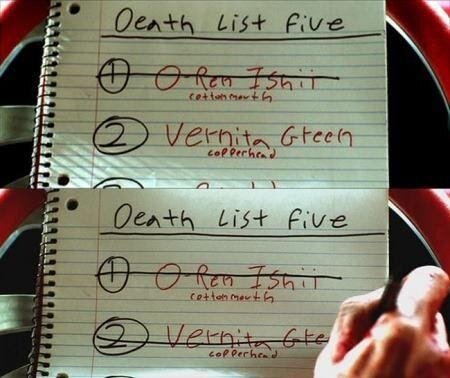
The rest of the film is told in a variety of flashbacks peppered with present-day ruminations as the Bride provides us with the details of her betrayal and quest for revenge. By the time she tackles O-Ren, we feel as if we know her story as if we’d experienced it first-hand ourselves.
When laid out chronologically, all ten chapters of Kill Bill (vols. 1 and 2) are told as such:
Chapter 3: The Origin of O-Ren
Chapter 8: The Cruel Tutelage of Pai-Mei
Chapter 6: The Massacre at Two Pines
Chapter 2: The Blood-Splattered Bride
Chapter 4: The Man From Okinawa
Chapter 5: Showdown at the House of Blue Leaves
Chapter 1: 2
Chapter 8: The Lonely Grave of Paula Schultz
Chapter 9: Elle and I
Chapter 10: Face-to-Face
Since we’ll only be discussing the first film, we only care about chapters 3, 2, 4, 5, and 1 – in that order. There’s no confirmation on exactly when the film takes place, but it’s generally assumed to be around 2003, the year of release. All of the film’s wiki-pages also center around this year, making it a reliable point-of-reference for Tarantino geeks on forums. This would make the original massacre take place in 1999, the Bride would wake up around 2003, and kill O-Ren the same year. This infographic should help you keep tabs on the story.

Besides a few brief shots at Two Pines, the first scene we see O-Ren in the flesh is in a flashback in Chapter 5: Showdown at the House of Blue Leaves, where she has officially been named “Queen of the Tokyo Underworld”. The Bride tells us that this opening scene takes place about one year after the Massacre at Two Pines – around the year 2000. It opens with the famous scene of O-Ren in front of a council of yakuza with Johnny Mo and Gogo Yubari by her side. Now pay close attention because this storytelling speedbump starts here.

Since the Bride introduces Gogo here as being 17 years old, we can safely assume that when she awakes from her coma three years later, Gogo’s actually 20 – the age of consent and adulthood in Japan. Keep in mind, she’s not referred to as being 17 anywhere else in the present-day, only in this flashback. Tarantino maintains that Gogo is 17 as she fights the Bride, but that would mean that she’s only 14 in this flashback and even younger when she was drinking at the bar. Here’s where the continuity issue lies.

Where is your mother?
The delivery of this information and the introduction of this new character is muddled, due to the fact that she was introduced in the past as being in the present. Now, if Tarantino says she’s 17, due to the laws of the “Word of God” trope, she’s 17. But despite being able to J.K. Rowling himself out of the conversation, his plot structure says otherwise because you simply cannot introduce a character in the past as being the age she is in the present.
Unless Gogo is a vampire and I completely missed that subplot.

Finally, Cyril, we agree on something.
The issues with numbers continue as in Chapter 3: The Origin of O-Ren, we find out she became the top female assassin in the world by age 20 – in 1994 – and that at 25, she participated in the Massacre at Two Pines in 1999. The math adds up perfectly and she ages as a young woman should. Based on the Bride’s information, O-Ren would have been 26 during her meeting with the council since it happened one year after. Again, Gogo was introduced as 17.
The climactic showdown at the House of Blue Leaves takes place three years after this meeting, making O-Ren 29 years old when she got her crown cut from her shoulders (literally). Her wiki page also has this as her age at death, so why would O-Ren age but not Gogo?

If time doesn’t exist…*gasp* then is the plot a coma dream?
My Thoughts
I personally love this theory as it makes more sense to me thematically and practically. If Gogo were a legal adult, portraying herself as an innocent schoolgirl is a clever fear tactic that could help her blend into daily situations, potentially doubling her role as an infiltrator. It also explains the slightly-more-than bodyguard relationship she seems to have with O-Ren – but that’s a conversation for another time.
Secondly, this makes the flashback at the bar more interesting and while this is another example of seeing the present within the past, it’s something Tarantino does throughout the whole film anyway. I mean, half the film’s backstory is told while Uma Thurman wiggles her toes in the backseat of a pickup truck.
There’s no way she would have been able to get alcohol in any reputable drinking establishment in Japan at a young age. Based on the mise-en-scène, we can tell this is a proper bar in Tokyo – perhaps in Shibuya, Roppongi, or Kabukicho – that has many people enter its doors. While some bars in these areas are reported to have yakuza presence and have scammed tourists out of thousands of dollars, locals will do their part to stay away from these areas. And the creep at the bar looked more like an average salaryman than a gangster.
We know that Gogo is a sadist in every way and it doesn’t seem hard to believe that doing something like dressing up as a young girl and killing men is how she spends her average Friday night. Or perhaps it was a gang hit – we’ll never know – but whatever the reason, many theories seem more believable than a 14 year old girl (at most) somehow getting a whole bottle of sake to herself in a bar in one of the busiest cities in the world.
Based on how the film was structured, Gogo couldn’t have been 17 when she died. However, if what Tarantino says is true, she would have been 14 at the council and should have either:
1) been introduced as such or
2) introduced as 17 in the present day (this option makes more sense considering the nature of the story he wished to tell).
Now, did the details just get muddled up in editing? Possibly. Probably.
Does this ultimately impact the story in any way?
Not really.
One of the most glorious parts of being a writer is that absolutely everything you say is canon, despite its flaws – after all George Lucas staked his career on this – but while it’s fun to play with structure as a writer, one can’t expect their audience to understand things to be innately true because “they just are”. Most importantly, we can’t expect them to just accept it lying down.

How do parsecs and British accents exist in A Galaxy Far, Far Away anyway?
If you’re a stickler for details like I am, something like this can shatter your suspension of disbelief and spiral you into a plethora of possible theories (now I can’t stop thinking about vampire Gogo Yubari). But despite this long-winded argument, at the end of the day, no one cares if a parsec is a unit of distance or time when all they want is to see the Empire destroyed. And honestly, Gogo’s age holds about as much weight as the disappearing bullet hole in Vernita Green’s kitchen. But you probably knew about that too.
Today, with a Bachelor’s in film production, I fully understand the beauty of non-chronological storytelling and why Tarantino’s name is so awe-inspiring. He developed a habit of taking the existing standards of filmmaking, shredding it to pieces, and pasting them together in a new way. By doing this, he forged his name as a Picasso of screenwriting – a master of creating something vaguely reminiscent of a familiar three-part structure (if you squint your eyes and tilt your head a little).
No list of plotholes or continuity errors will ever change my opinion that Kill Bill is a nearly perfect film. Every film has its flaws, every film; it’s the curse of being human. But I’ll always swear by Kill Bill because it is – and always has been – one of the clearest examples of a true cinematic masterpiece.

After the Fall - Post-Apocalyptic Anthology Announcement!
Jordan and Hudson fill you in on the latest with our feature film, This World Alone, how the pandemic affected us, and tell you all about our newest book release!
Jordan Noel (director) and Hudson Phillips (writer) fill you in on the latest with our debut feature film, This World Alone (and how the pandemic has affected those plans), but ALSO to announce something we're VERY excited about and one more way for you to lend your support to our favorite little film....
A brand new book of short stories, poetry, and comics inspired by the universe of This World Alone! We've got 30 stories that explore aliens, zombies, robots, mutants, natural disasters, technological failures, sand yes, even pandemics (all written before our current reality).
Half the money made from the sell of the book goes to these incredibly talented writers and the other half goes towards getting This World Alone FINALLY released into the world!
Visit http://ThisWorldAlone.com to learn more about the film and get your copy of After the Fall on Amazon here: https://www.amazon.com/dp/B088VR6L87/

Gods and Men – God of War, Quarantines, and Interrupted Journeys
Jacob York examines the 2018 Game of the Year God of War through the lens of the quarantine that the world is currently dealing with.
“Do not mistake my silence for lack of grief.” – God of War
As I walked toward my audition, I couldn’t help but notice how empty Times Square was. It was the first truly beautiful day of the year, but people were unnerved by the specter of Covid-19. I understood. My pockets were filled with disinfectant wipes that I ran over every surface I touched. I avoided crowded elevators. Still. We felt somewhat prepared. My wife and I moved to New York in early February but were getting our feet under us. We knew the neighborhood, had a stash of non-perishables and, thanks to the concerns of my public-health-nurse mom, were stocked with enough hand sanitizer to fill a bathtub. I thought we were ready, but there was a nagging feeling that I couldn’t quite write off as simply a product of my nervous nature.
Four days later, our entire apartment was packed and we were driving to Kentucky. It might sound indulgent to say the whole ordeal felt harrowing, but even as we spent the sixteen hour drive listening to our favorite podcast with our cat on our laps, neither my wife or myself could shake the feeling that there was a monster over our shoulders. We arrived at three in the morning, unpacked the rental car, and collapsed in my childhood bedroom.
The next couple of days passed very quickly. We caught up on sleep. I finished some scripts that were due. I shouted upstairs at my dad and stepmother about what they were watching on television to try and keep some sense of normalcy. I felt very grateful. I was in a safe place with people I loved. I was able to fully quarantine away from them. My wife and my cat were with me. We were, and continue to be, incredibly fortunate.
But then what?
Against my better judgement, I’ve been an Xbox guy for some time. The last PlayStation exclusive game I played was The Last of Us, when a friend loaned me his system for a month. Dad had a PS4 in the basement and I needed a project. God of War (2018) seemed like a project worth my time. I’ve never played a God of War game, so I didn’t have a real familiarity with the characters. Still, I heard it was great. Game of the year. Why not?
Now comes the part where I feel like I have to talk about the game. This isn’t supposed to be a review, but here’s the long and short of it. The combat is satisfying and visceral. The visuals are gorgeous and detailed. The score is great. The sound design is great. The mission structure, supporting characters, dialogue, all great. Like I said, I had no relationship with the main character (Kratos, a very mortal god), but ended my time in the game as a convert. I couldn’t stop telling people how much I loved this experience. The game is a masterpiece, which made me so thankful because I needed a masterpiece.
God of War is a lonely game. It’s about grief and growth and trying to become a better person despite the history you may be so desperate to escape. It begins with Kratos chopping down a tree. He and his young son, Atreus (Or “Boy”, as Kratos more often refers to him), are preparing a funeral pyre for Atreus’ mother. They go on a quick hunting trip as she burns, and they return to gather her ashes and fulfill her final wish – to sprinkle her remains from the highest peak in all the realms. From that point on, it’s a story about a father and son who don’t quite understand each other. Like most fathers, Kratos can’t help but worry at his son’s perceived weaknesses and the brutality of the world they inhabit. Like most sons, Atreus doesn’t understand his father’s past and wants to live up to Kratos’ standard, even when he can’t fathom why. For the first half of the game, it’s just these two, spending time together and alternating between terror and wonder as their world expands and their relationship deepens.
Terror and wonder, like seeing a titanic serpent rise from a lake and speak to them in a long dead tongue.
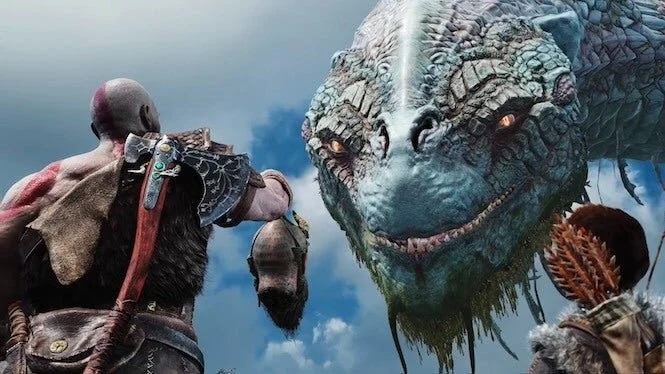
Terror and wonder, like walking through a nearly empty Times Square on the way to an audition you didn’t realize would be your last.
Being at your father’s house when you’re past a certain age is a strange experience. Sleeping on a bed that seemed huge in your childhood and cramped as an adult. Posters on the walls of things that were important for reasons you can’t quite remember (Did I even buy Badrock #1?). But there is a sweetness that can’t be denied. Cracking open the copy of A Prayer for Owen Meany I read in high school blasted my memory awake. I’m able to drink the sweetest water on the planet, made so because it was the comfort I found during so many dark nights, half awake and wandering from my bed to the bathroom. My wife and I walked through the woods to the home that used to belong to my grandparents, me pointing out landmarks along the way. The walk is now much shorter than I remember.
Though we have a yard to walk around in, we’re still confined to this place. We are, like most people, essentially trapped. Kratos and Atreus gave me vistas. They gave me adventures and challenges and quantifiable obstacles to overcome in a time when the only goal is to stay inside. Before we left New York, I left our apartment twice in ten days, doing everything I could to stay healthy for an acting job in Arizona that has since been postponed until September. After a near month of self-quarantine, I needed a world of escape and, in my time of despair, God of War provided. I did everything I could to put off finishing the game. In the mornings, I would read through guides that would help me find every nook and cranny of their world. In the afternoons, I would throw myself at the Valkyries, a series of optional bosses meant to test the skills you’ve built in game. At night, I watched the documentary produced by Santa Monica Studios about the development process in twenty-minute increments, and became charmed by Corey Barlog, the creative lead behind this story that took me so completely. But it wasn’t just that I was looking for a thing to do. The relationship between Kratos and Atreus was so genuine; it made sense that they would want to spend time together. So I played. So they could.
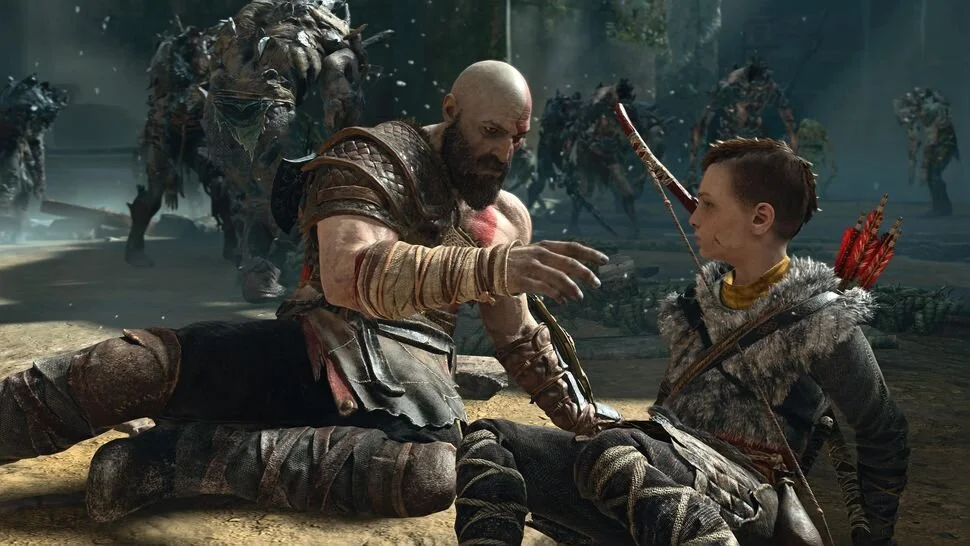
I finished God of War and took a breath. I turned to my wife and said, “That was a hell of a game.” It had all but convinced me to switch consoles. I wasn’t going to miss out on an artistic experience like that again. It inspired me and made me greedy to be a part of something as great as this game was (I immediately went to the Santa Monica Studios website to see if they were hiring writers.). It distracted me when things in life had taken a dark turn. It gave me a reason to be excited to get up in the morning and, in the aftermath of our life being put on hold, a reason to get out of bed is as close to a miracle as one can ask for.
Life has been a mishmash of emotions since I took that walk through Times Square. As with most people, I’m trying to find ways to occupy my time. I’m writing and creating while trying to binge art that inspires me (I finished another game last night: Celeste. The metaphor of “climbing a mountain” was made clear by how my hands ached after completing levels. It gave me a personal perspective that I couldn’t get simply by watching Free Solo.). But God of War felt different. It wasn’t a game; it was a companion. A relationship I was able to inhabit as stress mounted all around.
I mark my life through art that changes me. Buying Voodoo by D’Angelo in high school – watching De La Guarda as a college kid – binging the first season of Succession as my wife and I packed for our first stint in New York. Like that well-worn copy of A Prayer for Owen Meany that I kept in my backpack, they sit and wait for the proper moment to bring you right back to where you were when you first encountered them. Someday, I will play the sequel to God of War and it will bring me back to my father’s basement, unstuck from time; an adult in my childhood bedroom. When the world was uncertain and fearful and I was able to turn to those I loved the most for comfort. To my family, to my wife, and to a story told well. I am so grateful.

The 14 Best Sci-Fi & Fantasy Films of the Decade
Science Fiction and Fantasy are staples of genre stories, and have been for decades now. Many of us here at Mirror Box are self proclaimed nerds, so these films mean so much to us! Here are the best Sci-Fi and Fantasy films of the decade!
Science Fiction and Fantasy can come in so many forms. Whether it’s a cerebral, cold thriller or a warm, emotional animated story, these two genres are often two sides of the same coin, and we at Mirror Box love them both equally! Some of our favorite artists, filmmakers, podcasters, and artists give us their favorite Sci-Fi and Fantasy films of the decade! (Note: We asked contributors for their best films of the decade including best animated films, and then assigned them to a specific genre, hence the heavy emphasis on animation).
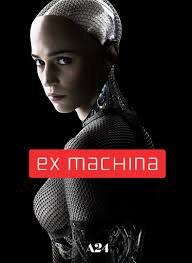
Ex Machina
I’m gripped by the seeming effortless simplicity of Ex Machina. The film tells a small story of a young programmer who is invited to assess an advanced humanoid A.I. Yet, through this basic setup, viewers are led to ask the most profound questions about human existence. What makes us human? What differentiates us from Artificial Intelligence, if anything at all? The story's limited locations and characters work in its favor, building to a claustrophobic climax that subverts expectation in the most satisfying of ways. Ex Machina is a modern day “Frankenstein” story, where, once again, the seemingly monstrous creation forces us to ask difficult questions about the creator’s own monstrosity.
Ryan W. Smith is a screenwriter/producer, who has written feature films and TV for Anonymous Content, Netflix, Disney and others. He is the co-writer/producer of the science-fiction thriller, VOLITION (directed/co-written by his brother, Tony Dean Smith), set for release in early 2020 — www.volitionthemovie.com.

Inside Out
Pixar's INSIDE OUT is not only one of my favorite films of the decade but of all time. I connect so deeply to the balance of joy and sadness and I marvel at how such complex concepts are presented so simply and wonderfully. The world building, the performances and the story all come together in such a beautiful way. I am also inspired by the work behind the scenes and how the script was developed so relentlessly - it reminds me in my own work that you're never too good for a rewrite!
Kerry Carlock and husband/filmmaking partner Nick Lund-Ulrich are currently working on their second feature RED KNIGHTS FOREVER while their first one, ARMSTRONG, can be seen on Amazon Prime.

Under the Skin
The plot of Jonathan Glazer’s Under the Skin is nothing new: An alien comes to Earth and is infected by human emotions and longings. The execution, however, is radical, visionary. I haven’t rewatched the movie since it was in theaters five years ago, but images, moments, entire scenes are burned into my memory, maybe for life. Runner-up: Goodbye to Language. There’s nothing sci-fi about the story in Jean-Luc Godard’s 2014 opus. But the film itself is like a visitor from the future. It has by far the most innovative use of 3-D in any movie I've ever seen. Godard (who just turned eighty-nine on December 3) proved he’s still decades ahead of everyone else.
Nelson Kim teaches film at Wagner College in Staten Island, New York, and makes strange, personal indie movies like www.SomeoneElseMovie.com when given the chance.
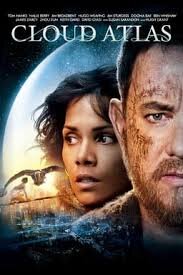
Cloud Atlas
There are movies that I like, there are movies that I love, and then there are movies that change my life. Cloud Atlas doesn’t just define the last decade of film, it shows us what is possible in the future. The Wachowskis & Tom Tykwer took David Mitchell’s book that told six stories across six time periods and six genres and intertwined them with such ambition and such energy that I got done watching it for the first time and said “What was THAT!?!” How many filmmakers get to spend $100M on a film where all the actors play multiple parts in each time period, changing races and genders as they go? But it stuck with me, and each time I rewatch it, it’s like a sacred experience for me to disappear into this movie and let the spiritual ideas invade my brain and the deep emotions invade my heart. It’s not often that I leave a film with so many questions, much less questions that make me challenge my beliefs about the world we live in and how I interact with others around me. These kind of lofty, experimental, giant budget movies with equal parts adventure, mystery, and heart would be my favorite type of movies if they got made more than once in a lifetime. I’m not sure we’ve ever seen a film like this before and I’m not sure we’ll ever see a film like this again, but my hope is that the spirit of Cloud Atlas will live on through multiple creators and over multiple ages, being reinvented and reimagined for all time.
Hudson Phillips is a writer, producer and founder of MirrorBoxFilms.com

Uncle Boonmee Who Can Recall His Past Lives
This film is the perfect storm of surrealism and folklore. It is inspired and loosely based on old ghost stories of the town the filmmaker grew up in and blends gorgeous cinematography with foreboding dream sequences that leave you on edge. No matter how ominous the movie gets, I can't pull my eyes away from the screen and am blown away by images I'll never forget. Honestly, it's so hard for me to pick a single film of the decade but I just think this little known movie deserves to be seen.
Adam Petrey is an atlanta filmmaker with three short films under his belt that also moonlights as a freelance video editor.

Arrival
One paragraph why: I was born in 1990, so this last decade was my twenties, and I spent them trying on different possible personas. It's impossible to pick a favorite movie of a decade when each year felt like its own era. So I picked the movie that if I flipped on a television right now and it was on, I'd watch it. Arrival was one of those movies that I saw and thought, I'm going to watch this many more times for the rest of my life. Screenwriter Eric Heissier did such a perfect job taking Ted Chiang's already-gorgeous short story Story of Your Life and weaving it into a delicate web that crescendos, unravels, then resolves like a concerto. Denis Villeneuve's direction is the brilliant combination of epic sci-fi and understated personal drama, and that tone is perfectly supported by Jóhann Jóhannsson's hauntingly beautiful score. It's classic sci-fi. A seemingly insignificant person who possesses a specialized skill is called upon to save humanity, and while they must overcome their personal baggage to do so, that same baggage is paramount to their success. The way in which it all intertwines blew my mind and made me bawl. Amy Adams was also so perfectly cast as Louise. The alien ships designed by Patrice Vermette are intoxicating—they immediately inspire curiosity—and creature designer Carlos Huante created aliens that I want to run away from but then also hug very much. Arrival is touching, heartfelt, and mind-boggling—it's perfect sci-fi magic.
Rachel Sweeney is an actor, writer, director, and stand-up comedian based in Los Angeles, and you can view her work on her YouTube and Vimeo.
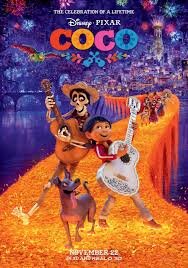
Coco
This is the film I’ve seen about eight times already, and I can never stop crying when Abuelita Coco remembers her father Hector. It’s an impactful story of embracing your family and your culture and the Day of the Dead is no exception. Generations may come and go, but the power of love and remembering your loved ones will cement their memory for future generations.
Ethell Nunez-Suazo is an aspiring Line Producer and Unit Production Manager working her way up in the indie world. Instagram: @original_clone_in_black Twitter: @cloneinblack

Inside Out
In 2015 I had just about given up on Pixar. With the exception of the unexceptional Brave, the previously imaginative studio exclusively pumped out sequels and prequels, which declined in quality and necessity—from Toy Story 3 to Monsters University—for the first half of the 2010s. And then came Inside Out. How can I sum up this utterly ambitious yet simple film in one paragraph? To put it succinctly, from my first watch to every viewing thereafter, I have been in awe. In awe of a movie that makes memories malleable, journeys a landscape of personality, and that goes beyond Pixar’s usual personification of inanimate objects, and actually gives emotions to emotions. Not to mention the audacity of writer/director Pete Docter to trust the audience, young and old, with a plot without villain or peril, where the crisis is a young girl grappling with her sense of self. Navigating difficult subjects, like loss of innocence, forgotten memories, and the importance of sadness with care and adventure and zero condescension. It’s heartbreaking yet delightful, with playful gags and the perfect cast of comedians set against a bright, wondrous canvas. I’m so grateful that Pixar took such a big risk on this genre-breaking family movie that has brought me and so many others joy.
Lara Morgan watches and occasionally makes movies in Austin, Texas.

Arrival
My favorite movie of the decade has to be Arrival (2016), directed by Denis Villenuve. I remember seeing the film with a friend and us both leaving the theater utterly blown away. Just every detail from the script, the acting, the editing, especially the way it plays on your understanding of flashbacks, fit together perfectly. Even details such as the alien designs and their circular language have so much thought put into them that it truly shows this film was a labor of love from everyone who worked on it. And on top of all the attention to detail, this movie seems to tell a whole new story in the alien invasion genre. Instead of the aliens coming to attack earth, a la Independence Day, it’s about how important it is to set aside our differences and try to understand each other. This movie is certainly something special and I think it’s the capstone to an amazing decade for director Denis Villenuve.
Brad Kennedy - 1/2 of the directing duo at Sozo Bear Films (@sozobearfilms)

Arrival
The movie that moved me most deeply was Arrival. I think that because I am a relatively new dad, my boys are seven, four and one, it caught me off guard, and the emotion was impossible to contain. I went in expecting a sci-fi analysis of our world today and instead got my mind blown, and my heart opened.
Michael Brown has been making films and adventuring for thirty years. Along the way, he has racked up three Emmys, many film festival awards, and five summits of Mount Everest. The most meaningful, however, his family, wife Julia, and three sons.

Interstellar
Favorite movie of the decade is Interstellar! I love Nolan and I love sci-fi. The movie felt so raw when a lot of movies in the same vein would make everything super slick. So I enjoyed how human the movie felt. Even the fact that they had an actor voicing the robots as well as manually moving the bots around in the scene. I loved the use of practical effects and models and the sound design made for such a visceral experience. And when you strip away the sci-fi stuff it’s still an awesome story about a man and his daughter and the power of love.
Luke Pilgrim is 1/2 of the writing/directing/producing team Sozo Bear Films, creators of the web series “Encounters.” https://youtu.be/SYiZYtIAb7w

Inside Out
My favorite film of the whole decade is the animated masterpiece Inside Out, Pete Docter's brilliant exploration of feelings. And if you know me, this is a big deal because there were TWO Toy Story movies released in the decade, both of which are near perfect. Inside Out is maybe not perfect, a little messy, but as an emotionally repressed 42 year old who stuffs sadness and fear and anger down and tries to only emit joy, it hits me deep down every time like no other movie of the decade. Also, BING BONG is my jam.
Kyle "GIbby" Gibson, an emotionally repressed 42 year old who loves movies, basketball, his wife, his buds and guitar players on big rigs, sells insurance in his day job and co-hosts the incredibly awesome podcast Four Friends Fight About Film with three of his best friends who make fun of his love of all things Pixar.
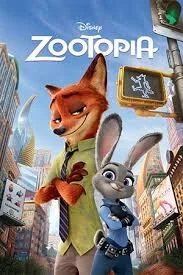
Zootopia
This is by far Disney’s best, smartest, and funniest animated film within the last ten years. In a world where animals have evolved and live together in harmony, the dark underbelly of classism still exists. The film’s two main characters prove to be a dynamic duo that play off each other well. Their arcs speak volumes on society’s issues with stereotypes and the disastrous effects of an outdated prejudice system on society. The nuances in the film are worth every frame and the comedy is gold. This is a movie that both parents and their kids can enjoy together.
Lisa Waring is a producer, screenwriter, director and owner of NXG Global Productions (www.nxgglobalproductions.com). She currently resides in South Florida with her husband and our five children.

Black Panther
Sci Fi is such a broad genre, so when looking back over the decade in search of the best you come up with a lot of results. I wanted to say Ex Machina, because that's probably the right answer. I wanted to say The Last Jedi, because hyperdrive is friggin' weapon! I really wanted to say Her, because that movie was probably made for lonely corner of my heart. What I didn't want to do is pick an easy answer and delve into that big bad Marvel Universe, but...Black Panther gave us Afrofuturism and the applications of a Technologically Advanced African Nation to the plight of the African Diaspora. They gave us traditional African fabric as a futuristic shield, bonus for not being a weapon. They gave us rhinos...ok, we maybe could have done without those CGI rhinos but...they gave us, ME, an exhilarating epic story that is more Sci-Fi than Tony Stark's and did what all great sci-fi really is meant to do, say something. Black Panther said a lot. I heard all of it. And I'm still listening
Profound Clarke is A Brooklyn born Atlanta based writer, Profound Clarke is a storyteller with a passion for perspective. In pursuit of new perspective he holds his writing to the idea of a concept that's unique with a story that's more important.

The 12 Best Action Films of the Decade
Who doesn’t love a great action movie? These are blockbuster popcorn flicks at their finest, and what the theater-going experience is all about. Action films are a spectacle, and we love them for that. Here are the best action movies of the decade!
Action flicks are a staple of the movie going experience, and have been for decades now. It doesn’t matter whether you’re a millenial or a boomer or a boy or a girl, action movies are for everyone. This decade has shown no shortage of quality in that category, with great films coming out every year. We’ve seen the introduction of completely unique characters, as well as an entry in a legendary action film franchise that dates back to the late 70’s. There’s something for everyone, and we asked some of our favorite writers, podcasters, filmmakers, and artists to give us the action movies that rocked them to their cores this decade!

John Wick
I will always love this neo-noir that plays out like a dark, graphic novel on screen. The depth of John Wick runs so much deeper than "He killed all those people over a puppy." The emotional core of John Wick is the love he has for his wife. His motivation is to honor her after she dies. The puppy she gave him is his one connection left to her. And it was taken from him. This movie shows us that in some universe, a man of focus, commitment and sheer will exists. A skilled assassin who buried his past to marry the woman of his dreams. A man who once killed three men in a bar with a pencil. A named John Wick.
Violet Conner is a screenwriter based out of Phoenix, Arizona. When she's not spending time on Instagram or Twitter, she's parenting her two children and watching movies. Writing with themes of empathy and humanity that reach the emotional core is a huge passion for her. Essentially, the human equivalent of a Hallmark card.

Spider-Man: Into the Spiderverse
On a lark, my wife and I went to a mid-day showing of Into the Spiderverse in the closest theater to my small Kentucky hometown. Within minutes, I was openly weeping. Seeing it so close to the town where I was born was a profound moment for that nerd who didn't know where he fit in for so much of his youth. I didn't grow up with Miles Morales, but Spider-Man was the first comic book character that entered my consciousness. I've grown up with him. To finally see a comic book movie that didn't apologize for its source material was breathtaking. There were so many movies this decade that I adored. Ex Machina is a perfect movie. Mad Max: Fury Road compelled me to see it in the theaters four times. I've evangelized Happy Death Day to anyone who would listen to me. But I've waited my entire life for Into the Spiderverse.
Jacob York is a writer and actor from Benton, Kentucky who has lived in Atlanta for most of his professional career. @jkobbster on Twitter.

Mad Max: Fury Road
This is a tough one. Ten years of movies! That's a lot. That's at least like ten movies. After much back and forth in my mind, I'm going to pick Mad Max: Fury Road. I don't think any movie over the whole decade was more fun, exhilarating or just plain weird as Fury Road. I watched the movie with a huge smile on my face the whole time, seeing things I'm pretty sure I'd never seen on screen before. So here's to you, bungee corded guitar player guy on big rig truck—you earned it.
Kyle "GIbby" Gibson, an emotionally repressed 42 year old who loves movies, basketball, his wife, his buds and guitar players on big rigs, sells insurance in his day job and co-hosts the incredibly awesome podcast Four Friends Fight About Film with three of his best friends who make fun of his love of all things Pixar.

Mad Max: Fury Road
I'm a hard sell for action films. While I enjoy a well-choreographed action scene, I often find them lacking in focus. Action with too much going on and not enough character and story can't hold my attention for long. But this one had it all, from character to fantastic production design, stellar performances to, yes, some of the most beautifully choreographed action scenes in recent memory. While I wouldn't call this film a masterpiece in the vein of Scorcese's contributions this decade (and prior), this is my favorite film for sheer enjoyment and re-watchability.
Dayna Noffke is a screenwriter and director from Atlanta. She is currently in development for her first feature film, GET CHINO!

Mad Max: Fury Road
From the moment I saw the teaser trailer for this film, I knew this was going to be an unparalleled cinematic experience. And I was right. I've seen the movie several times over the past decade, and each time I'm astounded by the breadth of George Miller's vision in terms of world-building, production design, and the cast of characters he's created. I also like the fact that he explains virtually nothing, plunging us into a desperate situation and embarking on the barest of survival narratives. It's a movie that got me excited about movies again.
Kevin Miller is a best-selling novelist and award-winning filmmaker whose most recent feature-length documentary, J.E.S.U.S.A. will be released on Feb. 25, 2025. To read more about Kevin and his work, visit www.kevinmillerxi.com.

The Nice Guys
I almost went with John Wick, because "duh"... but I’m going with what I believe is also the most underrated movie of the decade, which is Shane Black’s 2016 action/comedy The Nice Guys. It’s one of the most well written, well acted, well edited, etc. etc. films that’s come out in years, in my opinion. Who knew such comedy chops could come from Ryan Gosling and Russell Crowe? It’s the usual hilarity we’re accustomed to from Shane Black where he subverts what we’ve come to know and expect to happen from a scene for the sake of character and comedy. Everyone getting shot at and someone needs a gun? Let’s have a character throw a weapon in heroic fashion to the other man pinned down, but wait, it goes through the window and they’re still screwed …. buddy comedy, great action, great writing, great message, all around fun. I could watch it every week.
Walker Whited - writer/director of feature film “By Night’s End” and editor at Atlanta based post house W Squared Media. | www.wsquaredmedia.com | By Night’s End Trailer - https://youtu.be/0rrZJHHR0wE

Baby Driver
Perhaps the best part of Baby Driver is its soundtrack, because the songs take on an active role in the film, which plays almost like a feature-length music video. Edgar Wright created one of the few and best original screenplays in the last decade. And to top it off, the film was shot and set in my hometown of Atlanta.
Robert Carnes is a writer, marketer, author of two books, and lives in Atlanta with his family.

Mad Max: Fury Road
If someone told me that I would love a movie that was essentially a two-hour car chase ten years ago, I wouldn’t have believed them. In fact, I refused to see this movie in the theater because I didn’t think I would like it. But it really is the most entertaining car chase you could ever imagine—without a car running into a single vegetable stand. I love the badass female lead and the practical visual effects. I am definitely not a car person, but even the crazy souped up vehicles are fascinating and tell a story all on their own. It is pure insane, apocalyptic fun.
Susan Cooper is a podcaster and creative project manager in Atlanta. She has the superpower of resourcefulness and hopes to use that power for the greater good.

Looper
Contrary to popular belief, the 2010s have been a banner decade for cinema. Despite what some see as an endless series of franchise-fatiguing reboots, dozens of incredible movies saw release each year—they just may not have played on 4,000 screens. It’s hard to pick only one, but I always lean towards genre, and for my money, the best genre film this decade was 2012’s Looper. Rian Johnson’s time-travel thriller subverts expectations at every turn, knowing which way the audience expects the story to go and constantly upending those expectations with every turn. A marvel of narrative construction and filmmaking craft, Johnson’s film starts out as one story before shifting gears and revealing itself as something else entirely, almost a superhero origin in disguise. More importantly, Looper perfectly encapsulates the generational divide that seems to crack ever wider as we’re dragged further and further into the twenty-first century. By having its main character Joe meet himself as an older man (ably realized by co-stars Joseph Gordon-Levitt and Bruce Willis) that conflict is made literal, with the brash-yet-idealistic youth coming up against his wizened-yet-uncompromising elder. As the famous Bob Dylan lyric goes, you can either get out of the new world or you can lend a hand to help it; by film’s end, Joe accomplishes both in a stunning climax that offers hope for the future by rectifying the past.
NATHAN CABANISS is based out of Lawrenceville, GA, where he lives a life consisting primarily of danger, intrigue and Netflix. His fiction has appeared in various publications, in both English and in French. 2016 saw the publication of his first collection of short stories, Mares in the Night, and his short novel The Mummy’s Hand At the Center of the Universe was released in 2018.

Looper
Looper came out after I had graduated from Film School and was feeling as if I had made a huge mistake and should have become an accountant. A movie that I would consider an “MK movie,” it was a time travel movie that pushed the trope on its head, had a distinct POV, and was a joy to watch. This film actually made me want to make the sci-fi films that I want to make. It lit a fire under me creatively and it was a surprising film. Its writer and director, Rian Johnson, continues to surprise me and make me want to push myself in my filmmaking. That’s why Looper is my favorite film of the decade.
MK McFadden is a lover of science fiction, pizza, and deadlifts.

Star Wars: The Force Awakens
In trying to pick my favorite movie from the last ten years, I went with what gave me the most joy in the theater. Star Wars is my first cinematic love and it's hard to resist the opening fanfare and rolling yellow letters in a darkened theater with a few hundred other like minded individuals. The movie may be imperfect, but feeling the new characters inspire the next generation of Star Wars fans was a joy, which is why it was my favorite of the decade.
Nick Lund-Ulrich and wife/filmmaking partner Kerry Carlock are currently working on their second feature RED KNIGHTS FOREVER while their first one, ARMSTRONG, can be seen on Amazon Prime.
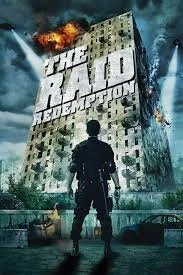
The Raid: Redemption
When thinking back on the decade genre by genre...it can be difficult. You get locked into movies over the last few years as they're what's fresh on your mind so you go over some list of movies to see the hell you've been doing for the past 10 years. At least, that's how I find myself at the end of 2019/beginning of 2020. So when I was asked "What's the best action movie of the last decade?" I had to take a second to-- The Raid: Redemption. Yes, it takes one second for me to come up with this answer because...well, The Raid is kind of always on my mind. The Raid: Redemption (2011) is a perfect action film. Writer/Director Gareth Evans took his audience and locked them in an apartment building with a police force. A ride...er...stair climb along with Indonesia's finest. The man at the top? Ruthless. The tenants between, all on a mission to leave not a lawful intruder alive. When I first stumbled onto this, I couldn't believe what the filmmaker's pulled off. Creative gun fights, endless tension, and some of the most brutal and personal hand to hand combat I've ever witnessed. Once they get into that building you will be locked until it reaches it's intense conclusion.
Profound Clarke is A Brooklyn born Atlanta based writer, Profound Clarke is a storyteller with a passion for perspective. In pursuit of new perspective he holds his writing to the idea of a concept that's unique with a story that's more important.

The 10 Best Horror Films of the Decade
Horror movies are here to stay, whether with the critics or the fans. It feels like the genre has gained some legitimacy this decade, and we here at Mirror Box can only hope that trend continues! Here are the best horror films of the decade!
There’s been no shortage of quality horror films by talented directors this decade, so it’s a great time to be a horror fan! Even if you’ve never quite gotten into horror, there’s never been a better time than now! There are so many great ones to choose from, so we asked some of our favorite writers, podcasters, filmmakers, and artists to give us the films that scared them the most this decade!
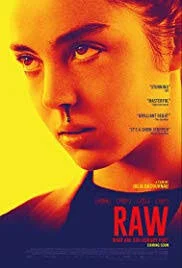
Raw
Julia Ducournau’s Raw is the classic story of wanting to fit in at college all while discovering your intoxicating obsession with devouring human flesh. Hate when that happens. It’s a coming-of-age tale as much as it’s a macabre unraveling and it’s as smart as it is sick. It’s a wholly original tailspin into depravity with a brilliant final scene that’ll give you something to chew on long after it’s over. Cannibalism joke!
Aaron Chewning is a comedic writer/director/performer http://aaron.productions/
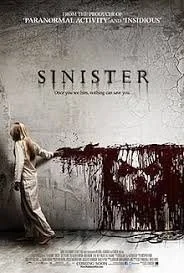
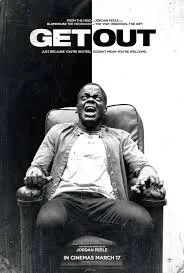
Tie: Sinister and Get Out
I'm going to have to cheat and choose two films for this one, because I simply can't decide. Both of these movies had me watching and re-watching, dissecting exactly what was so special about them. Sinister gets props for being one of the first films to genuinely scare me in years. The writing is tight, the concept unique and it has what I consider to be, arguably, one of the gutsiest third acts I've ever seen. It goes all out and does not stop. Get Out, on the other hand, managed to tap into something very real, timely and intense. It took us to a place that we didn't necessarily want to go and showed us things we may have wanted to ignore or look away from. And it did it all with grace. Jordan Peele has such an intensely unique voice and a mastery of the art of building suspense. It's a masterclass in making solid, intentional choices. I really enjoyed Us, as well, and can't wait to see what he does next.
Dayna Noffke is a screenwriter and director from Atlanta. She is currently in development for her first feature film, GET CHINO!
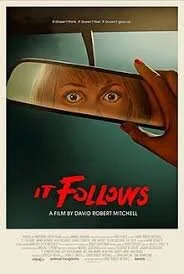
It Follows
I grew up being scared of everything. EVERYTHING. It wasn't until around 2009 that everything changed, and I began to really get into film and thus, horror films. Since that time, I've really grown to love the genre, despite the multitude of frankly, bad movies out there. A smart, well-made horror movie is one of my absolute favorite things. Yes, I realize that's a weird/morbid thing to write, but it's so true. In 2015, one of those smart and well-made films was released. David Robert Mitchell's It Follows was one of the best theater experiences I've had in quite a while. With a distinct lack of jump scares, but an abundance of style and smarts, It Follows continues to be a film I'll suggest to absolutely anyone, and not just horror fans. All of its elements make it a great film. The music is full of haunting synths that create an atmosphere of dread, and the cinematography and camera movement are both unique and fully serve the story. It has never stopped being entertaining for me after multiple viewings, and I will highly suggest that YOU, dear reader, go out and watch this movie. At night, preferably.
Colby McHugh is a writer who loves pop culture in all of its many mediums, who also would like to write comics one day. Any artists interested in talking ideas or just shooting the shit can email him at showandtellwords@gmail.com
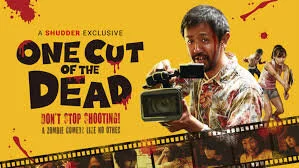
One Cut Of The Dead
Wow. Wow. Wow! One of the smartest, most well-executed movies I’ve ever seen. Somehow Shin’ichiro Ueda and team were able to create an earnest, beautiful, meaningful, hilarious, super fun, brilliant horror-comedy in the long beaten dead horse of the zombie genre. I must admit, it’s not scary, but I’m willing to bet that by the end of the movie you won’t care that you weren’t scared. And I don’t even really like horror-comedies! See this movie!
Jordan Noel is a director/editor/artist/dad/husband/ friend best known for not keeping his website, jordan-noel.com, up to date.
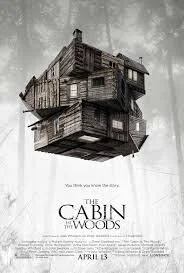
Cabin In The Woods
I am a huge horror fan, and have been my entire life. I’ve seen everything, which is one of the things I love about Cabin In The Woods. The movie KNOWS I’ve seen everything, and twists my preconceived notions of what should happen in a horror movie, while still honoring and acknowledging the mighty history of the genre. The movie is ostensibly about exactly what you’d think it would be about with that title—a group of kids spend the weekend at a cabin in the woods and scary things happen. I can’t really tell you more without spoiling the barrage unexpected twists and turns you’ll enjoy when you watch this film. The characters are memorable, the monsters are amazing, and the dialogue is snappy, and the plot is tight and smart. So good you’ll want to see it again to catch all the clever bits you missed the first time. Watch it!
Lynne Hansen is an Atlanta-based horror artist who specializes in book covers, and you can see her work at LynneHansenArt.com.
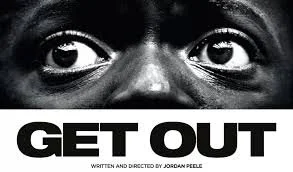
Get Out
Get Out was a film that revolutionized the horror genre and provided a thorough look into a delicate subject matter. On the surface it’s a movie about a young man who meets his girlfriend’s sadistic and unhinged family and must fight to survive. However, the movie dives deep with its messages, tones, Easter eggs, nods and winks to the audience. This was nothing short of genius. Peele’s mixture of horror and light comedy with in-depth commentary on race, history, relationships and culture made this one of the best social thrillers I’ve ever seen. I found no flaws with this film. And each time I sit down to give it another viewing, I find a new discovery and truth.
Lisa Waring is a producer, screenwriter, director and owner of NXG Global Productions (www.nxgglobalproductions.com). She currently resides in South Florida with her husband and five children.
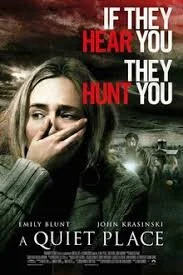
A Quiet Place
There may be more macabre or horrific films of the last decade, but when it comes to “favorite”, not much can top John Krasinski’s family drama. Immediately arresting, genuinely exciting, and thoroughly engaging, it’s an inventive homage to popcorn thrillers past, scaring us as well as inspiring us, and genuinely leaving us all breathless for more.
Nathan Rouse, occasional theater producer, frequent podcaster, father and husband, lives in Charlotte, NC, with his wife and 3 kids, foolishly hoping and hopefully foolish that all of our best days are still to come.
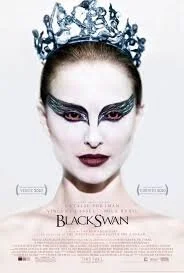
Black Swan
This has been an amazing decade for horror, especially for stories that walk the line between being both terrifying for audiences and critically acclaimed. There are so many I can list here, including The Babadook, It Follows, Get Out, Hereditary, The Witch (my runner-up pick) ...too many to cover here. When I think of movies that had a physical impact on me, though, I have to pick Black Swan as my favorite of the decade. I still remember the dying moments of the finale as I sat back and exhaled, not realizing I was sitting forward and holding my breath the entire time. It felt like the first warning shot of the decade which culminated in so much attention and so many awards for the genre. I look forward to what the upcoming decades will bring us when films like Black Swan and the others start influencing the next generation of storytellers.
Chuck Thomas is a screenwriter, producer, and podcaster in the Atlanta area. Check out his work at atlantascreenwriter.com, his production company hootyhooproductions.com, and his podcast Atlanta Film Chat at atlantafilmchat.com.
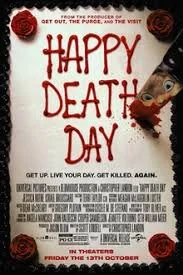
Happy Death Day
On its face, Happy Death Day shouldn't work. "It's Groundhog Day but with stabbing ..." sounds like something you'd read off the notepad you keep on the bedside table in case you get an idea in the middle of the night. In spite of all that, it's one of my favorite movies of the decade, genre be damned. It's a frothy affair anchored by one of the best lead performances from an actor I had never heard of in Jessica Rothe. If I could buy stock in a performer, I'd go broke betting on her. PG-13 horror is a tightrope, but Happy Death Day works because everyone involved knows precisely what film they're making and go all in on the silliness of the concept. It's fun, it's occasionally tense, and it's the kind of movie you can watch over and over and ... well, you get the drift.
Jacob York is a writer and actor from Benton, Kentucky who has lived in Atlanta for most of his professional career. @jkobbster on Twitter.

The 16 Best Drama & Comedy Films of the Decade
These films are so much more than just their genre. Here are the best drams and comedies of the decade!
Occasionally, we come across films that tend to defy traditional genre tropes, whether through sheer uniqueness or a combination of multiple genres in one. Those particular films can be really special viewing experiences, and ones that we rarely forget. We asked our some of our favorite writers, filmmakers, podcasters, and artists to give us the best dramas and comedies of the decade. Enjoy!

Drive
Masterfully suspenseful, emotionally powerful, and infinitely cool, Nicolas Winding Refn’s Drive is my favorite movie of the decade. Ryan Gosling’s never been better as the nameless driver, a protagonist so charismatic that he makes Steve McQueen look like Mr. Bean. Throw a supporting cast of Oscar Isaac, Carrey Mulligan, Bryan Cranston and a perfect against-type Albert Brooks into the mix and you have one of the best rosters in recent memory. It’s a fascinating character study, a powerful love story, and an exhilarating thrill ride that’s about as good as it gets.
Aaron Chewning is a comedic writer/director/performer http://aaron.productions/
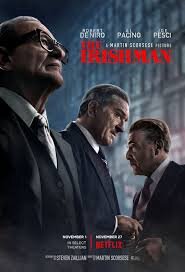
The Irishman
In mulling this question over, that of "favorite movie of the decade," the only title that came up was The Irishman. The film being fresh in my mind, I chalked the feeling up to freshness. And yet, there is something about the movie that stands out among the crop. No doubt there are other worthy films of the last decade, but, with 10 years of movies and TV shows meant to seem like movies behind us, I can't stop thinking about Joe Pesci. His performance was so perfect, so understated, both calm and calming. Even if it had not been from an actor known for how well he can shout on screen, it would still be a moving performance. The scope of this film, spanning close to 60 years, is visualized and tangible to a degree I can't quite describe. And then there's the familiarity. Somehow I know these characters. I mean I don't, but growing up with an Italian American clan from New England (with no known mob ties, thanks) created a vibe of nostalgia. 1960s crooners, fresh bread, exclamations like "minchia!" evoke the same feeling as Christmas dinner. And even though these men are killing each other all the way to a fruitless dead end, they are still real people motivated by love, honor, and family. The last thing I'll say is that, for all its glory, this decade in film often left me tapping my foot with impatience. Every movie I see is at least 20 minutes too long. Perhaps most impressive then, is the fact that throughout all 3.5 hours of The Irishman, not a line, not a shot, not a moment was wasted. I was never bored. The film has stuck with and, I assume, will continue to stick with me. In a decade of strapping young lads, The Irishman is the venerable old wiseman sitting on top of the mountain.
Derek A. Kamal is a game maker and self-published author. He hides his work at ShorelessSkies.com
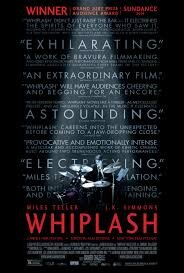
Whiplash
Whiplash grabs my attention from the very first frame, and it carries me, gripped, to the final moments. It does this, not only through the brilliant performances of Miles Teller and J.K Simmons, but through the skillful direction and writing of Chazelle. Every beat of the story serves the character development of Teller’s character, Andrew Neiman. We are glued to Neiman throughout the journey, latched onto his psyche, such that we feel his anguish and desire. Not a moment is wasted. I’m in awe of this level of tight storytelling. Chazelle adeptly creates a piece that is at once deeply complex, yet elegantly simple.
Ryan W. Smith is a screenwriter/producer, who has written feature films and TV for Anonymous Content, Netflix, Disney and others. He is the co-writer/producer of the science-fiction thriller, VOLITION (directed/co-written by his brother, Tony Dean Smith), set for release in early 2020 — www.volitionthemovie.com.

The Grand Budapest Hotel
My favorite movie of the decade is the second best film of 2014 according to the Academy: The Grand Budapest Hotel. It’s the first R rated film I saw on my own, purchased my own ticket for, and a piece of art that charmed me more than anything I’d ever seen, or have seen since. Is it a heist movie? An alternate history? A slice of life film? I don’t know the answer to that, but I do know it’s a good film. Not perfect, not necessarily a masterpiece, but good. And for me, it is watch at minimum once a year good. I’ve only got one paragraph so I won’t go into detail about the myriad of reasons to love this film, but if you haven’t seen it, do yourself a favor and see what I believe is the best film of the 2010s.
Alex Oakley is an aspiring actor, an amateur content creator, and all around enthusiasm enthusiast based in Atlanta. One of the co-hosts of the Shot for Shot Podcast.
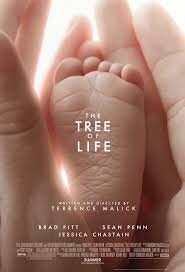
Tree of LIfe
I remember everything about the experience of seeing Tree of Life, Terrence Malick’s filmic poem about memory and childhood. I haven’t seen the film since seeing it in theaters on opening night because it impacted me so greatly I was unable to speak after seeing it. I cried in public in Manhattan’s Lower East Side, unable to express my immediate reaction with words. I saw Tree of Life a few months before my father’s stroke, during a time in my life when I was very aware of his declining health. The film was timed perfectly to strike the very essence of what I had been battling internally - looking back on my experiences as a child and trying to hold onto them, trying to make sense of how the people closest to me shaped me into the adult I was in 2011. Malick’s dream-like, lyrical style invoked the sentimentality in looking back on one’s experiences, both good and bad, before the universe we all come to know rapidly expands past our own grasp of it. It’s a film that makes remembering our pasts both celestially stunning and earthbound to the tragedies we cannot escape.
Victoria Negri is a writer/director whose feature work includes “Gold Star,” in which she also co-starred with Oscar-nominated actor Robert Vaughn, and the upcoming film “ULTRA.” For more info on her work: victorianegri.com
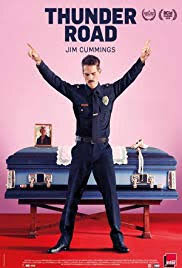
Thunder Road
Ok, this is such a hard one. So many great films have come out in the last ten years, but only a few have really affected me or changed the way I look at film. Thunder Road is one of those films. Writer/Director/Actor Jim Cummings originally released Thunder Road as a 13 minute short, and then adapted it into a feature length film a few years later. The short was already my favorite short film I'd ever seen when it came out, so when I found out Cummings was working on a feature length version, my mind was blown. And, needless to say, the film did not disappoint even a little. It was laugh-out-loud funny, incredibly heartfelt, and inspiring. I remember immediately wanting to go write something right after I saw it, and that feeling is exceedingly rare these days. I've written about Thunder Road at length here, just in case you'd like to read some more gushing over the film.
Colby McHugh is a writer who loves pop culture in all of its many mediums, who also would like to write comics one day. Any artists interested in talking ideas or just shooting the shit can email him at showandtellwords@gmail.com
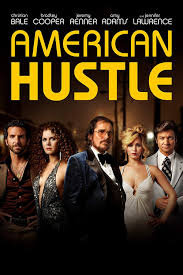
American Hustle
I’m surprising myself with this choice. I liked American Hustle well enough when it came out in 2013, but it wouldn’t have topped my list of “Favorite David O. Russell movies” at the time, and I would’ve laughed if you told me I’d pick it as my favorite movie of the whole damn decade. But I’ve watched it three or four times since then, and (here’s 21st-century cinephilia for you) I’ve looked at various scenes on YouTube too many times to count. And I’ve grown to love it. I love those characters, in all their heedless, hectic striving and their hunger for life. I love the cast — great actors bringing their A-game, and some pretty good actors achieving greatness. I love how Russell cranks everything up to eleven, the music spilling out over the scenes like syrup, the restless camera and the relentless pacing. When Hudson asked me to take part in this survey, I started coming up with a list of possible favorites, and stopped when I got to thirty candidates — a ridiculous number. And impossible to choose a single favorite among them. But then, when I asked myself which movie I’d want to watch again right now, I thought of American Hustle, and smiled.
Nelson Kim teaches film at Wagner College in Staten Island, New York, and makes strange, personal indie movies like www.SomeoneElseMovie.com when given the chance.
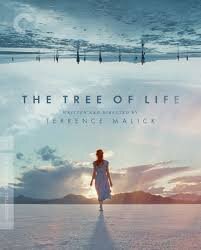
Tree of Life:
While there are numerous films to mention from the last ten years, my favorite film from the 2010s was Tree of Life, written and directed by Terrance Malick. I chose this film because it is one that truly impacted me on a personal, emotional and artistic level, and has stayed with me since the first time I saw it. It's great importance for me has to do with the themes within the film: difficult family relationships, existential questions about God/faith, the purpose of our pain and suffering, and how these non-tangible things are embodied and lived out in front of us as children within our nuclear family, and stay with us into adulthood. I especially love how Malick uses cinematography and visual poetry to narrate the film and address these deep philosophical questions in the same way God answers Job in the Bible, (quoted at the start of the film) as he questions God about his own pain and suffering. I highly recommend this film to anyone who is intrigued by these themes and ideas, and loves the cinematography of Emmanuel Lubezk.
Mikaela Bruce is a Writer- Director located in Los Angeles, Ca. www.pasareafilm.com | www.mikaelabruce.com

Blue Jasmine
Though I feel badly choosing a Woody Allen movie considering his malfeasance, for me
BLUE JASMINE is the best movie of the decade. It's layered in emotional ways that magnify both class differences and commonalities as well as mental health and how our sense of identity can become skewed and fraught by our own actions. More so, Cate Blanchett simply gives the performance of her life (again, every time). Though there were others that came close for me, i.e. almost everything from Denis Villeneuve, I watch Blue Jasmine a few times a year and I always find something new and subtly brilliant every time.
Jenny Frankfurt is a former literary manager who currently runs The Finish Line Script Competition www.finishlinescriptcomp.com
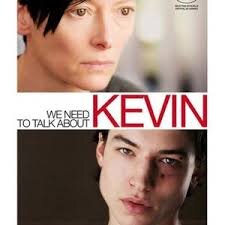
We Need To Talk About Kevin
“Favorite Movie of the Decade” is one that is apt to shift depending on the day or minute that the question is posed, but overall it’s got to be Lynne Ramsey’s We Need To Talk About Kevin. It’s so rare that all of a film’s elements can converge in such a powerful, poignant, provocative, unsettling, thoughtful, and effective way. Lynne Ramsey has a wonderful way of giving you just enough of a foundation to really let your brain play with what you bring to the movie. Apparently as a parent I brought a lot into the movie with me … and as the film unfolds I felt myself as a parent unfolding with it. It is among the most terrifying movie-watching experiences of my life … and I sat in awe of all of it. Visually it’s beautifully bold and unique. The performances are phenomenal (John C Reilly isn’t given nearly enough credit as a dramatic actor). Obviously, I highly recommend the movie but even more so if you are a parent. The approach and perspective of the mother (played perfectly by Tilda Swinton) is brave and rare. Just make sure you have someone close by to talk to about it because when the credits roll you will most definitely need to talk about We Need To Talk About Kevin.
Jordan Noel is a director/editor/artist/dad/husband/ friend best known for not keeping his website, jordan-noel.com, up to date.

Winter’s Bone
Let’s go all the way back to the beginning of the decade. The film that jumps out for me is Winter’s Bone. I choose Winter’s Bone because it is a great example of a successful (read “made it to mainstream”) Indie film that was directed and written by women and has a young woman in the centre of it. It opens on a foreign world – a world that doesn’t bother itself with what’s progressive and cultural because it has its own culture. It is a culture of people who have to fight for their everyday survival – lying, cheating, and stealing. It isn’t apocalyptic—we recognize the people in it: the desperate women who try to keep their children fed, and the unapologetic, opportunistic men who believe they are worth more than those they deem to be beneath them. And then there are the police who want to get these guys knowing that the only thing separating them from the others is their badge. Amongst all of these thieves and sinners is a young woman who just by her very presence is heroic. She stands up and has such a clear sense of who she is, where she stands in relation to the rest of those around her, that she glows in contrast to the dark tree lined landscape that surrounds her rundown home. She has a clarity of right and wrong that drives her empathy and she is “much more heroic than most men on screen” says one critic. This type of heroics has only been allowed for male characters on screen, but here it was in black and white and sepia blue. I was excited for these characters—women who articulate a depth that was complex and compelling—and I watched this young woman as she solved the problems in her world. There had not been a movie out there that was singularly clearing a path for others like it, directed, written and led by women. I was hopeful for the future of film that represented women the way that I am as I express my humanness.
CK Love is a writer/director currently working on two short films and an Instagram graphic novel @frankiencharliesworld with a partner. You can find her on Twitter at @cklovewrites

Room
Jacob Tremblay gives a knockout performance as Jack. This little boy has never known the outside world and his mother is able to help him create games and activities within a confined space for seven years. The aftermath of when they are rescued shows the trauma and changes they must now endure once they are free. The conflict between his mother and her parents is what really makes the story worth it, although the idea of how they got to be locked in a shed is sickening.
Ethell Nunez-Suazo is an aspiring Line Producer and Unit Production Manager working her way up in the indie world. Instagram: @original_clone_in_black Twitter: @cloneinblack
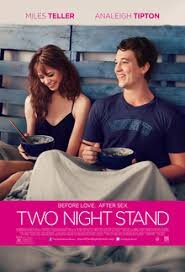
Two Night Stand
I’m a sucker for a well-written romantic-comedy and this one fits the bill. The thing I love about this story is that it mostly takes place in one location, which is a big challenge for a writer. This movie does it really well and keeps things interesting.
Jennifer Blanchard is a multi-passionate writer (www.byjenniferblanchard.com), storyteller, radio show host (www.35anddivorced.com) and maker (www.gerryrene.com) whose screenplay, The Rules, placed as a semi-finalist in the 2019 Stage32 Rom-Com Script contest.
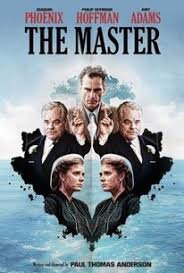
The Master
I can’t shake this dizzying concoction of historical drama, existential exploration, and psychological portraiture that happens to feature two of the best performances (by Joaquin Phoenix and Phillip Seymour Hoffman) I’ve ever seen in a movie. Combine that with Paul Thomas Anderson’s visual eye, so potent that even the deleted scenes contain all-time great shots, and top it off with Johnny Greenwood’s troublingly hypnotic score, and I’m left with a film that has haunted me since I saw it in 2012, and I’m sure it will continue to haunt me for decades to follow.
Brent Lambert-Zaffino is an Atlanta-based filmmaker and Programming Director at the Etowah Film Festival.
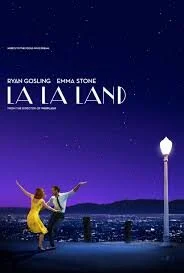
La La Land
Bright and beautiful colors, relatable character struggles, a score that alone brings you through all the emotions of the film, and a not-so-happy, happy ending make La La Land my favorite movie of the decade. Damien Chazelle created two of the most relatable characters to me in this whole decade. They reflect similar struggles that I face every day when it comes to chasing my own dreams, but they also provide hope that there is always a chance for your dreams to play out. While many hated the ending for Mia and Sebastian, I thought that the epilogue was one of the most beautiful sequences of my lifetime. To me the ending is not about the heartbreak of what could have been, rather it reminds us that each person we create intimate connections with existed in our lives for a reason, regardless of how long our paths crossed. There will always be relationships that exist solely to push us forward and to grow as people, whether or not they work out in the end. La La Land reflects the real struggles and hardships that many creatives face and it does so in such a stunningly shot and well-written manner.
Sonya May is a video editor and aspiring screenwriter living in the greater Atlanta area.

Sing Street
When selecting a favorite movie, it not only has to have phenomenal filmmaking elements, but it also has to be a guilty pleasure that lures me to watch it over and over again. The film I have most enjoyed this decade was Sing Street. A musical coming of age story where the characters explore who they are amidst discovering their dreams. Despite shadows in all the young kid’s lives, they are enlivened by creative momentum when they combine their talents and form a band. Though they join for unique reasons and varying skill sets, their approach to life changes when they discover how art positively fuels them in an unstoppable direction.
Michelle Caruso is an independent film Writer/Director who strives to create films with themes and characters that audiences can empathize with, learn from, and will resonate with their life experience.

The 13 Best TV Shows of the Decade
This was the decade that “prestige television” became a thing. With the abundance of quality television floating around, let us help you decide what to watch next! These are our favorite shows of the decade!
The 2010’s have been the decade of “prestige television” and it’s safe to say the medium has delivered on that term in full. There is an impossible number of quality television shows on a variety of channels, streaming sites, and apps. Everyone has a list of shows to watch that is never ending, so we asked some of our favorite writers, filmmakers, podcasters, and artists to help add to the “problem”! Here are some of the television shows that they loved this decade!

Westworld
Most likely I actually enjoyed some comedy like Broad City or Atlanta more. And I’m hesitant to choose an in-progress show that might fail to stick the landing Game of Thrones-style. But perhaps Westworld is the show that most intrigued me. The themes are right up my alley: ethics and threats of artificial intelligence, the nature of consciousness … and the direct references to some pretty bizarre evolutionary psychology theory that I’ve happened to read. Plus a non-linear approach to the narrative that, while often confounding—and perhaps flawed under closer examination—keeps the mystery's hooks firmly embedded in my psyche. But to boil it down: KILLER ROBOTS!!!
Jacob Hunt is an Illustrator/graphic designer/cartoonist/rock-and-roller at tracermetula.com and @juncobath on Instagram.
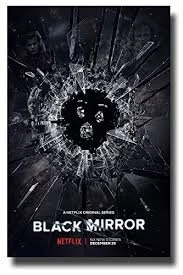
Black Mirror
Truly harder than any other decision I've made on this list. I have to say I deeply wanted it to be Atlanta. No show has more consistently surprised me, delighted me, and taken my breath away. I wanted it to be American Vandal. The creators of that show took what could have been a silly premise, teased it out until I cared about everyone involved, made me laugh, made me cry, made me think, then did the exact same impossible task with basically an entirely new cast. That they aren't being given a third season on Netflix is a tremendous disservice to them. I wanted it to be Fleabag or Succession or The Leftovers - all shows that have set the bar so incredibly high that the entirety of their catalog is unimpeachable. But it's not. It's Black Mirror. Because when Black Mirror is at its best, it shows you the future in ways both terrifying and delightful. Black Mirror isn't a TV show; it's a portal. Abandon all hope, ye who enter here.
Jacob York is a writer and actor from Benton, Kentucky who has lived in Atlanta for most of his professional career. @jkobbster on Twitter.

True Detective
Season one to be exact; however, I am a season two fan and we all can agree that season three was a return to form. The first season is such a perfect reflection of Southern Gothic sensibility. A dark mystery of ritualistic killings with hints of a supernatural element that may or may not be there. It has dynamic performances from Mathew McConaughy, Michelle Monaghan, and Woody Harrelson. It weaved a fantastic narrative between two different timelines that fully used techniques that can only be done in film, like the tension of a long take or a character telling a story and showing that they’re lying. It is beautifully shot by Cary Joji Fukunaga and masterfully written by Nick Pizzolato. The second season’s biggest crime was that it couldn’t live up to the hype the first season had around it. You could argue that there were a couple of stiff performances in it and the writing wasn’t quite on par with the first season, but it was still far better than most shows on TV. The third season was a return to form and Mahershala Ali is absolutely magnetic on that screen. True Detective shows us what can be done with serialized television and has stories that can only be told in such a long format. It’s such a rich narrative that is visually interesting in ways that other TV shows have failed to replicate even when they’ve tried. It’s a show that leaves you still thinking about it for years after it first aired, even the season that most people didn’t like.
Daniel L. Emmons is a comedian and screenwriter from Los Angeles, you can catch him on the horror-comedy based sketch team Nightchurch on facebook or youtube.

The Marvelous Mrs. Maisel
I honestly don't watch too many series, but I devoured Maisel. Aside from the incredible production design which immediately brings you into this world, I connected with the lead character of this fun, hilarious, and original show in her attempt to step out of her comfort zone and pursue a budding passion. Though it is set in the 40s, women today will relate to the struggle Maisel faces in terms of societal expectations of marriage and children as she breaks out on her own. Thankfully the show never gets hung up on gender politics, but delightfully and boldly pushes us onward to bigger and better things, just like Miss Maisel herself. I honestly can't wait for season 3!
Mikaela Bruce is a Writer- Director located in Los Angeles, Ca. | www.pasareafilm.com | www.mikaelabruce.com

Fargo
The original film Fargo is in my top ten (and the Coen brothers are in my top five), so this was a no-brainer. But even without my love for the original film, this series stands on its own as a brilliant exploration of "normal" people who think they can dabble in crime and then find themselves in a world of compounding pain and horror. Each season is a brilliant study of how one bad choice can lead to the dissolution of everything we care about. Cautionary storytelling at its finest.
Kevin Miller is a best-selling novelist and award-winning filmmaker whose most recent feature-length documentary, J.E.S.U.S.A. will be released on Feb. 25, 2025. To read more about Kevin and his work, visit www.kevinmillerxi.com.
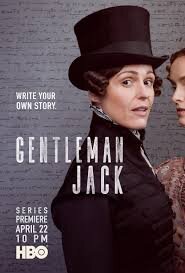


Female Run Shows
I cannot choose one TV show because there was a sudden and rushing tide of female run shows, show runners and leads that took over the decade. But I have to say, it is the British written and run shows that I love the most. Witty, charming, compelling and complex, both Killing Eve and Gentleman Jack took me for a ride I had never been on. And at the close of this decade, I am inspired by the presence of Sharp Objects. Some may say they don’t like female anti-heroes, but I’d venture to say that it is those who cannot and refuse to see women in all their complexity and give them roles that put them front and centre who are “sick of female anti-heroes.” Like every male-led story, there has to be a visible and visceral fall (present or imminent) or a deep darkness to have anywhere to go – any depth to express and any relation to humanity to make a compelling story (we all know that). We watch films and tv shows—look at art—which ultimately is what this is, to see ourselves and to see what it is that we as humans do to navigate our lives, no matter how messy. And we see how it all comes out. Joyful, fearful, or despairing. As a woman, I have to see how women do it. And although we still have a long way to go, this last decade has made great efforts and strides toward making women creators visible. Now if they can only get nominated. Let’s keep putting them on the map!
CK Love is a writer and director currently working on two short films, and an Instagram graphic novel @frankiencharliesworld with a partner. You can find her on Twitter at @cklovewrites

Westworld
Definitely Westworld, even though I haven’t finished season two (oops). The first season was the most memorable and enjoyable television watching experience I’ve ever had. A large group of my friends would get together every Sunday over a bowl of piping chili to see what in the heck was going on with this wild story and try to untangle our own crazy ideas of what we expected would happen in the next episode.
Walker Whited - writer/director of feature film “By Night’s End” and editor at Atlanta based post house W Squared Media. www.wsquaredmedia.com | By Night’s End Trailer - https://youtu.be/0rrZJHHR0wE

The Leftovers
Though there were a ton of great television shows that I enjoyed this decade, The Leftovers (2014-2017) had to top them all. First off, Lost is one of my favorite television shows of all time, but Lost seemed to suffer towards the end when it tried to answer all of the questions it had brought up during its six seasons. So to see show runner Damon Lindelof go back to a show that had similar questions, this one being where did everyone go during the Departure, and stick the landing was such a rewarding experience. The Leftovers had great characters and character moments, interesting science fiction themes, and a world that felt lived in. If you haven’t gotten a chance to check it out, I highly recommend you go ahead and dive into the three season series.
Brad Kennedy - 1/2 of the directing duo at Sozo Bear Films (@sozobearfilms)
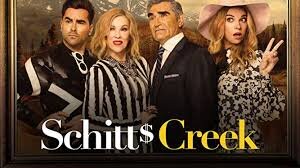
Schitt’s Creek
I am absolutely obsessed with this show. I LOVE Catherine O’Hara, Dan Levy, and Eugene Levy—they’re hilarious. And Dan is an incredible writer and storyteller. He does such a good job of pulling you into this story and making you care about these characters. I’ve re-watched season four probably a dozen times.
Jennifer Blanchard is a multi-passionate writer (www.byjenniferblanchard.com), storyteller, radio show host (www.35anddivorced.com) and maker (www.gerryrene.com) whose screenplay, The Rules, placed as a semi-finalist in the 2019 Stage32 Rom-Com Script contest.
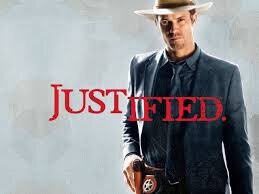
Justified
First of all, this was tough because I have seen a ton of good TV this decade: Veep, Brooklyn 99, The Good Place, Watchmen, Westworld, Schitt’s Creek, American Vandal, Great British Bake Off, and I could go on. The main thing that Justified and these other listed shows did was that they were very specific in what they wanted to do. They have a POV, and they made me enjoy television. In an era with so much to watch, I never felt like I was doing homework when I was watching it. I was enjoying a story.
MK McFadden is a lover of science fiction, pizza, and deadlifts.

Stranger Things
My favorite TV Show of the decade is Stranger Things. What’s not to love? It encapsulates everything I grew up watching from Spielberg to Stephen King. However, it still has its own unique voice as well. It’s so perfectly character driven. You fall in love with the characters from the start of season one and you have to keep tuning in to see where the story takes them each season. And I love the soundtrack! Everything about the show draws me in and I feel like I’m there fighting monsters in the 80s with a rag-tag group of friends.
Luke Pilgrim is 1/2 of the writing/directing/producing team Sozo Bear Films, creators of the web series “Encounters.” https://youtu.be/SYiZYtIAb7w

The Young Pope
A show this funny, sexy, trippy, and flat-out weird can’t also be a palpable illustration of religious conviction, right? That’s what I thought before 2016, but Paolo Sorrentino’s ten episodes of Italian insanity and Jude Law at his mischievous, steely-eyed, best turned me into a believer. Season Two arrives in 2020. Can they pull off the same magic to kickstart the next decade? I have faith.
Brent Lambert-Zaffino is an Atlanta-based filmmaker and Programming Director at the Etowah Film Festival.

Silicon Valley
HBO had some blockbuster series during the last decade, but none were more relevant than Silicon Valley. Each of the six seasons was a roller coaster ride from start to finish. The humor managed to be high-intellect and low-brow at the same time. And its critical look at the real life Silicon Valley was both darkly satirical and much needed.
Robert Carnes is a writer, marketer, author of two books, and lives in Atlanta with his family.

10 Best Novels of the Decade
Novels are a commitment. So commit to the right one! Check out some of our absolute favorite novels from this decade!
Novels are a commitment. Starting a new book is almost as exciting as finishing one, and with the advent of audiobooks and Kindle, there are that many more ways to read. There’s never a wrong way to read a book! We asked some of our favorite writers, filmmakers, podcasters, and artists to give Mirror Box some of the novels that made an impact on them this decade. Enjoy!

Gone Girl by Gillian Flynn
It’s hard to balance beautiful writing and engaging storytelling. Usually you get one of the two, but Gillian Flynn is the master of this kind of high-wire act. Gone Girl is a dark suspense novel told from the dual perspectives of a husband and his wife who has gone missing. For Nick’s side, we get a first-person narrative that never cheats and yet still has you wondering if he murdered his wife. For Amy’s perspective, we get her diary, which, for every question it answers, asks five more. The writing is tight and lyrical, but it never demands attention. It drags you deeper and deeper into the story—a clever, unique, and engaging tale that you won’t soon forget.
Lynne Hansen is an Atlanta-based horror artist who specializes in book covers, and you can see her work at LynneHansenArt.com.

To Kill a Kingdom by Alexandra Christo
So I guess this is where I admit reading isn't really my "thing". I grew up a voracious reader, but as time has gone by, reading just isn't how I consume fiction anymore. Don't get me wrong. There are books I've devoured, sure. Moonwalking with Einstein: The Art and Science of Remembering Everything by Joshua Foer, Blood, Sweat, and Pixels: The Triumphant, Turbulent Stories Behind How Video Games Are Made by Jason Schrier, The Sports Gene: Inside the Science of Extraordinary Athletic Performance by David Epstein, for example. I like non-fiction with explanatory subtitles. It's to the point where most of the fiction I've read over the past decade have been books I've narrated. To that end, my favorite novel has to be To Kill a Kingdom by Alexandra Christo. Yes, I narrated it, but the world she crafted was dense and intricate, filled with characters I wanted to know more about long after my time in the studio finished. That it's such a confident work for a first novel is doubly impressive. So, yes ... this is a book I read for work, but it's the kind of book that makes my work a pleasure.
Jacob York is a writer and actor from Benton, Kentucky who has lived in Atlanta for most of his professional career. @jkobbster on Twitter.
Caliban's War by James S. A. Corey
As a writer of fiction, I don't read enough fiction. I can't explain why. Maybe Tolkien spoiled me. However, I love The Expanse. It's snappy and thoughtful and stylish and cool, all while wearing taped glasses. What I mean is that these books (and the wonderful television show it inspired) keep nestled away in their protomolecule-infested innards just enough tech and "hard" scifi, that it feels effortlessly real. That yin-yang balance is why The Expanse is so popular and so good. You get the sweet taste of believable physics with the pacing, action, readability, and character development of a perfectly crafted novel. Caliban's War is, I feel, exceptional in the way it weaves new characters into the well-established quilt of the first book. In so doing, the world (relatively small in the scope of genre books) is expanded: new wrinkles appear; the sociopolitical matrix of the solar system takes on new life in exhilarating ways; the possibility of first contact is terrifying. All the while we are still held close by the crew of the Rocinante, comfortably sharing the galley with our friends as we peer out into the horrid void.
Derek A. Kamal is a game maker and self-published author. He hides his work at ShorelessSkies.com
Doctor Sleep by Stephen King
The Shining is one of Stephen King’s best works, I think we can all agree. It’s a really unique and interesting horror novel about isolation and alcohol, creativity and family. It was also published in 1977, and does not qualify for this list. The prior fact, however, does make the novel I DID choose all the more impressive. Stephen King managed not only to write an impressive and deserving sequel to one of his most beloved novels, but write said sequel a quarter of a century later. Doctor Sleep manages to be a compelling and chilling narrative, while expanding the universe of The Shining AND revealing what 25 years has taught the author about the themes he wrote in 1977. (And it was SO good it was adapted into a phenomenal film just this year!)
Alex Oakley is an aspiring actor, an amateur content creator, and all around enthusiasm enthusiast based in Atlanta. One of the co-hosts of the Shot for Shot Podcast.
The River of Consciousness by Oliver Sacks
As someone who has found myself seeking a mystery diagnosis, trapped in the gaps of my doctors' knowledge, it is admittedly a joy to read about rare and difficult-to-explain medical conditions. It's hard to find them written about with a humanity that is closer to the patient's experience than the abstracts you'd find on NCBI. Neurologist Oliver Sacks was known for this, and he was sometimes criticized for it. His posthumously published collection of essays, The River of Consciousness, is a sort of indirect defense and eulogy of this way of thinking. Sacks discusses the sentience of plants and the brain's ability to manipulate and create memories. He talks about plagiarism as a form of creativity. Included is an essay on the patients he encountered whose Parkinsonism had slowed their perception of time so much that they were frozen, at times for decades. He discusses Freud's case studies and their influence on neurology, and Willam James' theory of a "stream of consciousness" and whether frogs have one. It's all fascinating, but my favorite chapter is the last one, Scotoma: Forgetting and Neglect in Science. Scotoma is Greek for "gap." Sacks describes that when he first started researching migraines, he found no existing evidence of his patients' symptoms until he found long-forgotten accounts of the same symptoms in Victorian medical literature. He discusses other instances of these "gaps" in science, when discoveries have been misunderstood, dismissed, and forgotten. Like I said, I've been caught in those gaps. Sacks' argument is that when we don't dismiss the experience of the patient, or the seemingly outdated observations of scientists that came before, we just might be able to fill them.
Rachel Sweeney is an actor, writer, director, and stand-up comedian based in Los Angeles, and you can view her work on her YouTube and Vimeo.
Lexicon by Max Barry
Lexicon is all about the power of words. And in the book, so-called poets are like superheroes (or super villains) who can use the full power of words like weapons. I've always been a fan of author Max Barry and his way with words. This latest novel of his is equal parts fast-paced thriller and reference-fest for literary nerds.
Robert Carnes is a writer, marketer, author of two books, and lives in Atlanta with his family.

Gun Machine by Warren Ellis
Warren Ellis’ metatextual crime thriller is something of a dark-mirrored reflection of the various anagram-laden police procedurals you find on network television—a CSI with a deliciously evil goatee, if you will. Gun Machine tells the story of Detective John Tallow, an aging, down-on-his-luck New York cop who stumbles upon a room covered wall-to-wall with various firearms, each of them linked to hundreds of unsolved homicides. Ellis uses his central mystery as an excuse to delve into the secret history of New York City, excavating everything from the origins of Wall Street before European colonization to the occult underpinnings of the city’s architecture and design to, yes, America’s seemingly-incurable obsession with guns. Ellis uses his narrative to depict a world quickly becoming more corporatized and less human, where police forensic work is outsourced to private security contractors and human interaction can only take place through the filter of digital screens. Guiding it all is Ellis’ sure hand, the novel brimming with rip-roaring displays of violence interspersed with the author’s patented brand of pessimistic optimism.
Nathan Cabaniss is based out of Lawrenceville, GA, where he lives a life consisting primarily of danger, intrigue and Netflix. His fiction has appeared in various publications, in both English and in French. 2016 saw the publication of his first collection of short stories, Mares in the Night, and his short novel The Mummy’s Hand At the Center of the Universe was released in 2018.
All Our Wrong Todays by Elan Mastai
There is a sweet spot for me in storytelling where you take a sci-fi premise, you grind it through every possible genre (Action! Sci-fi! Comedy! Romance!), and finally filter it through real human emotions while somehow still making it feel grounded. Sprinkle in a little optimism and you have the recipe for my perfect book. And somehow Elan Mastai got ahold of this recipe and elevated it like only a master-chef (author) can. All Our Wrong Todays checks all the above boxes, but does them in a way that is constantly surprising. As a writer I like to think I have a knack for predicting where stories are going. Mastai does such a masterful job at keeping me guessing that not only did I not know where it was going, I stopped trying to guess and just enjoyed the story! You’ll notice I haven’t mentioned what the book is actually about yet, but a quick google search will provide you with a synopsis, and I wanted to use this space to swoon. One last endorsement: this is the only book I’ve ever read where I immediately contacted the author to thank him for writing it.
Hudson Phillips is a writer, producer and founder of MirrorBoxFilms.com

The Way of Kings by Brandon Sanderson
Fantasy has always had a soft spot in my heart, going back to my childhood. The works of J.R.R Tolkien and C.S. Lewis really helped to open my imagination to the grand worlds of Middle Earth and Narnia. I loved them so much, and then of course the LOTR films are some of my all time favorites. Unfortunately, after those films all came out, I feel like I lost touch with the genre (we will not talk about the Hobbit films). It wasn't really until just recently that I found a fantasy series that engendered that same excitement that I had growing up. Ironically, my favorite novel of the decade came out in 2010, and I didn't even read it until 2019. The Way Of Kings by Brandon Sanderson opened my mind up to fantasy yet again, and in just a brisk 1k pages too! The world building, the characters, and even just the ease of the writing itself all made for a completely engrossing experience. I couldn't remember the last time I'd read a 1,000 page novel in the span of about a month. A lot of fantasy feels dense and a bit of a chore to read, but this first part of The Stormlight Archive series was one of the easiest reads of my life. I was hooked almost immediately. I've already read the second one (Words of Radiance) in the series as well, and it continues to live up to the hype. Can't wait to read the third part (Oathbringer), which might wind up being the longest book I've ever read. It's gonna be great.
Colby McHugh is a writer who loves pop culture in all of its many mediums, who also would like to write comics one day. Any artists interested in talking ideas or just shooting the shit can email him at showandtellwords@gmail.com
Motherest by Kristen Iskandrian
I’ll be honest - I read a lot but rarely anything new. I tend to read a lot of pulp I find in thrift stores. However, sometimes a book comes along that are more current. I’ve maybe only read a dozen books from the last decade and my favorite of those is Motherest. I made notes as I read it and this was my assessment at the end: “Hilariously heartbreaking. Terrifically terrifying. Brilliant.” No diggity, no doubt, y’all. This was more than reading a book — crazy as it sounds, it was like breathing a book. Cliché but this book literally made me laugh and literally made me cry. I got mad when I reached the end because I hated that it had to end. It is is thoughtfully crafted and realized… I’ve read few novels of this caliber. I don’t even want to tell you what its about other than a young woman and her relationships with the people in her life. And if you’re anything like me you’ll find yourself as one of those people.
Jordan Noel is a director/editor/artist/dad/husband/ friend best known for not keeping his website, jordan-noel.com, up to date.

10 Best Podcasts of the Decade
Everyone listens to podcasts these days, and there are so many to choose from! Which ones were our favorite this decade?
Podcasts are everywhere these days. They provide millions of individuals with entertainment and information based on just about any subject they could possibly be interested in. Whether it’s true crime, politics, pop culture, or even just some good old fashioned nerdery, podcasts have some of the most diverse programming of any medium. Some of our favorite writers, filmmakers, podcasters, artists, and more have given us the podcasts they enjoyed the most throughout this decade. Be sure to check them out!

The Adventure Zone
I've binged podcasts before, but none so quickly as The Adventure Zone's first story, Balance. What started off as a silly D&D adventure with the McElroy brothers and their father Clint become something deep and impactful, becoming a cultural phenomenon that now includes live shows and comic adaptations. Creating a story like that is no small feat, and essentially writing it on the fly for years is impressive. I came in at the end of the Balance arc and couldn't stop listening until it all wrapped up. While the subsequent stories of The Adventure Zone have been hit or miss, Balance remains one of my favorite podcast memories and got me interested in playing D&D.
Chuck Thomas is a screenwriter, producer, and podcaster in the Atlanta area. Check out his work at atlantascreenwriter.com, his production company hootyhooproductions.com, and his podcast Atlanta Film Chat at atlantafilmchat.com.

The Daily
Not to get political, but it has been a very divisive and existential decade for our country and the world. There is a lot going on, and quite frankly, it’s exhausting to keep up with. The New York Times has kept me updated and informed for the latter half of this decade with The Daily. Michael Barbaro and his team somehow manage to put together half hour podcasts EVERY DAY to keep their listeners informed on news, both domestic and abroad. As we rocket into a new decade during a very turbulent political climate, do yourself a favor and stay informed. Listen to my Podcast of the Decade: The Daily!
Alex Oakley is an aspiring actor, an amateur content creator, and all around enthusiasm enthusiast based in Atlanta. One of the co-hosts of the Shot for Shot Podcast.

U TALKIN’ U2 TO ME?
When I told my boyfriend I was going to write about Mystery Show, he looked confused. “I thought the prompt was about your FAVORITE podcast.” He got me. Mystery Show is objectively a GREAT podcast, which I thought would showcase my emotional depth and intellect. But the truth is, as intellectual as I’d like to be, I have an undeniable love for all things silly. The silliest of which being U Talkin’ U2 To Me? Jokingly billed as the ”comprehensive and encyclopedic compendium for all things U2,” hosts Scott Aukerman and Adam Scott (aka Scott and Scott) spend most episodes talking about Harry Potter, Huey Lewis and the News, The Godfather … and occasionally U2. Likely infuriating for the band’s fanatics, the derailments are half the fun—ranging from stories of attending The US Festival, to surrealist, non-sequitur subpodcast episodes, such as What’s Your Deductible, Bro?, I Love Film, and even the sub-subpodcast, I Love ‘I Love Film’. And when the show DOES focus on U2 (and later R.E.M. in the spinoff R U Talkin’ R.E.M. Re: Me?), even for someone with indifference toward the band, the themes of fandom are universal. The glow of falling in love and poring over lyrics, anxiously awaiting that first new album after the obsession has festered, and the betrayal when they reach stardom by going a different direction. Listening to Scott Aukerman, the skeptic, and Adam Scott, the purist, passionately debate the works of a band they both love, feels so familiar and cozy, like sitting on a couch between two tipsy friends arguing whether “The King of Limbs should just be a Thom Yorke album since it doesn’t sound like Radiohead anyway, Kevin!” This faux feeling of intimacy makes the payoff all the more rewarding when after 21 episodes and 1.5 years, the two fanboys sit down with U2 themselves for a charmingly nervous interview. U Talkin’ U2 To Me? is not for everyone, but it is very much for me, and I have so loved listening and relistening to it for the past six years.
Lara Morgan watches and occasionally makes movies in Austin, Texas.

The Moth
There is something transformative about hearing entertaining stories by regular people about their real lives. The Moth has exposed me to profound perspectives from people all over the world. I’ve never consumed any other type of media that brings me so intimately into someone else’s story, be it funny, tragic, or simply bizarre. It’s a snapshot of humanity that I think could change the world if more people listened.
Susan Cooper is a podcaster and creative project manager in Atlanta. She has the superpower of resourcefulness and hopes to use that power for the greater good.

Myths & Legends
Being a total nerd for anything to do with myths, legends, and fables, it’s a no-brainer that my favorite podcast of the decade is Myths and Legends. This podcast retells and breaks down folklore from countries all over the world in an easy to understand manner. Everyone knows the basic Greek myths or the Legend of King Arthur, but the host, Jason, digs deeper into those same myths and uncovers folklore that most have never even heard of. He covers everything from Romanian, Chinese, Irish, Persian, Native American, and Scandinavian folklore to your typical, and not-so-typical fairy tales. The best part is he doesn’t make any of it up. They have all of their sources for most episodes available to double check on their website. So for some easy and interesting listening for your commute, be sure to check out Myths and Legends.
Sonya May is a video editor and aspiring screenwriter living in the greater Atlanta area.

Hidden Brain
My favorite podcast is NPR’s Hidden Brain with Shankar Vedantam. I’ve always been fascinated with psychology and this podcast explores different topics each episode. From work, family, politics, to relationships, they do a deep dive into how and why we live life the way we do. The discussions not only inspire self-reflection, but they also identify social conventions that can potentially be redefined by understanding the patterns that created them.
Michelle Caruso is an independent film Writer/Director who strives to create films with themes and characters that audiences can empathize with, learn from, and will resonate with their life experience.

Why is This Happening? with Chris Hayes
I wasn’t historically prone to news consumption. So when America charted an unexpected course the fall of 2016, I, for one, found myself in need of a ballast to make sense of what suddenly seemed nonsensical. WHY IS THIS HAPPENING? is a conversation show about life in America and how we made our way down any number of paths. It acknowledges the likely valid outrage of a given headline informing the history of our arrival in these strange times. From the census or climate change, to racial dynamics and judicial appointments, it paints a cogent and accessible picture for understanding our current national moment by examining the breadth of our sometimes wretched, sometimes inspiring past.
Nathan Rouse, occasional theater producer, frequent podcaster, father and husband lives in Charlotte, NC, with his wife and 3 kids, foolishly hoping and hopefully foolish that all of our best days are still to come.

Binge Mode
Take a deep breath and remind yourself—it's OK if you don't care about Game of Thrones, Harry Potter, or Star Wars. (Honestly, you should care about Harry Potter, but ... it's fine … ) The 2010s are the decade where fandom took a stranglehold over popular culture and didn't let go. Finding a podcast that gives the uninitiated —or even the very initiated—a deep dive into a world they're semi-familiar with is absolutely valuable. That's not what makes Binge Mode great. Hosts Mallory Rubin and Jason Concepcion knew one another when the podcast was thrown in their laps, but listening to their mad first dash of cataloging every episode of Game of Thrones is to be transported directly into the experience of finding your best friend. The show continues to be a wonderful exercise in pop cultural dissection, even when the original property falls off a bit, (Spoiler alert for the final episode of Game of Thrones: THEY HATED IT!) but nothing will ever replace that first year, when Jason and Mal found creative partners in one another and everyone listening to the pod was lucky enough to bear witness to it.
Jacob York is a writer and actor from Benton, Kentucky who has lived in Atlanta for most of his professional career. @jkobbster on Twitter.

Last Podcast on the Left
Like so many others, this decade was all about discovering our collective obsession with true crime, and I wish I could say I was different, but alas, I too love true crime. It began for me as a morbid fascination with horror movies in the early 2010s, and slowly shifted into the world of podcasting with the rise of popular shows like Serial, My Favorite Murder, and Sword and Scale, among many others. But for me personally, it was a podcast that I discovered quite out of nowhere a few years ago called Last Podcast on the Left, and it was everything I wanted in a true crime show. It was well researched, laugh out loud funny, and was able to satisfy my true crime needs with its "heavy hitter" series, where they take a few episodes to dive deep into the lives and horrible actions of the most infamous serial killers in history. In the years since I found them, the Last Pod guys have continued to amass a huge following in the podcast community, going on multiple live tours and culminating in a book being released in April of 2020.
Colby McHugh is a writer who loves pop culture in all of its many mediums, who also would like to write comics one day. Any artists interested in talking ideas or just shooting the shit can email him at showandtellwords@gmail.com
10 Things That Scare Me
Fear has been a bit of a throughline in my life. I’ve always been a little obsessed with it. For some mysterious reason even within my safe, suburban, happy childhood I was obsessed with fear and much of that carried over into adult life. I’m not as intensely scared of things now as then but it’s still something I grapple with. But our true fears are a vulnerability that I feel we rarely talk about. That’s why this show is so amazing. Honestly, I haven’t listened to all of the episodes yet because I save them for when I might need them. Most are around 6 minutes or so and I find them incredibly inspiring, fascinating, moving, refreshing, comforting, and beautiful. Sharing our fears is an act of openness and trust. This show is so simple. Just people of all walks telling us, and audience of peers, ten things that scare them. Brilliant.
Jordan Noel is a director/editor/artist/dad/husband/ friend best known for not keeping his website, jordan-noel.com, up to date.

10 Best Comic Books of the Decade
Comic Books have come quite a long way since 2010, and there’s no signs of stopping! Check out which comics we loved the most this decade!
Try and imagine that it’s 2010 again. The Marvel Cinematic Universe was still in its infancy, and The first Avengers film was still two years away from being released. Essentially, comic books were still just comic books, and hadn’t quite ventured into the public consciousness just yet. The ten years following have seen a boom in the industry, thanks to the popularity of both film and television, and an increased diversity of both readers and creators. Comics are everywhere now, from every publisher, and in every medium. You can find a comic for you anywhere, whether it’s a small webcomic or a popular superhero, there’s something for everyone now! We’ve asked some of our favorite writers, filmmakers, podcasters, artists, and more to share some of their most beloved comics from this decade, and we encourage you to check some of these fantastic stories out. Even if you’ve never read a comic before, there’s always time to start now!

Paper Girls
Shamefully, this is very nearly the only comic of the 2010s that I’ve even read, so I’m sort of forced to choose it! Been too busy catching up on 80s superhero nonsense. Anyway, Paper Girls … while the story hooked me instantly, ultimately it was the artwork that kept me loyal. Loved Cliff Chiang’s completely unique rendering: stylized yet realistic, and with a wonderful sketchy quality. Then Matt Wilson’s gorgeous color palette, dominated by pinks, purples, and teals, really sealed the deal. The story? Ultimately it didn’t really come together for me … but the journey was worth it! Great characters, relationships, concepts, and dialog with fun 80s nostalgia and time travel hijinks!
Jacob Hunt is an Illustrator/graphic designer/cartoonist/rock-and-roller at tracermetula.com and @juncobath on Instagram.

Deadpool
When I first read the witty, snarky R-rated banter of Wade Wilson, I was hooked. He says the things we wish we could say. I love that. Deadpool is flawed, but knows he's flawed. He doesn't hide who he is. I bought Deadpool Assassin this past year and loved every page of it. The movies add layers to his character, bringing to life his humanity, and made me empathize with his character even more. Deadpool (2016) was basically an R-rated rom-com set in the Marvel universe. And you can't help but fall in love with this foul-mouthed mercenary with a katana blade and incurable cancer by the time the credits roll. Deadpool is the hero we didn't know we needed.
Violet Conner is a screenwriter based out of Phoenix, Arizona. When she's not spending time on Instagram or Twitter, she's parenting her two children and watching movies. Writing with themes of empathy and humanity that reach the emotional core is a huge passion for her. Essentially, the human equivalent of a Hallmark card.

Here
The graphic novel Here by Richard McGuire is really fascinating because it's a non-linear story that takes place in one location over the course of history and the future. The art style is incredible and the concept is unparalleled. It focuses on one corner of a room from the beginning of time to the end and shows off many different time periods. While the story is very contained and small it also feels huge and epic.
Adam Petrey is an atlanta filmmaker with three short films under his belt that also moonlights as a freelance video editor.

SAGA
This is my first decade reading comics actually, so I have to say that my favorite is the one that started it all: SAGA. I was always intimidated by comics. They seemed to require a muscle and set of visual skills that I just didn't have. But Fiona Staples’ art makes it not only easy to read but a delight. I love her imaginative creatures and how she brings them to life with facial expressions—and not just the main characters but everyone from little Ghus to Prince Robot (who doesn't even have a face). And I am now a complete disciple of Brian K. Vaughn (PAPER GIRLS is a close second favorite). It’s a wonderful, gross, beautiful, scary world, and I'm in love.
Kerry Carlock and husband/filmmaking partner Nick Lund-Ulrich are currently working on their second feature RED KNIGHTS FOREVER while their first one, ARMSTRONG, can be seen on Amazon Prime.

Mister Miracle
I love Kirby's Fourth World and in particular Scott and Barda. It's an amazing glimpse into a mind operating at peak creativity. So that makes what Tom King and Mitch Gerads did even more impressive. They took the unfettered imagination of Kirby and distilled it down into a touching story about a family dealing with their issues. I read Mister Miracle with my wife and filmmaking partner Kerry Carlock, and seeing her fall in love with these characters is what comic books are all about.
Nick Lund-Ulrich and wife/filmmaking partner Kerry Carlock are currently working on their second feature RED KNIGHTS FOREVER while their first one, ARMSTRONG, can be seen on Amazon Prime.

The Fade Out
Narrowing this down to just one book was rough. There are so many published this year that have a valid claim to this title, but I decided to talk about one that might be flying under the radar of a lot of “Best of Decade” lists, and one that will interest readers of this site. The Fade Out by Ed Brubaker and Sean Phillips is a comic about the last days of the old Studio System and the cover-up of the murder of a starlet. It’s a classic Film Noir about two writers trying to uncover the mystery the studio they work for is trying to hide from the public. The subject is nothing new—it’s well known how corrupt the only studio system actually was back in the day—but the story is riveting and the art is the best Sean Phillips has ever done. Even going so far as to replicate iconic Hollywood buildings and landmarks in his artwork. And if you buy it in single issues, which you can via online, it’ll also come with essays in the back about the era (unsure if they’re in the full trade). This book makes the “Best of Decade” because it’s something you don’t often see in comics these days, a period piece that doesn’t have some fantastical element to it. The Fade Out is just a story about a couple of men over their heads in a conspiracy that may or may not end well for them.
Daniel L. Emmons is a comedian and screenwriter from Los Angeles, you can catch him on the horror-comedy based sketch team Nightchurch on facebook or youtube.

SAGA
I love comics. Let's just start with that. I spent a large amount of my childhood reading comic books and fueling my imagination with the vast world of superheroes and such. That said, the 2010s were all about realizing that the medium is SO much more than just people in tights punching each other. I began college in 2010, and quickly found the work of writer Brian K. Vaughn to be some of the most interesting and relatable genre stories I'd ever come across, including film and novels. I was hooked from the moment I first opened Vaughn and artist Pia Guerra's now-legendary Y: The Last Man, which was published from 2002 to 2008. In 2012, he and creator Fiona Staples began work on what can only be described as an epic space opera that tackles everything from star crossed lovers to having to find a babysitter (And finding one in a teenage ghost. This story is wild). This comic, of course, is Saga, Vaughn's magnum opus that has reached 54 issues as of this year, and is only halfway finished. From the incredible plot, world building, and relatable characters, to the mind bending art and colors by Staples, Saga is easily my favorite comic of this decade. Just knowing that there will be another 54 issues of this story makes me giddy with excitement, and I can't wait to see where they take it next. I expect it'll make me laugh, cry, and feel just about every other emotion along the way.
Colby McHugh is a writer who loves pop culture in all of its many mediums, who also would like to write comics one day. Any artists interested in talking ideas or just shooting the shit can email him at showandtellwords@gmail.com

The Flintstones
It may seem odd to choose an adaptation of a beloved sixties cartoon as the best comic of the decade, but considering said decade began with President Barack Obama and ended with President Donald Trump, perhaps it’s only appropriate. Forget whatever preconceived notions you may have—Mark Russell and Steven Pugh’s The Flintstones is a seminal work of graphic literature, a satire so thoroughly and compellingly realized it feels less like a fantasized version of our past and more like a stark premonition of things to come. Bitterly ironic and achingly human, Russell and Pugh’s interpretation of the old Hanna-Barbera cartoon extends far beyond a simple spoof of The Honeymooners, taking the familiar premise and characters and coloring in the lines of their world with the absurd details of our own. From Bedrock’s denizens being devoured by consumerism to the perils of a society coming up for air after a lengthy war, to the existential crisis of being a living vacuum cleaner kept in a closet for most of your natural life, The Flintstones casts its wide-reaching net of satirical humanism with a sharp-eyed focus and a biting wit. Oddly enough, this series of prehistoric hijinks acts as a perfect time capsule of what life was like in the 2010s.
Nathan Cabaniss is based out of Lawrenceville, GA, where he lives a life consisting primarily of danger, intrigue and Netflix. His fiction has appeared in various publications, in both English and in French. 2016 saw the publication of his first collection of short stories, Mares in the Night, and his short novel The Mummy’s Hand At the Center of the Universe was released in 2018.
Totally Awesome Hulk
This decade has been all about diversity and self-expression, so it’s easy to say that The Totally Awesome Hulk created by Greg Pak and Takeshi Miyazawa is my favorite comic book of the decade. Amadeus Cho is the Totally Awesome Hulk, but his first appearance in Marvel comics was way back in 2005, making him one of the first Korean American comic book characters I’d ever seen. So when he got his first stand alone series in 2015, I was stoked! In The Totally Awesome Hulk, we get to see what the Hulk is like when he shares a body with an overconfident, teenage genius. Unlike Bruce Banner’s Hulk, Cho basks in the glory of his powers and uses them, somewhat recklessly, to stop monsters that are terrorizing the earth; so he’s kind of like your friendly neighborhood … Hulk.
Sonya May is a video editor and aspiring screenwriter living in the greater Atlanta area.

Chew
While the first issue of Chew by John Layman (words) and Rob Guillory (art) was released in 2009, the bulk of the 60-issue series was released in the 2010’s and it is by far the most imaginative, fun, and original piece of entertainment I’ve enjoyed in ANY MEDIUM over the past decade. Chew tells the story of Tony Chu, a detective who has the ability to take on the memories of anything he eats. So in order to solve murders… well, you can see where this is going. And yet somehow the set-up of this series is the least weird thing about it. My favorite comics are the ones that work best as comics, not as storyboards for a movie or TV show. That means truly taking advantage of the medium and its unique storytelling abilities. And while there have been rumblings of a Chew TV show, there’s no way another medium could come close to capturing the pure insanity and zaniness on display in these pages. I highly recommend you consume this series with the same zeal that Tony Chu might consume… well, you can see where this is going.
Hudson Phillips is a writer, producer and founder of MirrorBoxFilms.com
Defining Independence, Both In Film and Life: A Survey
What does independence mean to you? The Mirror Box crew examines the parallels of independence in creativity and in life.
First thing you bought as an adult that made you feel independent?
Colby McHugh: Still waiting on that one. I’ve never quite felt like an adult.
Jacob York: The first rent check in Atlanta.
Isaac Chasteen: Vacation plane ticket.
Monica Beard: When I signed the lease to my first apartment.
Hudson Phillips: One particular car. A Saturn. Wasn't even my first car, but the first one I bought with no help from my parents. I still remember how it felt to drive it off the lot.
CK Love: TV
Favorite artist who broke off from a group to start a solo career?
Colby McHugh: It hurts my heart saying this as a Backstreet Boys fan, but the only true answer is Justin Timberlake.
Jacob York: “The Heartbreak Kid” Shawn Michaels.
Isaac Chasteen: Theresa Wayman of Warpaint.
Monica Beard: Beyonce (DUH!)
Hudson Phillips: Gerard Way, frontman of My Chemical Romance, but the solo career I love is him writing comics.
CK Love: Peter Murphy from Bauhaus.
If you could make a living doing anything, what would you do?
Colby McHugh: Tell stories. It’s so vague, but stories can come in any number of varieties and mediums, and I wanna be here for all of ‘em.
Jacob York: Acting and writing. I'm kinda doing it.
Isaac Chasteen: Run my own home furnishing design studio.
Monica Beard: Something where I’m making other people happy.
Hudson Phillips: Writing Marvel movies.
CK Love: Writing.
What was your favorite independent film of 2018?
Colby McHugh: Thunder Road. I could talk about this movie (and the short it’s based on) for hours. You know what, just watch it. And then talk to me about it. Please.
Jacob York: Free Solo. It took my breath away. A friend of mine who is a climber told me The Dawn Wall was a better film, but Free Solo's idea is so easy to communicate. Man vs. Mountain. In one attempt. Fail and die. It's incredible.
Isaac Chasteen: Blindspotting.
Hudson Phillips: Eighth Grade
CK Love: Hereditary and You Were Never Really Here
What have you done this week to explore your creative independence?
Colby McHugh: Forcing myself to write, even though I have no specific idea in mind. Gotta stay sharp.
Jacob York: WOOF. NOTHING. Everything I've written has been for someone else. What a good wake up call.
Isaac Chasteen: Get my moped running again.
Monica Beard: I write for funsies. It's not anything anyone else will ever read but doing it is really relaxing.
Hudson Phillips: Outlined a new movie!
CK Love: Writing my noir thriller and my horror.
How do you define success?
Colby McHugh: The ability to live a happy life and still be able to pay bills and put a roof over my head.
Jacob York: Part 1 - Putting food on the table and keeping the lights on for myself and those I love the most. Part 2 - Garnering respect from artists I respect. (I recognize this one is a little more nebulous and maybe self-aggrandizing, but I see it in myself all the time. I just want people I think are cool to think I do good work.)
Isaac Chasteen: Outlining your own goals, and then meeting them.
Monica Beard: Success is when you have something to look forward to every day.
Hudson Phillips: Doing what you love every day.
CK Love: Getting up every morning. Haha. No really :)

Exploring Our Favorite Characters
Do you have a favorite character? Maybe even a favorite sidekick? The Mirror Box crew gives their answers to these burning questions and more!
Who is your favorite fictional character?
Hudson Phillips: Indiana Jones
Colby McHugh: Yorick Brown, from Y: The Last Man
Monica Beard: Spider-Man
Alex Oakley: I don’t know that it can get better than Gustave H, a relic of a bygone world of civility, and also maybe polite madness, in Wes Anderson’s beautifully crafted European analogue in ‘The Grand Budapest Hotel’
Jacob York: It has basically always been Magneto. He's just such an intriguing guy.
CK Love: Jessica Jones because she’s so anti-hero (in her own mind). Sherlock Holmes. Yes. All of them - but especially played by Jonny Lee Miller.
Who is your favorite sidekick?
Hudson Phillips: Bang Bang from The Brothers Bloom
Colby McHugh: Tim Drake’s Robin
Monica Beard: Kid Flash
Alex Oakley: When it comes to kickin’ it with protagonists, it doesn’t get better than Samwise Gamgee. That kind of friend is more valuable than gold.
Jacob York: Drywall from Scud the Disposable Assassin! A sad young man made out of zippers who found heroism (among other things) inside himself.
CK Love: Robin - Stephanie Brown. Watson in the new Sherlock on BBC and as played by Lucy Liu in Elementary.
Who is your favorite villain?
Hudson Phillips: Severus Snape
Colby McHugh: Brick Top, from Snatch. Every monologue he has is just perfect.
Monica Beard: Loki
Alex Oakley: THE MIGHTY MONARCH! Adult Swim’s Venture Bros. Had so many memorable characters over its 7 seasons but the shrill Malcolm Fitzcarroldo ended up having one of the most interesting backstories in the whole series!
Jacob York: Psycho Mantis from Metal Gear Solid.
CK Love: Joker in the comics. Moriarty as portrayed in the new Sherlock on BBC, and played by Natalie Dormer in Elementary.
Sum up your “origin story” in one sentence.
Hudson Phillips: After the death of his father, a preteen Hudson disappeared into movies as a way to cope. Now, as an adult, he makes movies that hopefully help the next generation do the same.
Colby McHugh: Born as an accident (?), the youngest of four kids branches out on his own in hopes that he can find at least one decent story in his pop culture jumble of a brain. With great knowledge of dumb/useless stuff, comes great pretentiousness.
Monica Beard: Born and raised in small town Georgia, turned to villainy post college graduation.
Alex Oakley: A young boy discovers that you really can lie for a living if you do it on stage! (Or in office)
Jacob York: It was all over the moment he realized he loved the attention.
CK Love: I was born to extraordinary parents with family gifts of clairvoyance, healing, and prescience, but I was kidnapped from a family picnic by an evil child who wanted a little sister.
If you had to wear one character’s costume every day for the rest of your life, whose costume would you choose?
Hudson Phillips: Speed Racer
Colby McHugh: The Dude. Comfort is key.
Monica Beard: Wonder Woman’s (preferably the movie armor)
Alex Oakley: I value comfort over appearance in most environments so I’m gonna have to go with The Dude himself.
Jacob York: Who wears a lot of hoodies? I dress like Rocky during training montages, but without the fitness.
CK Love: Batman’s. I like the cape and mask. Haha
Fill in the blanks while describing yourself: _________ with a heart of _________.
Hudson Phillips: Writer with a heart of even more heart.
Colby McHugh: Dog with the heart of a Cat. It’s a weird combination.
Monica Beard: Goof with a heart of ball
Alex Oakley: Beautiful idiot with a heart of more idiocy.
Jacob York: Human with a heart of E-MO-TION by Carly Rae Jepsen.
CK Love: Rebel with a heart of harlequin.
When you look back over your life, what do you want people to remember as your defining character trait?
Hudson Phillips: Empathy
Colby McHugh: I’m a simple guy. I just want to be remembered as a good hang.
Monica Beard: That I was always there for them when they needed me.
Alex Oakley: I want people to think of me primarily as kind.
Jacob York: Empathy. Or good looks. Both?
CK Love: Fiery compassion with a sense of humor.

The Dichotomy of Midsommar, The Breakout Horror Film Of The Summer (Or Sommar)
Midsommar, Ari Aster’s follow up to 2018’s horror classic, Hereditary, offers a new take on an old trope, but does it do enough to separate itself from his debut?
Midsommar, Ari Aster’s follow up to 2018’s horror classic, Hereditary, offers a new take on an old trope, but does it do enough to separate itself from his debut?
It sometimes feels disingenuous to compare a film to its predecessor, but I think Aster himself has set the framework for these comparisons. The two films are inextricably linked, both in themes and in horrific subject matter, but Midsommar also works very hard to differentiate itself from the typical horror film tropes. It is a film with very clear influences (hello Wicker Man), but still manages to throw some good ol’ fashioned original shock and awe our way.
It’s less of a pure horror movie than Hereditary was, but make no mistake, there’s no lack of utterly disturbing moments. Trust me. And also trust the couple that was sitting next to me in the theater. To think that two individuals could say the phrase, “What even IS this movie?” so many times (out loud and NOT whispering) was pretty staggering. But, at the same time, I get it. There was some STUFF in this movie.
The initial plot isn’t anything too out of the ordinary. Dumb, belligerent Americans in places they’re not supposed to be is a tried and true horror trope. Maybe there’s something cathartic about watching American dumdums die horrible deaths? Who knows. What makes Midsommar different from those other movies (Hostel, etc.) is that it’s not JUST about Americans being Americans. It dives into so many other ideas not previously explored in the horror genre.
The prologue introduces us to the protagonist, Dani (played brilliantly by Florence Pugh), as she deals with one of the worst things imaginable in the loss of her whole family. This is the closest Midsommar ever gets to Hereditary. One of the things that made Aster’s debut so heart wrenching and real was how the film dealt with the themes of loss and grief. That was what Hereditary based it’s whole plot around, and what really drove the narrative.
Midsommar, thankfully, looks at that theme from a slightly different perspective. Yes, we are introduced to this horrible tragedy from the get go, but it doesn’t really ever come back up. Not in the sense that you’d expect, at least. We, as the audience, view everything that happens to Dani through the filter of her tragedy, but that isn’t what the movie is about necessarily. It’s just one aspect of a film that throws a lot of different stuff into the pot. Potentially too much, considering the original cut Aster made was around four hours long. Despite the intimidating two and a half hour runtime, Midsommar (to its credit) is never boring. It’s really an exercise to see how long a human body can remain fully tensed up. By the time the credits finally rolled, I felt like I should have had a six pack, but unfortunately that was not the case. C’est la vie.
Christian (played by Jack Reynor) is also introduced in this prologue, as Dani’s shitty boyfriend that she has been with far too long. There’s a conversation between the two of them early on that is just as excruciating as any of the brutal violence in the movie, and that’s a testament to the writer/director himself. Ari Aster has said that Midsommar is as much a breakup movie as it is a horror movie, and it shows. Amidst all the intensity and horror, there are moments of Dani and Christian’s relationship that feel as real and as down to earth as any other film. It’s definitely a unique combination of ideas.
As Dani accompanies Christian and his PhD grad student friends to a commune in Sweden to celebrate Midsommar, things clearly start to take a turn into the more traditional anxiety of horror films. But thanks to that masterful prologue, everything that happens is seen through the eyes of Dani and her trauma, which makes for a chillingly effective movie watching experience.
What’s most impressive, possibly, is the fact that this is a horror movie that takes place almost entirely during the day time. That is never an easy task, and Aster succeeds by slowly building the tension and unease to an almost unbearable level, all in full sight. He never uses darkness to hide anything (and I mean anything) from the audience, and I have to begrudgingly respect him for such a bold choice. I wouldn’t be surprised if we see an uptick in brightly lit horror movies over the next couple of years, considering how striking Midsommar is.
One aspect where Midsommar differs greatly to Hereditary is in its humor. I can’t remember a single moment where laughing felt at all appropriate during Hereditary, but there were multiple moments throughout Midsommar that made the audience actually laugh out loud. It really is surprisingly funny, and the actors help accentuate the well-written dialogue with solid deliveries. Later on in the movie, there were other moments that elicited some uncomfortable laughter from the audience, myself included. Those later moments of laughter were more of a coping mechanism for the fever dream material we were seeing on screen. Sometimes, laughter is all an audience has, so I don’t fault anyone for the occasional chuckle, especially considering the images they were seeing. I accepted a long time ago that not everyone is a desensitized robot like myself.
The thing that excites me the most about Ari Aster’s first two films is that I can never seem to stop thinking about them. Whether I’m trying to wrap my brain around the plot or process my own thoughts on loss and grief, something about these films just resonates with me. That makes me incredibly excited (and a little uneasy) to see what kind of existential dread Aster is going to make me feel next.
Oh yeah, and thanks to Midsommar, I have no plans to try psychedelic drugs any time soon, so to any friends who want to trip on a commune in Sweden, I’ll have to pass. Sorry (not sorry).

When Found Footage Found Me: Revisiting The Blair Witch Project, Twenty Years Later
Twenty years ago, The Blair Witch Project rocked the film world with its unique, low-budget aesthetics and guerrilla marketing strategies and with that, an entirely new genre began. To celebrate the anniversary, Colby McHugh revisits his own experience with the film and how it helped form lasting impressions that still stick with him today.
Camping is an activity that I do once every few years. I’ve learned that I love my comforts, and that includes things like air conditioning and beds, so camping is generally reserved for special occasions (birthdays, bachelor parties, etc). Thankfully, I almost always have a pleasant time, even though I’m ready for my own bed by the end of it. Regardless of all of that, however, is the fact that every single time I go camping, certain scenes from a certain movie dominate my brain. That movie, of course, is The Blair Witch Project, the famous horror movie that I first watched about ten years ago during my senior year of high school. Since that fateful night, the film has remained one of my absolute favorite horror movie experiences.
This week marks the twentieth anniversary of the seminal found footage movie, and it just felt right to revisit my experience with the film that essentially created its own subgenre and spawned countless copycats, both good and bad.
There are very few instances in my life that I wished I was older than I actually was, but I really do wish I could have experienced the cultural chaos of Blair Witch at a proper age. In 1999, I would’ve only been eight years old, and still many years away from actually enjoying scary things. Despite missing that aspect of the film, I’ve always loved reading all about the guerilla marketing behind the film and the fact that yes, many people did think they were actually watching a documentary involving real death. It’s so difficult to imagine something that insane happening in 2019.
Let me take you back in time for a second. Ten years ago, to be exact, when I was living in the middle of nowhere in Georgia, out in the boonies (shout out to the city of Monroe, pronounced MUN-roe). Monroe wasn’t exactly known for its variety of things to do, although there was a Wal-Mart and a Blockbuster about a twenty minute drive from our house. I probably would have been around seventeen at the time, and so I began what would become a weekly cycle of making that drive to Blockbuster, renting a couple movies, and rinse, wash, repeat, etc etc. I have so many distinct memories of roaming those aisles, just browsing and taking way too much time to pick something out. It’s a curse of mine.
Having never previously been a fan of horror movies, or even anything remotely scary, I very slowly began to work up the courage to rent something from the dreaded horror section of that Blockbuster. Finally, I decided to bite the bullet and rent a scary movie, despite my brain telling me we wouldn’t sleep for weeks. I’d heard the basics of The Blair Witch Project from one of my older brothers, because he was a big horror buff, so I went with that one. Since I’m a sucker for a great movie watching experience, I turned off all the lights in my room, took a deep breath, and began what would be the first of many viewings of Blair Witch. I don’t think I breathed again for the entirety of its hour and a half runtime, but in the best way. It was so exhilarating. And it felt so REAL. Of course, I knew it wasn’t, but still, there was something so punk rock about it. The shaky camera. The improvisational vibe. The building of the tension. The horrifying final ten minutes. All of it. I went on to try and convince anyone that would listen to watch it. Only a brave few took me up on the offer.
During those two years I lived out in Monroe, I couldn’t tell you exactly how many movies I watched, but it was … a lot. Like I said, there wasn’t much out there. Despite all that, I can’t say a single one affected me as much as Blair Witch. It opened my eyes to a whole genre of movies that I hadn’t given a chance. I quickly began to work my way through the admittedly understocked horror section at Blockbuster until I had watched all of them. I learned just how many BAD horror films existed, but also found a good amount of unique and creative stories that I still love to this day. Not to mention all the goofy 80’s horror and Hitchcock classics that I grew to appreciate and enjoy.
I credit my time in Monroe as a big reason that film is such a huge passion of mine. That’s not a sentence I ever could have imagined typing out ten years ago, mostly because I truly hated living out there. Looking back, though, I found a passion while I was in Monroe, and I have to be eternally grateful for that.
I imagine I’ve watched The Blair Witch Project probably ten times or so since then, and it continues to be such an enjoyable watch for me, particularly if I’m watching it with someone who hasn’t previously seen it. Nowadays, there are few things as enjoyable (and rare) as watching a truly unique horror film. They’re out there, for sure, but sometimes ya gotta dig a little deeper to find the good ones.
There are only a select few films in life that make an impact like that, and I’m excited to continue thinking I’m safe when I go camping, despite my brain doing its best to convince me there’s a witch right outside my tent. So, thanks Blair Witch Project.
(for real, though) ...
July's Theme: Independence
What does "independence" mean to us in creative fields? Hudson throws a verbal molotov cocktail at the gatekeepers to help you define your own path to creative success.
July is upon us, and for those of us in the U.S., that means the 4th of July–our Independence Day. America as a whole is not feeling particularly patriotic right now, but luckily Mirror Box exists to explore deep-thinking genre film, not U.S. politics. So what does independence mean to us creative folk?
I think our desire for independence can be driven by a lot of things. For a teenager leaving home, independence is how they define themselves for the first time. For a small business owner, independence gives them more freedom to set their own hours and priorities. For us as filmmakers and storytellers and creatives, independence can be a byproduct of ego (“I don’t want anyone telling me how to make my art”) or it can be a way to take power away from the too powerful (“I want to make more than one penny off my music since the record label is making 90 cents”).
In Hollywood independent film is a loose term. Essentially any film that is paid for “outside of Hollywood” is considered an independent film. That includes massive blockbusters like Valerian, Cloud Atlas, and Passion of the Christ. In those cases, what independent means is “more risk.” Someone is putting their neck on the line without any guarantee of distribution (of course when you’re spending $100 million, there’s probably a good chance you’ll get it).
Other times, independent is meant almost more as a genre, meaning films that fit a certain non-Hollywood aesthetic like Little Miss Sunshine, Juno, or Lost in Translation.
Then there are those of us who are making films on such a smaller scale that we balk at both the above definitions. We are the filmmakers who work full time day jobs and go out on weekends to shoot on our iPhones. We are the filmmakers who raise small amounts of money from friends and family and then make AN ENTIRE MOVIE with an amount that wouldn’t even cover the coffee budget on a Hollywood film. We are the filmmakers who go from film festival to film festival, jumping for joy when audiences embrace our movies, even if those audiences are smaller than most Hollywood films’ cast & crew.
The independent film world is definitely exciting and so many filmmakers are creating beautiful works of art (even if most people will never see them!). It’s also exhausting. For an independent filmmaker, a single film can take up years of your life and soak up all your free time and vacation days. It will put stress on your family and bank account and will challenge you in ways you never expected.
But, if you’re doing it for the right reasons, and you’re able to stop every once in a while and look around at the magical world that has come to life from inside your head, it’s infinitely rewarding.
Independence means doing what you are meant to be doing right now.
It means not waiting for permission. It means not waiting until you’re ready. It means not waiting for more … more money, more time, more connections.
The problem with gatekeepers is that we start to believe there’s actually a gate. But much like Neo with the spoon, we need to change our perspective ... “there is no gate.” We can manifest our dreams right now.
And here’s the thing no one tells you–that desire to get to the “other side of the gate” never goes away because THERE WILL ALWAYS BE A NEW GATE.
I’ve interviewed a lot of full-time filmmakers and writers and all of them feel like they still haven’t “arrived” yet, like they still have something to prove, and they’re still the hacks they were before they were making a living at it; there is always another level to get to, always another door to walk through. Success, in its traditional definition, is a constantly moving goal
You have to ask yourself. What do you really want? Do you want the clout that comes from being the Russo Brothers? Or do you want to make movies? Do you want the fame that comes from being Scarlett Johanson? Or do you want to act? Do you want the money that comes from being Stephen King? Or do you want to write?
Here is where true success lies:
Find what you love to do
Do it everyday
You know why the gatekeepers exist? Because it makes them feel powerful. When you create without permission, it takes that power away. After all, you can control what you create, but you can’t control how it will be received.
Find the joy that comes from the making, not the feedback. Find the joy that comes from the creation, not the admiration. Find the joy that comes from fulfilling what you were meant to do with your life, not the riches and fame.
“Work hard but know that it’s not necessarily going to mean you’ll get what you want. That’s not the goal anyway — it’s the work.” ~ DON CHEADLE
Take a look around the site this month to read more articles and interviews as we dive into what creative independence looks like in different fields.

Avengers Week - Captain America: A Tree Beside a River of Truth
Welcome to Avengers Week here at Mirror Box! Each day, we’ll feature a piece from our incredible writers that highlights each original member of the iconic team and discuss the cultural impact and relevance these characters have on the big screen! As a fitting end to our series, Jacob York gives us his take on the first avenger himself, Captain America!
Welcome to Avengers Week here at Mirror Box! Each day, we’ll feature a piece from our incredible writers that highlights each original member of the iconic team and discuss the cultural impact and relevance these characters have on the big screen! As a fitting end to our series, Jacob York gives us his take on the first avenger himself, Captain America!
It’s cool to be cynical. The stakes are lower. If you appear to not care about the outcome of most decisions, or feel like they’re out of your hands, you don’t run the risk of disappointment. It’s a very human reaction to the modern world, when we’re all under someone’s thumb.
That’s not how most of us work, though. Despite our best efforts, we care. We keep showing up for the beating we know we’re going to get because it’s the right thing to do. We’re put together to give a shit.
Captain America has rarely been cool, but he has always given a shit.
I tend toward folks some people think are “vanilla”. What’s so funny about truth, justice, and the American way, right? And we could talk all day about the image America projects into the world as opposed to the stark reality we live with, but superheroes are supposed to be aspirational. As with any comic book character, Captain America has served at the whims of his creators since his debut in 1941, but Cap’s North Star has always been his standing up for the downtrodden, fighting for justice, and finding good when surrounded by darkness.
Comparing movie Captain America vs. comic book Captain America is a fool’s errand for me, even though that’s the assignment. My heart keeps pulling back to the core of the character, found throughout all media. Perhaps that’s why I find Chris Evans’ portrayal so successful. His career started as a face on Mystery Date 2000 (Thank you, Twitter…). After a series of comic book projects of varying success (it’s truly gobsmacking that he was in two Fantastic Four movies.), he found the part that has defined his career to this point.
I have trouble talking about Captain America without bringing up the other “vanilla” superhero du jour. I’ve always been convinced that if you could make one comic book character real, you would want to pick Superman. A benevolent god whose internal compass drove him to do everything he could to make the world a better place. Cap is the version of this that you can touch. He’s obviously a super soldier, but he can be defeated by conventional means as opposed to rare minerals from his home planet. Superman is, at its heart, the idealized story of the immigrant, coming to a new land to make a new life, the world prospering in response. Captain American, though, is the story of what any of us could be. Steve Rogers’ superpower was never his ability to throw a shield or bicep curl helicopters (though, those things certainly help …). It was the same grit and determination to stand up to bullies that was ground into him in as a kid in Brooklyn.
I don’t have any interest in recapping movies you’ve already seen, but it’s worth remembering what happens to Cap from film to film. In Captain America: The First Avenger, he goes from being a short, sickly street rat to an American icon, socking Hitler in the jaw at USO shows and saving the world from a Marvel-ized version of white supremacy and Nazism. He sacrifices himself to save the world and, in a heartbeat, is brought back seventy years in the future. Everyone he knows is gone. His conception of the world is shattered. And yet, he rises to the occasion to lead the team in The Avengers. In Captain America: The Winter Soldier, he gets his first reminder of normalcy; a friend he thought was dead returns. He solidifies his place as leader in The Avengers: Age of Ultron, shows that he’s willing to give it all up in Captain America: Civil War, loses everything he’s built since coming back in Avengers: Infinity War, and finds everything he thought he once lost at the end of Avengers: Endgame.
Captain America’s films are defined by heroism, but that doesn’t mean they’re superhero movies. Captain America: The First Avenger is a war movie. Captain America: The Winter Soldier is a Cold War Era conspiracy film. His humanity allows for a variety of interpretations. I can’t say he’s the audience avatar, but he’s my avatar. The person who is surrounded by monsters and gods but takes it in stride. Not just that–he leads them.
What do we owe ourselves? What do we owe each other? Those questions live at the heart of Captain America. This character pre-dates Marvel (Timely Comics published his first appearance) and Cap punching Hitler in the face happened a full year before the attack on Pearl Harbor brought America into the conflict. Cap was in the war before America was. Why? Because of what we owe each other–the opportunity to do good.
Cap has changed over the arc of the MCU, but he is still who he always was. The kid from Brooklyn trying to do good. The same as Chris Evans. The same as any of us, God willing. Just trying to do good.
“Doesn't matter what the press says. Doesn't matter what the politicians or the mobs say. Doesn't matter if the whole country decides that something wrong is something right.
This nation was founded on one principle above all else: The requirement that we stand up for what we believe, no matter the odds or the consequences. When the mob and the press and the whole world tell you to move, your job is to plant yourself like a tree beside the river of truth, and tell the whole world –
‘No, YOU move.’”
-Captain America

Avengers Week - Hawkeye: Eyes, Ears, and Backbone of the MCU
Welcome to Avengers Week here at Mirror Box! Each day, we’ll feature a piece from our incredible writers that highlights each original member of the iconic team and discuss the cultural impact and relevance these characters have on the big screen! In this piece, Sonya May takes a deep dive into one of the most underrated (and underused) characters in the Marvel Universe, Hawkeye!
Welcome to Avengers Week here at Mirror Box! Each day, we’ll feature a piece from our incredible writers that highlights each original member of the iconic team and discuss the cultural impact and relevance these characters have on the big screen! In this piece, Sonya May takes a deep dive into one of the most underrated (and underused) characters in the Marvel Universe, Hawkeye!
When thinking of the original Avengers, all too often, Hawkeye is forgotten. But I’m here to set the record straight; as demonstrated in Hawkeye’s arc in the MCU, it is clear that he is the glue that holds the Avengers together. Many tend to overlook him simply because he isn’t a hero with superpowers. Instead, Hawkeye is the most regular human guy out of all the Avengers. In all reality, Hawkeye is the father figure in the messed up family that is the Avengers.
S.H.I.E.L.D. Agent
We are first introduced to Hawkeye very briefly in Thor. This cameo appearance helps to establish his character as a S.H.I.E.L.D. agent as well as his preference for using a bow and arrow while observing from a high vantage point. On the surface, it looks like he’s merely a trusted agent with the best marksman skills. Dig a little deeper and you start to see the foundation of his empathetic and fatherly side being built. Even though he has his bow and arrow locked on Thor at all times, he admits to Agent Coulson that he’s rooting for Thor. It’s likely that he is rooting for Thor because he sees the demigod’s potential, much like how he saw the potential and good in Black Widow when he had been sent by S.H.I.E.L.D. to kill her (which Black Widow admits to Loki in The Avengers).
Loki’s Minion
Admittedly, the worst movie for Hawkeye’s character development would be The Avengers. Even Jeremy Renner wanted Hawkeye to be killed off after discovering that his character was not really going to be fleshed out in the film. While being Loki’s pawn for the majority of the film, Hawkeye is simply being used for his fighting abilities and inside knowledge of S.H.I.E.L.D., which are two character traits already established by his short cameo in Thor. His only ties to the Avengers are his pre-existing relationship with Black Widow and his professional obligation to Nick Fury. Let us not forget that unlike most of the Avengers, Hawkeye is still just a regular guy who is really good at fighting and has keen sensibility. After Black Widow literally knocks the sense back into him, Hawkeye joins the Avengers, mostly because he wants to kill Loki in revenge for having been mind controlled. So his reasoning for joining the Avengers paints him once again solely as a fighter and nothing more. During the Battle of New York, Hawkeye plays a quintessential role, as he perches up high and calls out enemy movements for the rest of the team and defends the city from there. Even though Hawkeye is mostly just set up as a one dimensional character, he can still be seen as the glue that holds the Avengers together. Without Hawkeye, the Avengers were unable to beat Loki on their own, but with his help, they were able to save New York.
Family Man
Finally, in Avengers: Age of Ultron, Hawkeye gets the character depth he deserves. He goes from being just a regular man who has insane combat skills to a man with a heart and family. After the Avengers face a major beat down from Ultron, they realize that they need to get off the grid. Hawkeye has the solution and brings them to a “safe house,” which turns out to be his family home. There the Avengers come face to face with Clint’s pregnant wife and two children.
Now, we begin to realize how much the Avengers truly do rely on Hawkeye. His wife, Laura, admits to him that she thinks they need him too much and that they may not always have his back in the future. This plays out later in Captain America: Civil War when he gets dragged out of retirement due to his desire to help Scarlet Witch and winds up having to sacrifice himself so that Captain America and Bucky can escape the airport battle, which results in his arrest.
It is also at the Barton homestead that we learn what he thinks of the Maximoff twins, and it seems like he even has a bit of a soft spot for them off the bat. In his words, they’re just punks. He realizes that they were young and desperate, which made for them to be easy targets to manipulate by the evil that was Strucker and later Ultron. After the Maximoff twins join with the Avengers, Hawkeye truly shines as a father figure when Scarlet Witch begins to have a breakdown, blaming herself for all the turmoil happening around her. Even though the twins are partially to blame, Hawkeye steps up and gives her the pep talk to end all pep talks. He puts on that dad hat and tells her that it doesn’t matter whose fault it is; none of it all makes sense seeing as he’s out there fighting robots with a bow and arrow. Like a good dad would, he gives her the option to stay hiding and her brother will come get her later, or she can step back outside and become an Avenger. That’s a defining moment for the future of the Avengers, and it’s all thanks to Hawkeye.
Retirement
In Avengers: Infinity War, we learn that Hawkeye bargained with the government, allowing for a real chance at retirement while under house arrest. It is during this time that, dare I say it, shit hits the fan. Now I’m not saying that Hawkeye’s lack of participation in stopping Thanos led to the snap, but I’m just going to put it out there–a good chunk of the time that Hawkeye is around, things get resolved. Such as defeating Loki in The Avengers, convincing Scarlet Witch to join the fight in Age of Ultron, and admitting that in order for Cap’s team to succeed, the rest of them need to be left behind during the airport fight in Civil War. Time and time again, Hawkeye has the Avengers’ backs and the one time he doesn’t, he loses everything.
Ronin
Avengers: Endgame opens on Hawkeye and his family, so right off the bat you know that this is not going to be a happy opening scene. He seems to truly enjoy his retired life, getting to spend time with his family and teaching his daughter how to shoot, but once again, he turns his back and all of that blissfulness disappears into thin air. That’s the catalyst that turns Hawkeye into Ronin. Now, I don’t believe they outright refer to Clint as Ronin after his five year turn to vigilantism and the dark side, but anyone who’s read the comics knows about Clint Barton’s stint as the lone warrior when he joined with the New Avengers. I’m not going to delve into the comics because the timelines do not precisely align, but when we see Clint again in Endgame, he has a new haircut, is a loner, and is mercilessly killing bad people in Japan. So even if he has not adopted the Ronin persona, he is still rogue and clearly not over the disappearance of his family. He hops from country to country, killing all the criminals that got to survive the snap, seeking vengeance and trying to make the world more fair.
Even when Black Widow appears before him with a plan that could potentially bring his family back, he tries to deny her in fear of becoming too hopeful. At this point, he is truly a broken man. His brokenness is further explored when he and Black Widow go to Vormir to retrieve the soul stone. He realizes that even if his family does return, he’s not the same man, and he doesn’t deserve to be with them. He’s seen Black Widow’s character development, and yet again, he so eagerly wants to have her back. This results in their heartbreaking battle of who should die so that the rest of the world may carry on. Despite their epicly choreographed sacrificial fight, Hawkeye was not able to sacrifice himself in the way he wanted to. He lost his best friend, but regained hope in being reunited with his family. Black Widow promised him hope at the beginning of the film, and through her sacrifice, she was able to give it to him. He may not have been the same Clint Barton as five years prior, but he had something to live for again.
At his core, Hawkeye is not just a fighter, but also a lover. He has the perfect doses of compassion and loyalty mixed in that help him to be the best Avenger that he can be. He is always dedicated to protecting those that cannot protect themselves and defending the innocent. No matter how much he wants to have just a regular family life, whenever the Avengers are in desperation, he is there for them and always helps them to succeed in their mission with whatever it takes. Through the course of his time in the MCU thus far, we’ve seen him grow from being a focused S.H.I.E.L.D. operative to a selfless Avenger and backbone of their missions. Hawkeye can assess situations in a way that most people and even other superheroes would overlook, so please world, stop overlooking Hawkeye.

Avengers Week - Thor: Ragnarok and the Hero's Journey
Welcome to Avengers Week here at Mirror Box! Each day, we’ll feature a piece from our incredible writers that highlights each original member of the iconic team and discuss the cultural impact and relevance these characters have on the big screen! Today, Violet Conner takes a deep dive into the God of Thunder, Thor!
Welcome to Avengers Week here at Mirror Box! Each day, we’ll feature a piece from our incredible writers that highlights each original member of the iconic team and discuss the cultural impact and relevance these characters have on the big screen! Today, Violet Conner takes a deep dive into the God of Thunder, Thor!
Much has been spoken on the myth and lore of the hero’s journey. The archetypal protagonist navigating through miles of mud and mire to reach the pinnacle has been sought, written, and studied for centuries. Joseph Campbell once spoke about it in his book, The Hero With A Thousand Faces: “A hero ventures forth from the world of common day into a region of supernatural wonder, fabulous forces are there encountered and a decisive victory is won: the hero comes back from this mysterious adventure with the power to bestow boons on his fellow man.”
Taika Waititi’s take on the Marvel character Thor completely embodies this narrative. Thor: Ragnarok meets us where our hero is captured. He’s woeful and musing on his past, but finds the humor in his almost gloomish situation. Which is how all great comedies start–from great tragedy. Throughout the film, Thor dredges through the comparative mythology, an adventure of sorts. Campbell describes these three stages of themes in his monomyth, a simple narratology:
1: Departure. This is where the hero is called on an adventure. He also has some sort of mentor in this calling.
2: Initiation. This component “begins with the hero then traversing the threshold to the unknown or "special world", where he faces tasks or trials, either alone or with the assistance of helpers.” He is pursued, challenged, and must overcome an obstacle that helps him reach his highest potential.
3: Return. This is the catalyst. The hero must stand on the bridge of two worlds. He takes his knowledge from the journey and alchemizes it into the zenith of wisdom and spiritual strength. The entire process is to strip the hero of everything that is held dear and close to the heart. The trials and struggles serve as a means to peel each layer, until the very essence of who the hero truly is remains. At the end, it is this naked, weary soul who triumphs in the story.
“The Departure” is at the beginning of Ragnarok. Thor shares how he has nightmares of his childhood home up in flames. A premonition, if you will. The evil devil that has him entrapped solidifies that this will in fact happen.Thor laughs in the face of danger. I want to pause here for a moment: a typical “hero’s journey” encapsulates a hero that starts at the lowest level with very little hope. The classic hero in this narrative generally has some sort of a tumultuous beginning. Yet, this isn’t the case with Thor. If we look at Thor, he had an almost idyllic start. Born with the power to wield thunder, he knew his strength from day one. His father, Odin, gave him a hammer called Mjolni to harness this force. It was when Thor was denied the right to become king over his realm of Asgard, that his journey truly began. In a sense, Thor’s story is almost the “inverse” hero’s journey, starting when he made the decision to fault from his roots.
When we meet our hero in Thor: Ragnarok, he still has a bit of his old ways traipsing around his persona. It’s almost as if Thor knows he can still laugh, charm, and call upon the trusty hammer daddy gifted to save himself from any sketchy situation. Which is true in a sense. Until the wildcard is thrown in.
Thor soon finds his father in exile. Odin is almost delirious, ready for the end of his days. Remember this: Thor views his father as the pinnacle of strength and wisdom. As Thor is almost overcome with grief, Odin shares that there is a long lost sister who is ready to take down Asgard. And, oh … she’s stronger than Thor and Odin combined. This is when “The Initiation” of the story occurs. The lost sister ends up destroying Thor’s beloved hammer and sends him into the abyss of cosmos, one of the nine realms of Asgard. Here, Thor is treated less than human, forced to watch Dharma Initiative-type propaganda videos and then sold as a slave. This is the complete antithesis of Thor’s entire life. He is told he can remain in chains or regain some sort of autonomy by participating in gladiator games. Thor chooses the latter.
As an homage to 1980’s sci-fi cinema synth score plays, Thor’s beloved hair is shaven right before he enters the arena. All seems at peace when he meets an old friend in battle, until the old friend beats him to the brink of death. The pain pushes Thor to the point of delirium, where he envisions his beloved father and remembers his strength. Ultimately who he is–The God of Thunder. This is the exact moment that Carl Jung describes in his idea of the “center of the field of consciousness”. It’s tapped when all ego is shredded from the psyche. It’s when feelings, intuition and memory collide, the precise moment when the internal meets the external world. The place that Jung calls “the interaction between the collective unconscious and one’s personal growth”. Thor captures this in the arena.
Until now, he thought his powers were only harnessed by the external. But in his deepest pain, he found the power was within the internal core of his being. Not in the hammer that was given to him. Not in his long, blond luscious locks of hair. But in the center of his consciousness. After this, Thor’s enlightened. He wants to help others become liberated like he is. He chooses to run towards his problems and not from them. But literally, he runs to the very thing that risks the livelihood of himself and his people. This is “The Return”, the catalyst where Thor stands on the bridge into his realm.
Armed with all of the wisdom and strength he’s gained, Thor confronts his sister, The Goddess of Death. She belittles him, pierces one of his eyes out and tells him he has no right to become king. In the final moments, just as Thor is about to give up, knowing Asgard will go up in flames, he enters the same hallucinogenic consciousness he was in before, envisioning himself at the feet of his father. Odin speaks: “Even when you had two eyes, you only saw half the picture. Are you “Thor, God of Hammers? That hammer was to help you control your power, to focus it. It was never your source of strength.” Thor concedes, saying he won’t ever be as strong as his father.
The next moment is the moment of all cinematic moments: Odin tells Thor, “No. You are STRONGER.” Thor embodies all of us as a collective. We all have or will embark on the hero’s journey. In the end, it’s that very realization when you’re on the journey of personal growth–when you realize you can see clearer when your body has been broken and that the strength has been inside of you all along. You are more conscious when you surrender the walls of the ego. To lose everything. To break open. To be brought to your knees. To remember the core of your strength ... this is the journey.

Jason Schneider Explores His Identity as a Filmmaker with a Limb Difference in "Despite the Loss"
Jason Schneider has edited documentaries for ESPN, PBS, several NY Emmy nominated television series, and now he’s released his directorial debut, Despite the Loss. The film helps spark a conversation about the way we look at limb difference and disability in society, all while highlighting what the bumpy road to self acceptance looks like.
Jason Schneider has edited documentaries for ESPN, PBS, several NY Emmy nominated television series, and now he’s released his directorial debut, Despite the Loss. The film helps spark a conversation about the way we look at limb difference and disability in society, all while highlighting what the bumpy road to self acceptance looks like. Through personal accounts, interviews with the people who know him best, and profiles from a diverse group of amputees, Jason dissects and re-frames his life, intertwining the trials and tribulations of building a race car with his personal journey for self acceptance.
I reached out to chat with Jason about being a filmmaker with a limb difference, the obstacles he’s faced along the way, and the creative ways he’s exploring distribution in today’s indie-film world.
Tell us a bit about your background. How'd you first get involved with film?
I've been interested in film for as long as I can remember, and begged my parents to buy me a PXL- 2000 for Christmas when I was around eight or nine years old (a video camera made by Fisher Price that used audio cassettes to record grainy B&W video). I used to make movies with my friends while growing up in Queens, NY and fell in love with the art of storytelling. As I got older, a career in film and television just felt like some impossible dream to me so I didn't pursue it. I went straight into the workforce after high school and worked various retail jobs, as a mechanic for a bit, then got involved in the restaurant business through a family friend.
I've always been a hard worker and worked my way up from dishwasher to part owner of a small restaurant by my early 20's, but I was miserable. The restaurant business is a tough gig with lots of long/grueling hours, and I had zero passion for it. I felt like I was wasting my life, and decided if I was going to work this hard it should be for something I was truly passionate about. So I walked away from the business (lost everything) and decided to enroll in college for film. I graduated in 2005 and have been working in the industry as an editor ever since.
Where did you first get the idea to do Despite the Loss and how did it all come together?
I've been building and racing cars as a hobby since I was a teenager. My dad was a mechanic so it was something I grew up around and had a lot of passion for. I'd been working as a documentary editor for a few years and would chat with colleagues about the cars I was building on the weekends. They would always say, “That would make a great documentary!” But my response was always, “Why?”
I never really thought about the fact that I was building and racing cars without a right hand, because at that time I didn't want to be associated with having a disability or be labeled different in any way. I also had no desire to be on camera, and really didn't feel like what I was doing was all that special, so I would just dismiss the idea.
A few years went by and I hit a rough patch in my career where I wasn't very fulfilled by the work I was editing. I thought maybe it would be interesting to try directing, as a way to take control creatively. I never liked the way people with disabilities were portrayed in cinema (a feeling I would later learn could be described as “inspiration porn”), and had the idea to profile other people with limb differences pushing the limits of their “disability” so to speak. I wanted to tell these stories as authentically as possible without sympathy or turning them into “inspiration porn.”
We borrowed a camera and a friend and I shot some test footage of me working in the garage on a classic Mustang I'd restored. Literally just to get a feel for the kind of look we wanted before our first official shoot. I told a few anecdotes about my childhood post accident just to pass the time while filming. When I cut together that footage as a proof of concept and started showing it to people, the response was universal, “You need to be in the film!” But I still dismissed the idea.
We started filming that summer with a double amputee mountain climber named Jerod, and I was taken aback by how much we had in common–our thought process, the way we looked at the world, our attitudes towards “disability”–it was incredibly eye opening for me because up to that point I had not known or associated with any other amputees. I started to realize there was merit in examining the common threads we (amputees) shared, and that's when the film's tone began to shift.
You mention that your goal with the film changed as you were filming. Can you talk about that a bit?
Most documentary editors will tell you that the real story of a film often emerges in the edit. And thankfully because of my background, I was editing footage almost immediately after shooting it. Without giving too much of the story away, I realized my original concept wasn't working, and in a moment of desperation turned the camera on myself. That impromptu interview brought a lot of the deeper questions I explore about limb difference and disability in the film to light.
I realized through that interview, conducted by someone I reveal later in the film, that I had buried a lot of issues stemming from the loss of my hand and never properly dealt with them–the way I looked at myself, how I thought the world looked at me, and the stigmas associated with disability. The interview sort of opened up pandora's box, and watching myself talk about those issues on camera, in a quasi third person kind of way, was a pivotal moment. I just knew I had to explore it further, however painful it was. That's when the real story of the film started taking shape.
What do you hope people walk away with after seeing the film?
I think I would answer this question differently depending on who I'm talking about.
For able bodied people, I'd like them to walk away with the understanding that they should treat people with limb differences as people first, and appreciate that we're just trying to live our best lives and make our own way in the world just like they are; that we do not need, or deserve, their sympathy; that our stories matter, and shouldn't exist solely as inspiration porn to make them feel better about their own life.
For people who are limb different but don't self identify as disabled, I'd want them to walk away knowing there's nothing wrong with that. Language is an incredibly personal thing, and everyone has a right to identify as they see fit. The same respect and understanding we demand from the able bodied community should apply to those with different viewpoints within our own community as well. But more importantly, I'd want them to know that they are not alone, and that there's an entire community of people that have gone through exactly what they may be going through, and it's ok to reach out to (and embrace) that community. I hope that the film can provide some comfort and guidance on their own path to self acceptance.
Talk a bit about your original distribution plan, the struggle of the film festival world, and how you're creatively working to solve some of the problems indie film is now facing?
Early on in my career I was fortunate enough to work with several veteran filmmakers and witness firsthand how the traditional path to distribution played out. The plan was always: apply to festivals, get into festivals, hope for a warm reception at said festivals–then sales agents and distributors would follow. As far as I was concerned it was the only legitimate way to go about it. So naturally when it came time to release my own film, I wanted to follow that same formula.
What I failed to realize at the time was that most festivals (as they exist today) are no longer geared towards independent creators. You need industry connections to get a submission taken seriously, and even then there's a slim chance (if any) for a film with a minimal budget by an unknown director to be selected. The circuit has basically been co-opted by studios looking to attach festival credibility (and free publicity) to their own mass market projects. It's a giant ponzi scheme.
I spent close to $2K on festival submissions from late 2017 through 2018. Out of 24 submissions, only seven festivals actually watched my film. Seven. The rest just took my money and sent out a rejection letter without ever watching the film. I could have dealt with rejections based on the merits of my submission, but to not even watch the film? It was a heartbreaking experience.
With the door closing on a festival run and no backup plan, I signed up for a distribution bootcamp that summer and gained some valuable insight into self distribution (although initially dismayed to hear about 75% of the panelists talk about how important festivals were to the process). Towards the end of the day one of the special guests said (paraphrasing), “I never count on festivals or distributors for my films. Why would you just hand over a film you’ve spent years of your life on, literally your baby, to a group of strangers in the hopes they promote and get it out there correctly?” This made total sense to me, especially given the deeply personal nature of my film.
I started researching filmmakers who'd had success with the self distribution model and formulated a plan based around that research. I ultimately decided against an independent theatrical release (as much as I wanted one) because of the substantial upfront costs involved and significant lead time required to secure theaters and generate enough publicity to make it worthwhile. Transactional Video on Demand (TVOD) felt like the best place to start, and I decided to go with Amazon Prime Video Direct, which allowed me to sidestep the expense (and 60-90 day turnaround time) of working with an aggregator, and get the film in front of a large audience as soon as possible. Because of my experience in post-production I was comfortable meeting Amazon's delivery specifications, but if you're not tech savvy, working with an aggregator may be preferred.
The beauty of starting with TVOD for me is that once the film premiered, it wasn't going anywhere. Traditional marketing plans call for very tight advertising windows geared around specific events–a theatrical run, TV premiere, DVD release, online launch, etc.–miss your advertising window (or even worse, have an unsuccessful campaign) and you may never break even, let alone profit. This can be a death sentence for traditionally distributed indie films, as distributors are quick to cut their losses and move on to the next project, leaving your film to languish in obscurity.
I can grow my audience slowly over time, try out different types of campaigns, and even build complimentary marketing strategies around the initial TVOD release, which is critical for an issue driven film like mine.
Phase two of my marketing plan involves reaching out to organizations with similar mission statements to try and engage the communities that might benefit most from the project, and I have several screenings in the works partnering with those organizations. Phase three involves the educational market, and I'm currently still researching how best to approach that.
What advice would you give to a documentary filmmaker just getting started on their journey?
The best advice I can give is to research every aspect of your project thoroughly, from pre-production all the way through distribution, and formulate a solid game plan before ever shooting a single frame of footage. Despite The Loss was my first feature, and I basically hit the ground running with a “figure it out as I go” attitude. In hindsight, the lack of preparation was a huge mistake on my part, and one of the many reasons why my film took eight years to make.
Having said that, trust the process and don't be afraid to improvise and modify your plan accordingly as new opportunities present themselves–it's just the nature of documentary. You'll encounter many challenges along your journey; the best filmmakers embrace those challenges and evolve accordingly.
Also, try not to spend your own money making the film. I nearly went broke twice, it's not fun.
You can check out Despite The Loss right now on Amazon Prime Video in the US and Amazon Prime Video in the UK, or find more information at DespiteTheLoss.com and following them on Facebook, Twitter and Instagram.